The Implementation Monitoring and Evaluation Division placed the draft ordinance before the Cabinet.
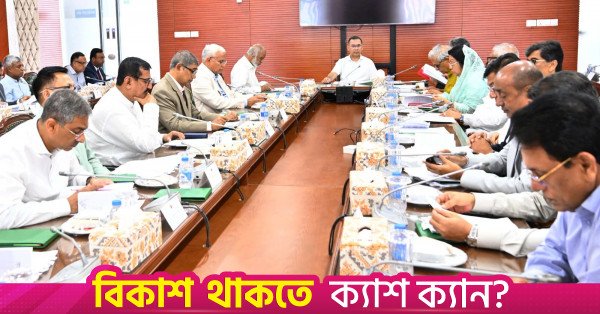
Prime Minister Tarique Rahman chairs the 21st Cabinet meeting at the Secretariat on Sunday, 20 September 2026. Photo: PMO
“>

Prime Minister Tarique Rahman chairs the 21st Cabinet meeting at the Secretariat on Sunday, 20 September 2026. Photo: PMO
The Cabinet has given policy and final approval to the draft Public Procurement (Amendment) Ordinance, 2026, proposing changes to protect domestic industries, boost competition in government procurement and modernise the long-standing process.
The approval came at the 21st Cabinet meeting at the Secretariat today (20 September), chaired by Prime Minister Tarique Rahman, according to a press release from the Prime Minister’s Press Wing.
The Implementation Monitoring and Evaluation Division placed the draft ordinance before the Cabinet.

According to the press release, the amendments aim to protect domestic industries while increasing competition in public procurement.
They will also expand provisions on procurement contract administration and management and modernise procedures under the open tendering method.
The draft introduces rated-criteria-based evaluation for bids for goods, works and physical services, allowing tenders to be assessed not only on price but also against specified criteria, in line with the internationally used “Rated Criteria” concept.
It also proposes using the limited tendering method for equitable resource distribution, clarifies rules on professional misconduct and allows an “Alternative Procurement Arrangement” for urgent state requirements.
The press release said the draft ordinance was prepared to introduce timely changes to the public procurement system. It received final Cabinet approval, subject to vetting by the Legislative and Parliamentary Affairs Division.
Calls for easier e-tendering in parliament
The procurement reform follows calls in the third session of parliament to simplify the e-tendering process and increase competition in government tenders.
On 30 August, Bogura-4 MP Md Mosharraf Hossain called for simplifying e-tendering to create more employment opportunities for educated unemployed youths.
In a Rule 71 attention notice, he questioned why the process had not been simplified within six months of the current government, while the interim government had done so in a short period.
In response, Local Government, Rural Development and Cooperatives Minister Abdul Moyeen Khan said procurement by agencies under the Local Government Division, as well as district, upazila and other procuring offices, was being conducted under the Public Procurement Act 2006 and Public Procurement Rules.
He said existing methods, including the Limited Tendering Method (LTM) and Open Tendering Method (OTM), were being followed, adding that simplifying the e-tendering process was under consideration in the public interest.
During the discussion, Law Minister Md Asaduzzaman said the government had taken an initiative to update the Public Procurement Act and Rules to remove alleged “syndicates” and barriers to competition in government tenders.
He said the government had identified allegations that the previous system under the law and rules had deprived people with opposing political views of business opportunities.
The minister said the government had opted to reform the system through legal processes rather than taking overnight measures.
He said a Cabinet subcommittee had been formed to amend the public procurement law and rules.
As its chairman, he had held several meetings with the ministers and state ministers concerned and prepared a draft, which he said would be placed before parliament soon.
Within three weeks of those remarks, the Cabinet approved the draft Public Procurement (Amendment) Ordinance 2026, proposing measures to increase competition, protect domestic industries, introduce rated criteria for tender evaluation, expand limited tendering and allow alternative procurement arrangements during emergencies.
About The Author