Bangladesh built 39 High-Tech and Software Technology Parks between 2009 and 2023 based on the assumption that physical infrastructure alone would trigger a technology boom and attract investment.
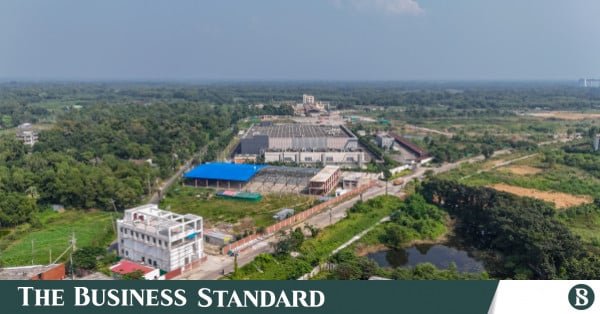
An aerial view of recent developments at an industrial block in Gazipur’s Kaliakair Hi-Tech Park. With total investments crossing $800m, the 355-acre site has become one of South Asia’s fastest-growing hubs for electronics, information technology, and data infrastructure. The photo was taken recently. Photo: Mohammad Minhaj Uddin
“>

An aerial view of recent developments at an industrial block in Gazipur’s Kaliakair Hi-Tech Park. With total investments crossing $800m, the 355-acre site has become one of South Asia’s fastest-growing hubs for electronics, information technology, and data infrastructure. The photo was taken recently. Photo: Mohammad Minhaj Uddin
Bangladesh’s network of High-Tech and Software Technology Parks has struggled to generate the investment, skilled jobs and technology businesses envisioned by policymakers despite rapid expansion over the past decade, industry leaders and former policymakers said.
They attributed the shortcomings to inadequate ecosystem support, a shortage of skilled manpower, weak industry-academia links, poor maintenance, high utility costs and inappropriate locations.
The concerns were raised at a virtual discussion organised by the Power and Participation Research Centre (PPRC) today (12 September).

Dr M Rokonuzzaman, professor at the Department of Electrical & Computer Engineering at North South University, said Bangladesh built 39 High-Tech and Software Technology Parks between 2009 and 2023 based on the assumption that physical infrastructure alone would trigger a technology boom and attract investment.
“Results so far clearly show that the assumption was not the right one,” he said, citing Taiwan, South Korea, Malaysia and Singapore, where technology ecosystems developed alongside physical infrastructure.
The Jashore High-Tech Park illustrates some of the challenges, said Mohammad Mohidul Islam, managing director of Ongsho.
He said the 40 companies currently operating there were largely struggling to survive without adequate ecosystem support.
“The authority treats them as tenants rather than as entrepreneurs,” he said, adding that trained manpower quickly leaves the area while poor maintenance and high utility costs further burden businesses.
Rajshahi Hi-Tech Park, however, offers a more positive example, according to Engr Md Ashafuddoza Shishir, co-founder and chief operating officer of Netro Systems Ltd and Telzen.
He said technology ventures had emerged from an incubation centre established in 2016 and subsequently expanded into global markets.
However, direct institutional support remains limited, he said.
“The tangible benefit for companies in the Rajshahi Hi-Tech Park remains confined to tax exemptions, as direct authority support for startups is largely absent,” Shishir said.
Farhana A Rahman, chairperson and CEO of UY Systems Ltd, said the problems were not confined to individual parks.
“We remain trapped in a loop of grandiose promises about high-tech parks, yet despite the building of so many parks across the country, real progress on the ground remains absent,” she said.
Referring to the Kaliakoir Hi-Tech Park, she said companies were allocated land without sufficient supporting services, prompting many to surrender their plots.
Rafel Kabir, managing director of DNS Software Ltd, said the government should move beyond export tax incentives and reconsider the broader objectives of the parks.
He suggested focusing on foundational technology manufacturing, such as motherboards and chips, while providing complete infrastructure comparable to export processing zones.
Faiz Ahmad Taiyeb, former special assistant to the chief adviser at the Ministry of Posts, Telecommunications and Information Technology, identified location as another fundamental problem.
“The core failure of Bangladesh’s High-Tech Parks stems from placing heavy physical infrastructure in regions lacking a viable local economy,” he said.
He suggested integrating such facilities with existing EPZs, commercial centres and economic hubs where businesses can access markets, talent and supporting services.
Taiyeb also questioned the effectiveness of the training ecosystem developed around the parks.
Summing up the discussion, PPRC Executive Chairman Hossain Zillur Rahman said the government should shift its focus from physical infrastructure to the “soft infrastructure” needed to sustain technology businesses.
“Long-term success requires shifting focus from building physical real estate to cultivating soft infrastructure, skilled human capital, and industry-driven training,” he said.
The panellists said the high-tech park programme did not necessarily need to be abandoned but should be redesigned around functioning ecosystems, reliable utilities, accountable governance, skilled manpower and direct support for technology companies.
About The Author