Salahuddin Ahmed says victims can seek redress directly in court.
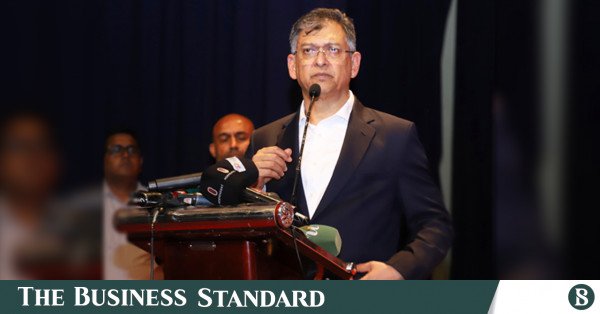
Home Minister Salahuddin Ahmed today (29 August) spoke at Bangladesh National Museum during a panel discussion on enforced disappearances and human rights. Photo : Collected
“>

Home Minister Salahuddin Ahmed today (29 August) spoke at Bangladesh National Museum during a panel discussion on enforced disappearances and human rights. Photo : Collected
The Home Minister Salahuddin Ahmed today (29 August) said that the proposed Enforced Disappearance Prevention and Redress Act 2026 will make it easier for victims of enforced disappearance to seek justice directly.
He said the proposed law would open a direct route to justice and redress through the courts, without forcing victims of enforced disappearance to go through lengthy and complicated procedures.
The minister made the remarks as the chief guest at a panel discussion and special photography exhibition titled ‘A panel discussion to make the disappeared appear: Law, Justice, Accountability and Human Rights,’ organised by human rights group Mayer Daak to mark the International Day of the Victims of Enforced Disappearances at the main auditorium of Bangladesh National Museum in Dhaka.

Highlighting various aspects of the proposed Enforced Disappearance Prevention and Redress Act 2026, the minister said the bill was placed before parliament on 27 August.
The proposed law provides punishments ranging from life imprisonment to, in certain cases, the death penalty, depending on the classification and severity of the offence, he said.
It also provides that if a person subjected to enforced disappearance remains missing for a long period, their heirs may, with court permission, obtain property rights after five years. The state would also provide compensation if the responsible party fails to do so, he said.
“The law is currently with the parliamentary committee, and there is an opportunity to incorporate any good suggestions,” the minister said.
He also said the National Human Rights Commission Act 2026 had been drafted in line with international standards and national needs.
On the alleged disappearance of Miraj Sheikh in Mongla, Bagerhat, Salahuddin Ahmed said joint forces’ operations in the Sundarbans and coastal areas had put pirates and forest robbers under pressure.
He said, “Operation Mangrove” and “Operation Sundarban” had weakened the groups, prompting them to attack a Coast Guard office, resulting in a case centred on the Coast Guard.
“However, there is information about conflicts among the pirate groups themselves over the Miraj Sheikh issue,” he said.
He added that an impartial investigation had found no evidence of involvement by any government force.
“Nevertheless, to maintain transparency over the incident, the government is prepared to form any impartial and independent inquiry commission, if necessary,” he said.
Assessing the country’s law and order situation during the current government’s six-month tenure, the minister said there had been no political persecution, extrajudicial killing or enforced disappearance during the period.
He said the government had taken special initiatives to turn the law enforcement agencies it inherited into professional forces.
Alongside efforts to boost morale and provide positive incentives, the government was also focusing on the “Reward and Punishment” policy, he said.
The minister added that the Cabinet had already approved a law to dissolve the Rapid Action Battalion (RAB) and establish a new elite force, the Special Response Battalion (SRB), based on accountability and transparency.
At the event, the minister recounted his own harrowing experience of enforced disappearance.
He said he was held for a prolonged period in a dark, damp 5-by-10-foot cell without ventilation and subjected to physical and mental torture, with every moment marked by the fear of death.
Despite suffering from various physical complications, he said he was denied even basic medical treatment and was eventually blindfolded and taken to Shillong in India.
As he had no valid documents, he said he fought a legal battle for nine and a half years in a case related to crossing an international border. He was later acquitted of all charges by an Indian court.
The minister expressed deep gratitude to the people of Bangladesh and brave students for what he described as liberating the country through the anti-fascism July mass uprising.
Earlier, the minister inaugurated a seven-day special photography exhibition on enforced disappearances and torture at the Nalinikanta Bhattasali Exhibition Gallery of Bangladesh National Museum.
The exhibition will run from 29 August to 5 September 2026.
About The Author