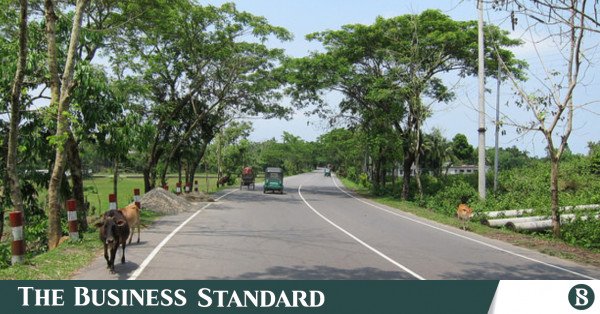
The mega project – Sasec Dhaka-Sylhet Corridor Road Development Project – was launched in 2021 with an estimated cost of Tk16,919 crore and is scheduled for implementation between January 2021 and December 2026
Photo: Collected
“>

Photo: Collected
Highlights
- Dhaka-Sylhet highway project achieved only 21% physical progress by April 2026.
- Land acquisition and utility relocation remain major implementation bottlenecks.
- Design revisions required due to outdated feasibility study and field changes.
- Weak soil, contractor finances and management slowed construction progress.
- Lengthy tender approvals delayed contracts by up to 19 months.
- IMED warns project completion deadline may be missed without urgent action.
A study by the Implementation Monitoring and Evaluation Division (IMED) has revealed significant delays and structural weaknesses in the implementation of the Dhaka-Sylhet highway project.
The mega project – Sasec Dhaka-Sylhet Corridor Road Development Project – was launched in 2021 with an estimated cost of Tk16,919 crore and is scheduled for implementation between January 2021 and December 2026.

According to the IMED report, despite nearly 89% of the project’s scheduled implementation period having elapsed, physical progress stood at only 21% as of April 2026. Among the major components, progress reached 11.50% for the main carriageway, 16.33% for service lanes, 31.14% for bridges and 58.79% for culverts.
Jointly financed by the Asian Development Bank (ADB) and the Bangladesh government, the project aims to upgrade the 209.328-kilometre highway from Kanchpur in Dhaka to Sylhet into a four-lane corridor, alongside the construction of service lanes, bridges, culverts and flyovers.
The study found that contractors have been unable to carry out work at the required pace because only 37.61% of the land acquisition and handover process has been completed, while the relocation of electricity and gas utility lines has progressed slowly. Relocation of Titas Gas pipelines has reached just 0.78%, while Jalalabad Gas pipeline relocation stands at 15.68%, making utility relocation one of the project’s biggest bottlenecks.
Infographic: TBS
“>

Infographic: TBS
The report also identified several other reasons for the delays, including the mismatch between the feasibility study conducted seven years ago and current ground realities, weak soil conditions beneath parts of the highway, lengthy tender evaluation and approval procedures, and contractors’ financial difficulties. The period from tender invitation to contract signing ranged from 11 to 19 months.
According to IMED, multiple administrative, technical and institutional challenges have prevented the project from achieving the expected level of progress.
The report noted that land acquisition has repeatedly been delayed due to staff shortages in district administration offices, frequent transfers of officials, land ownership disputes and objections over compensation. In many cases, changes in land classification and legal disputes have prolonged the handover process, preventing contractors from starting or expanding work.
Conversely, in several contract packages where sufficient land has already been handed over, progress has still been unsatisfactory. IMED attributed this to contractors’ weak financial capacity, poor site management and inadequate planning.
Another major reason for the delays has been the need to revise project designs. Because current conditions differ significantly from those envisaged in the original feasibility study, additional flyovers and underpasses have had to be incorporated, road alignments modified and drainage systems redesigned. Securing approvals for these revisions has consumed considerable time, while construction has had to be suspended temporarily in affected sections.
Weak subsoil conditions have emerged as another major challenge. In several sections, the ground’s low load-bearing capacity has required extensive ground improvement works, subgrade replacement and design revisions. These additional engineering processes and approval requirements have further delayed implementation.
Financial constraints faced by some contractors, shortages of construction materials and insufficient heavy machinery have also hampered progress. The report further highlighted weaknesses in on-site management and contractors’ failure to meet construction targets.
Administrative delays have likewise contributed significantly to the project’s slow implementation. It took between 11 and 19 months to complete the process from tender invitation to contract signing. Multi-layered approval procedures, weak inter-agency coordination and delays in decision-making have all slowed field-level implementation.
Adverse weather and severe traffic congestion have posed further obstacles. Construction is frequently suspended during the monsoon because of waterlogging, while heavy traffic on one of the country’s busiest highways has complicated the transportation of construction materials and equipment.
The study also noted that discrepancies between the original feasibility study and current field conditions have created substantial implementation challenges. Newly emerging technical issues have required additional surveys and design revisions, extending the project’s overall implementation timeline.
IMED warned that unless these problems are resolved quickly, completing the project within the scheduled timeframe will be difficult, delaying its anticipated economic benefits.
Tender delays cost the project valuable time
An analysis of the tender process for the project’s 13 contract packages found unusually lengthy delays from tender invitation to final contract signing across all lots.
According to the study, securing approvals from the Asian Development Bank (ADB) during tender evaluation consumed considerable time. Approval of Technical Bid Evaluation Reports (TBERs) took between 21 and 113 days, while approval of Financial Bid Evaluation Reports (FBERs) required 10 to 76 days. As a result, these two stages alone added between three and six-and-a-half months to some contracts.
Because of these delays, bid validity periods had to be extended multiple times. In some cases, bid validity was prolonged from 240 days to 345 days, which the report warned could discourage international contractors and reduce competitive bidding.
About The Author