The Jamaat leader alleged a lack of transparency in parts of the electoral process
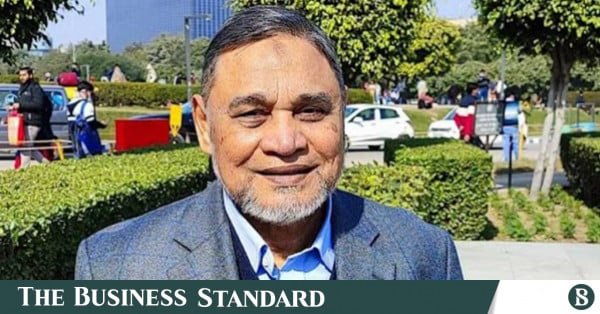
AMM Nasir Uddin. File photo: Collected.
“>

AMM Nasir Uddin. File photo: Collected.
Chief Election Commissioner (CEC) AMM Nasir Uddin today (18 May) called on political parties to cooperate in ensuring “bloodless” local government elections, warning that violence and internal conflicts have marred such polls in the past.
Speaking at the inauguration ceremony of the newly elected committee and reception for the outgoing committee of the Reporters’ Forum for Election and Democracy (RFED) at the Election Training Institute in Agargaon, the CEC said political understanding would be essential to hold peaceful and credible local elections.
“We want the cooperation of the parties. If necessary, sit down among yourselves. Reach a settlement – we do not want to see bloodshed. We want a bloodless local government election.”

Highlighting the interim government’s support during the 13th parliamentary election, he said local government elections are approaching and necessary reforms to laws and regulations are underway.
He said concerns had already been raised by leaders of two political parties and stressed that no election could be conducted successfully without political cooperation.
Expressing concern over violence during local polls, the CEC said many murders had occurred in previous elections and contests often became highly competitive, even within families.
Referring to clashes in Brahmanbaria’s Sarail upazila, he said, “Political parties should have an understanding among themselves that they will not engage in any kind of trouble in local elections.”
The CEC also expressed concern over reports of political parties announcing candidates for local elections despite the absence of party symbols.
“Although party symbols will not be used in the local government polls, I am seeing in the media that various parties are already announcing nominations. This is a concern for me; it has brought a fold to my forehead. If it remained independent, there would be no party ownership, and there would be no internal party chaos. Therefore, I believe the parties should sit together and settle it; our support will be there.”
Nasir Uddin said the Election Commission wanted to establish a lasting culture of fair elections in the country.
“One election was good. That does not mean elections in Bangladesh will always be good. We want to initiate a culture of good elections. Not just one, but all elections will be good. So that we can build a good culture of elections, the parties should also sit together. We want, in a true sense, a 100% good local election.”
Government ministers and advisers have recently indicated that local government elections could be held by the end of this year.
Regarding the possible schedule, the CEC said the date for the polls had not yet been finalised.
“The date for the local elections has not been finalised yet. Since the election will not be held with party symbols, we need to reform some rules and regulations. After finishing work on this, we will sit with the government. The government wants it – they have announced it will start within this year. This takes time.”
Chief Whip Mia Nuruddin Ahmed Apu, Jamaat Assistant Secretary General AHM Hamidur Rahman Azad, NCP leader Nasiruddin Patwary, and Broadcast Journalist Center Chairman Fahim Ahmed, among others, also spoke at the event.
Jamaat leader Hamidur said the election could not be considered fully satisfactory despite the participation of many political parties.
“Although many parties participated in the vote, broadly speaking, this election cannot be called entirely satisfactory,” he said.
The Jamaat leader alleged a lack of transparency in parts of the electoral process.
“Everything is fine on the surface, but a mess underneath. Regarding the work done inside, I have said before – if there is a ghost in the mustard seed, who will drive the ghost away? Within the process, that transparency was not maintained,” he said.
Referring to allegations of election engineering raised by NCP leaders, he said, “How engineering was done – taking the vote itself is not a fair election. For a fair election, there must be a fairly declared result. There is a matter of transparency here.”
“Some qualitative development has taken place. But I am sorry to say that, broadly, we cannot call it a fair election,” he added.
At the programme, the committee elected on 1 March, led by RFED President Kazi Emad Uddin Jebel and General Secretary Ekram-ud-Daula, formally assumed responsibility.
About The Author