Earlier, hatchlings of the same species were also born in 2023 and 2025.
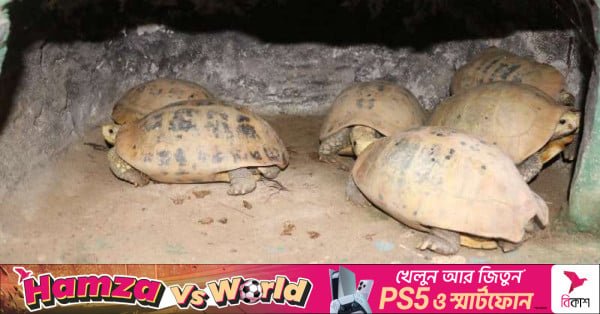
Hatchlings of the critically endangered elongated tortoise. Photo: Collected
“>

Hatchlings of the critically endangered elongated tortoise. Photo: Collected
Chattogram Zoo has reported the successful birth of five hatchlings of the critically endangered elongated tortoise, known locally as the yellow hill tortoise.
The hatchlings emerged on 6 June, according to zoo authorities.
Zoo keepers and officials said that significant progress in breeding this species began after the introduction of an improved and expanded habitat, enriched environmental conditions, and modern care systems in 2022.

Earlier, hatchlings of the same species were also born in 2023 and 2025.
With the latest five additions, the total number of elongated tortoises at Chattogram Zoo now stands at 16.
Over the past four years, the population has doubled from eight to 16, marking nearly 100% growth. Officials say this reflects a strong conservation outcome driven by scientific management and breeding initiatives.
Experts note that this is one of the most important examples of successful conservation breeding of a critically endangered species in the country.
They believe the achievement will provide a strong foundation for future conservation, monitoring, and possible reintroduction efforts.
Chattogram Zoo has been carrying out conservation and breeding programmes for various endangered and near-extinct wildlife species.
As part of ongoing efforts aimed at eventual reintroduction into natural habitats, the elongated tortoise has now been added to its list of breeding successes.
The elongated tortoise is globally recognised as a critically endangered species.
Experts say its population has declined significantly due to habitat loss, illegal hunting, and various environmental pressures. As a result, conservation breeding efforts are considered crucial for its recovery.
Chattogram Zoo Curator Dr Shahadat Hossain Suvo told The Business Standard that the latest hatchlings are part of the zoo’s continuing success in breeding the species.
“Earlier hatchlings were also born in 2023 and 2025. This time, out of seven eggs laid, five successfully hatched, while two did not produce hatchlings,” he said.
He added that the adult tortoises were already housed in the zoo. “Initially there were eight tortoises. After expanding their habitat and improving environmental conditions, regular breeding began.”
Another curator, Shakhawat Hossain, said the population has doubled over the past four years through breeding.
“Currently, 29 staff members collectively take care of the animals. There is no dedicated specialised team for them,” he said.
The zoo authorities said the tortoises are regularly fed fresh fruits and green vegetables, while their enclosures are maintained to mimic natural conditions.
They added that the species is considered critically endangered due to its severe population decline of around 80–90%.
Previously, the zoo observed that the species had not laid eggs for eight years after 2013. The group of eight tortoises—four males and four females—had been kept in a small 22-square-foot enclosure.
According to officials, the lack of proper hiding spaces and secure nesting areas had hindered reproduction.
After 2022, a larger, more natural habitat was created, allowing quiet and safe nesting conditions. Officials believe the improved environment helped restore breeding activity.
Experts attribute the decline of the species to habitat loss, environmental stress, and illegal hunting, which have collectively pushed it into the critically endangered category.
About The Author