Months after the cease-fire, Gaza’s economy remains strangled for Palestinians like Saleh’s family — in large part because of restrictions imposed by Israel. Early in the war, the Israeli government clamped down on trade to Gaza, selecting only a handful of Palestinian businesses to receive import permits. That decision severely limited competition; it led to a trade system in which merchants pay layers of steep fees to the chosen businesses for every truck that enters. The function of the fees, and who ultimately pockets them, is often unclear to those paying.
“By the time it reaches Gaza, the cost is huge,” said Ruwa Jabr, chief executive of PalTrade, a Palestinian nonprofit. “A shipment that should cost 100 shekels ends up costing 20,000 shekels or more.” Israel’s long list of banned or restricted imports — including basic items like poultry, batteries and hygiene products — has also helped create a raging black market of smuggled goods sold at sky-high prices. A spokesman for COGAT, the Israeli security agency responsible for coordinating aid deliveries to Gaza, told The Times that the restrictions were necessary to prevent Hamas and other “terrorist elements” from procuring goods or profiting from trade.
Merchants trying to import food have to navigate a process full of brokers, fee-charging middlemen and black-market profiteers, some of whom are in or have connections to the Israeli security services. Beginning in 2025, a shadowy figure with alleged ties to Israeli intelligence, who went by the code name Abu Basel, directed the transport of banned goods worth tens of millions of shekels through multiple border crossings, according to interviews with Gazan traders and an Israeli indictment of his associate Raghib Salim, obtained by The Times and first reported by Haaretz. The indictment details a sophisticated smuggling operation that brought in contraband like cigarettes and restricted goods like concrete, a bulldozer, beef and chicken. Abu Basel’s nationality is not specified, but the indictment describes him as having “numerous connections within the Israeli police” and warehousing goods in the Israeli settlement of Beit HaArava in the West Bank.
The opaque wartime economy has had dire consequences for ordinary Gazans, according to documents and interviews with more than 80 truckers, merchants, brokers, business leaders, aid executives and former government officials. One kilogram of flour, enough to bake a couple of loaves of bread, used to cost about 50 cents in Gaza. During the war, it rose at least as high as $27. One kilo of eggs, once about $2.50, went up to $130. Cooking gas that had been $2 per kilogram climbed to $190. “Israel has used its control to create scarcity,” said Tania Hary, executive director of the Israeli human rights organization Gisha. “I see that as a concerted strategy to keep the population dependent.”
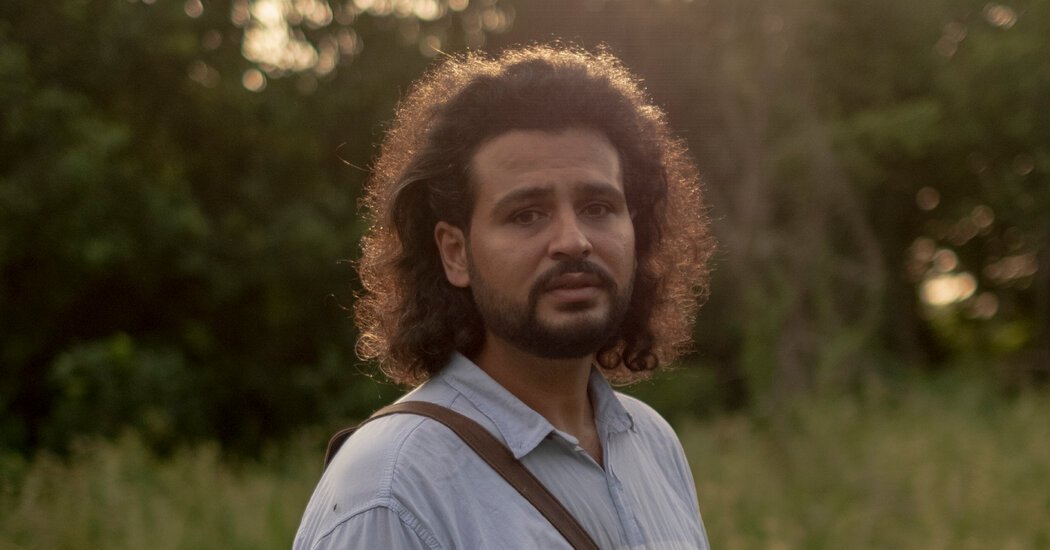
Money sent from family members abroad is often the only way many Gazans can afford food and other essential items. In his London apartment, Saleh sifted through bank statements and transfers, WhatsApp messages and photos and videos on his phone to document his family’s experience for The Times, as well as the financial toll on him. Over the last two years, he has emptied his savings, borrowed money from friends and started a GoFundMe campaign, but it hasn’t been enough. He is more than $125,000 in debt. Last year he quit his job as a server in a restaurant to focus on helping his family survive, estimating that he could earn more by raising money full time on their behalf.
Each morning, Saleh communicates with his family in Gaza and monitors the war. Gabriella Demczuk for The New York Times
Every morning, Saleh wakes up and sits down at his computer. He loads four screens so he can monitor the news and social media for updates while also soliciting donations and sending a stream of emails to foreign embassies and aid groups.
His phone buzzes.
What’s your plan today?
Saleh
His younger brother Rashad updates Saleh on their parents’ health and how much money the family has left. He asks when Saleh can send more.
Saleh’s brother Rashad searching for food for his family in Khan Younis on Gaza’s southern coast in 2025.
Before the Oct. 7 War
Saleh grew up with his seven younger siblings in a tiny house in Rafah, Gaza’s southernmost city. His father, Kamal, worked as an administrator in the intelligence services under the Palestinian Authority. His mother, Reem, tended to their home and the children. As Saleh grew older, his grandfather told him stories of Bayt Daras, the village where he used to live, which was emptied and demolished by Zionist paramilitary forces in 1948. Saleh remembers his grandfather showing him a piece of paper, a deed for the land that once belonged to him.
Of all his siblings, Saleh was closest to his sister Shaimaa, two years his junior. Saleh was 10 when Shaimaa was killed near their house by an Israeli tank, as Israel and Hamas traded fire during the Second Intifada. He watched as their father picked her up, still in her pajamas, and ran to the hospital. Hours later, Kamal returned, his clothing soaked in blood. For weeks, Saleh felt nothing. He found himself unable to cry, until Ramadan, when the family sat down for Iftar and he saw Shaimaa’s empty chair. Shortly after, he had a dream — the only one he remembers from his childhood. He was riding a horse, and stretched before him was an empty Rafah.
Kamal Abu Shamala and his wife, Reem, with their children in the early 2000s. From left: Saleh, Rashad, Raji, AbdulRahman and Shaimaa.
In 2007, five years after Shaimaa’s death, Hamas took control of Gaza by force. Saleh participated in protests against Hamas, demanding free and fair elections. He remembers his father being taken in for interrogations by Hamas at least three times. In 2021, after Saleh’s apartment was destroyed in an Israeli airstrike, he decided he had to get out of Gaza. Then 29, he applied to a master’s program at Exeter University in Britain and secured an exit visa. Two of his younger brothers, Rashad and Raji, watched him prepare to leave with a mixture of exhilaration and yearning.
The following year, Saleh arrived in London. He knew very few people, and at first he found his life isolating and empty. He felt as though the British winter had frozen his mind. Even the trees in London looked foreign. Depressed and struggling to overcome the language barrier, Saleh dropped out of his master’s program and found a job at a Palestinian restaurant. He spent time with friends who reminded him of home, taking the train to Cambridge for dinners with one of his former professors at the University of Palestine who now worked with a major tech company. They played rounds of Trex, a card game from the Levant that Saleh’s family used to play.
The Abu Shamala family’s home in Rafah earlier this year.
Over time, Saleh felt more hopeful. He made friends and was granted asylum in the United Kingdom, in part based on his earlier participation in protests against Hamas. On Oct. 6, 2023, he posted on Facebook marking “one year in the land of fog.”
The road this time is one way only, no return. You will survive, stubborn man, but you will not feel the sense of these roads again.

The next morning, he woke up to the news that Hamas militants had crossed the border into Israel, killing about 1,200 people and taking some 250 hostages.
Is anyone in Gaza sleeping?
They won’t leave one stone standing.
Rashad
Then the bombs started to fall.
At first, Saleh couldn’t reach his family. He called over and over, growing so upset that he threw his phone at the wall, breaking it. Finally, after three days, Rashad called. He told Saleh that the family was gathering their passports, hoping they could cross the Egyptian border.
In Saleh’s mind, there were only two things for him to do: Get money to his family and get them out. At first, Saleh could transfer money to Rashad directly, from his own Bank of Palestine account to his brother’s. But the banking system in Gaza was collapsing and A.T.M.s were running out of cash. Through a friend, Saleh heard about an Egyptian middleman in Cairo who charged a 28 percent fee to facilitate wire transfers.
In January, he wired $4,000 to the middleman. Once it was received, the middleman told a cash broker in Gaza to give the money to Rashad. Saleh would repeat this money-transfer process dozens of times over the course of the war. The fees charged by middlemen and brokers peaked at 60 percent last August, meaning that every $100 he sent became $40 that his family received. Rashad used some of the money from one of the early transfers to stock up on supplies, rent a van and prepare the family to move from Rafah to Khan Younis, after the Israeli military ordered people to evacuate the city ahead of an offensive.
Rashad photographed the aftermath of Israeli airstrikes near his family’s home in Rafah in October 2023.
By early 2024, as Israel’s bombing campaign mounted, three-quarters of the Gaza population was displaced, and the death toll climbed to more than 30,000, according to the Gaza Ministry of Health, which does not distinguish between civilians and combatants. Saleh transferred money to Rashad over and over, burning through his savings. They began a routine of starting every morning by calling each other to divvy up the day’s tasks, like researching ways to evacuate the family and calling friends to borrow money. More and more it felt as if they were two halves of one mind. “He notices details others might miss,” Saleh said of Rashad. “There is something very gentle in the way he pays attention.”
Saleh’s family evacuated Rafah, moving in May 2024 to the Al-Mawasi displacement camp near Khan Younis, on Gaza’s southern coast. It was an expanse of cloth tents nine miles long. Because Saleh’s parents had separated five years earlier, Saleh’s siblings had to divide the responsibilities of caring for their parents. Rashad and his sisters tended to their father, who has multiple sclerosis and a pacemaker. Raji took over the care of their mother. They tried to get by on the canned foods and flour they brought from Rafah, because food was becoming scarce and increasingly expensive.
View from the makeshift tent where Reem sought shelter after being displaced from her home in Rafah in September 2024.
Brokers, Middlemen and Profiteers
Before the war, Gaza was already under Israeli blockade, its commercial trade system restricted. Israel had long banned and restricted items that it classified as “dual use” — goods that it said could be repurposed by militants — which included certain electronics and heavy equipment but also things like wheelbarrows and some kinds of tents. Still, thousands of trucks entered the enclave each month, carrying goods from a wide array of merchants.
The Israeli government shut down trade completely at the start of the war, allowing it to resume five weeks later with far tighter controls. The number of commercial truckloads entering Gaza per business day plummeted to 14 in the early stages of the war from an average of 400 in the months before Oct. 7.
The few Palestinian businesses chosen by Israel to receive import permits were owned mostly by well-connected Gazan merchants, some living in Egypt. “A limited number of local merchants were approved by the defense establishment,” the COGAT spokesman told The Times, “subject to a defined set of criteria and a rigorous security screening process.” Many Gazan merchants criticized the decision, claiming the businessmen were chosen because of their close relationships with COGAT rather than their relevant expertise. The lack of competition allowed those businesses to raise prices and charge high fees, sometimes paid using cryptocurrency. Merchants say they often don’t know the purpose of the fees or whether the businesses pass them on to other people or entities.
One of them described paying not only to import but also to transport goods within Gaza. Nahed Shehaibar, the head of the Gaza private transport association, said the layers of fees paid to the chosen Gazan intermediaries quadrupled the cost of moving a load of citrus fruit from north to south Gaza. “The cost of the load itself is 40,000 shekels, about $15,000,” he said. “But we pay $70,000 to $100,000 on top of it just to pass.” For clothing, Shehaibar said payments were regularly in the range of $300,000 to $400,000. Shipments of sugar, which were particularly in demand, could have fees of up to one million shekels, roughly $300,000. “The scarcer it is in Gaza, the higher the coordination fee,” said another Gazan merchant who asked to remain anonymous for his safety. In March 2026, the head of Gaza’s chamber of commerce released figures indicating that total fees paid since the start of the war had surpassed $1.5 billion.
In addition to these fees, merchants also paid hefty tolls to the companies that control the two main crossings into Gaza: Kerem Shalom, on the border with Israel; and Rafah, on the border with Egypt. Contractors on both sides of the Kerem Shalom crossing work for the former Shin Bet official Nissim Jan, who has built what Haaretz once called a “little empire” in logistics and real estate. Palestinian merchants have long complained that the fees charged by Jan’s company and its contractors exceed the cost of the services they provide, while the Israeli human rights group Gisha has criticized the lack of transparency around border operations. (Jan did not respond to a request for comment.)
The line between inflated, legal payments and bribes can be hard for merchants to discern, because some middlemen claim to operate with the official or tacit approval of the Israeli security services. That became clear in early 2026, when Israeli prosecutors indicted a smuggling ring accused of moving illicit goods through Kerem Shalom and another crossing. The group included Bezalel Zini, the brother of the head of the Shin Bet, and Israeli military personnel. Zini was accused of using his position as an Israeli military reservist and a commander of Uriah Force, a rogue unit that reportedly conducted mass demolition in Gaza, to bring in cigarettes and tobacco by pretending they were for “security needs.” He faces charges including aiding the enemy in wartime, which carries a maximum of life in prison or the death penalty. (Lawyers for Zini have said he denies the charges but did not respond to a request for further comment.)
Months later, the indictments of the anonymous security official and Abu Basel’s associate revealed even deeper coordination between smugglers and members of the Israeli security services. Avigdor Feldman, the lawyer representing the security official, said that his client worked with the secret service for 20 years, describing him as “quite high in command,” and insisted he would prove his innocence in court. The official is accused of accepting bribes totaling nearly $3 million to transport cigarettes, phones, batteries and medical equipment into Gaza, according to the indictment obtained by The Times. “The respondents chose to use the war as a tool with which to enrich themselves and obtain personal profit,” it read.
Profit may not have been the only goal for Abu Basel, according to a forthcoming report from the Organized Crime and Corruption Reporting Project, an investigative nonprofit based in Amsterdam. The O.C.C.R.P. interviewed Gazan traders who say they participated in Abu Basel’s scheme and who claim that it was part of a security operation to obtain information about Israeli hostages, living and dead, who were still in Gaza. Nashef Darwish, the lawyer representing Abu Basel’s associate, said he also believed, based on what he has been told by sources familiar with the smuggling operations, that in some cases, goods were probably being traded for intelligence about hostages and hostages’ remains. “There are a lot of intelligence people who are involved,” he said.
Abu Basel’s identity remains unknown, but sources close to the operation told the O.C.C.R.P. that he is in the Shin Bet, Israel’s domestic intelligence agency. The indictment of his associate alleges that Abu Basel maintained a striking degree of influence over procedures at the border: He decided which trucks should be used and the timing of their entry, moving goods under the guise of an organization called the Palestinian Immigrant. One night in December 2025, according to the indictment, Israeli police arrived at a warehouse where Abu Basel’s associate was supervising the loading of trucks; after Abu Basel spoke to one of the police officers on the phone, they released the smugglers and left the warehouse. The O.C.C.R.P. report claims that Abu Basel’s operation enabled Hamas to levy a 15 to 20 percent tax on smuggled tobacco shipments. (The Israeli government did not respond to questions about the O.C.C.R.P.’s findings.)
The Business of Escape
In the markets, Saleh’s brothers saw people selling cigarettes and iPhones, restricted goods they knew that merchants couldn’t legally import. Near Khan Younis, merchants set up makeshift stalls where they sold fruits, yogurts and vegetables, often bought and then resold for as much as 10 times their cost before the war. Saleh began borrowing money so he could send his family the amount they needed. On Instagram, Rashad posted a picture of a friend holding up a bag of coffee, with a dark joke as the caption.
RashadMore expensive and harder to get than heroin.
In Britain, Saleh’s life took on a surreal quality. He barely slept, often waking in the middle of the night flooded with grief. He found that in the morning, his teeth ached because he was grinding them during the few hours he had managed to drift off. He was losing his focus, needing to prepare for two hours just to leave the house; a few times, he accidentally left the oven on. He skipped doctor’s appointments, canceling at the last moment because he was afraid a family member would call while he was without service on public transit.
Every routine activity — visiting the community garden, going grocery shopping — was laced with guilt. He started a WhatsApp chat with friends in London who had family in Gaza, and they traded news about Israeli strikes, calling the chat احا, which means “What the Hell.” In February 2024, he started a GoFundMe, posting a photo of his father and siblings, their arms around one another as they stood by the grape vine in front of their old Rafah home. Many of his friends were financially supporting their families in Gaza or Cairo — one of whom would eventually take on $90,000 in debt. Another asked him how to find middlemen who could get cash to his relatives.
Saleh on the balcony of the apartment he shares in London in May. Gabriella Demczuk for The New York Times
More than anything, Saleh was focused on figuring out how to help his family escape. Friends back home in Gaza sent him the Facebook page of an Egyptian business called Hala that evacuated people from Gaza for a price, with the approval of the Egyptian government. Hala was part of a portfolio of businesses owned by the Egyptian tycoon Ibrahim al-Organi, a close ally of President Abdel Fattah el-Sisi; his company Abnaa Sinai helped control the Rafah border crossing.
Hala charged about $5,000 per evacuation. The company required that anyone trying to purchase one for a family member come in person to their office in Cairo and pay in cash, using bills that were issued in or after 2013. Once the payment was made, the company added the evacuee to the list at the Rafah border crossing.
In the first eight months of the war, about 100,000 people fled Gaza. While some people left with the help of international organizations or foreign governments, for many the only route of escape was through Hala. It seemed to Saleh that it was mostly those from wealthy or well-connected families who were able to get out. Reporting in The Sunday Times of London found that by April 2024, Hala had evacuated more than 20,000 people, bringing in as much as $88 million in revenue. (Hala did not respond to a request for comment.)
By May, Saleh had raised enough money between his GoFundMe and loans from friends to evacuate his whole family. The Rafah border crossing had recently closed, but Saleh and his family members hoped it would quickly reopen. They gathered their passports and each filled one backpack with clothing and photos, preparing for the 20-minute drive to the border crossing. Saleh flew to Cairo with $37,500. Hala gave him a stamped confirmation and told him to wait for updates on when his family’s names would appear on the company’s approved list. After leaving the office, he went to a dentist to treat the pain in his jaw. What he felt wasn’t quite relief but fragile hope.
But the border didn’t reopen, and Hala halted its evacuation business. Saleh waited to ask for his money back, hoping the company would eventually resume operations. (He eventually requested and received a refund two years later.)
In the meantime, he tried every other method he could think of to get his family out. He spent all day emailing embassies and NGOs. He sent messages to a contact at the World Health Organization: “All the authorities I reached till now say everything is in your hands,” Saleh wrote. “Help this father struggling daily pls.”
Kamal recovering from a stroke in 2025. The hospital continued to come under Israeli attack.
Saleh’s friends on WhatsApp talked about other organizations, like Gaza Life and Al-Majd Europe, which were promising to evacuate people for a price. Al-Majd Europe, an organization with ties to an Israeli-Estonian businessman that described itself as having a humanitarian mission, charged Gazans around $1,800 for safe passage out, but many who paid the fee in the summer of 2025 didn’t hear anything more for months. Abruptly, in October and November, hundreds were flown out from Ramon airport in southern Israel through Kenya to Johannesburg. Gaza Life advertised to vulnerable Gazans on Facebook using what appeared to be A.I.-generated videos. Saleh knew desperate friends who had given them money and never heard from them again. (Al-Majd did not respond to a request for comment. Gaza Life appeared to have shut down and could not be reached for comment.)
The High Cost of Illness
In November 2024, while the family was living in tents in the Al-Mawasi displacement camp, Saleh’s father, Kamal, suffered a suspected stroke. He was taken to Nasser Medical Complex, one of the few hospitals still operating in Khan Younis. The doctors there wrote out a list of the medications he needed to stimulate blood circulation and get oxygen to his brain, all of which Saleh and Rashad knew would be difficult and costly to track down. Even basic painkillers had quadrupled in price.
For much of the war, Gazans could access medical supplies only through limited humanitarian aid shipments or black-market channels. Medical resources were dwindling, with the W.H.O. reporting that nearly half of 622 essential medications were completely unavailable by May 2025. Humanitarian aid groups bringing in medical supplies had to get approval in advance from Israeli authorities, who wanted to ensure items couldn’t be repurposed by Hamas. The process could take months. Further delays were common, as border authorities screened each truck before entry. Aid groups reported temperature-controlled medicines languishing in trucks for weeks.
Rashad scoured private pharmacies for medications their father needed, like aspirin and blood thinners. He and Saleh traded messages about how to find them. Saleh made calls to friends in Gaza searching for the names of pharmacies that seemed to still be open.
Do you know Karaza Pharmacy?
Saleh
Rashad explained that the pharmacy had shut down.
Kamal tried to sleep through the pain, but in May 2025 he had a series of strokes and couldn’t walk or talk, conveying his thoughts by trying to write notes on paper or on his hand. He needed a new battery for his pacemaker and a cardiac catheterization, but none of Saleh’s siblings knew how he’d be able to get the procedure at the hospital, which was swamped with patients.
Days after his stroke, while Kamal was lying in a bed in the hospital, Israeli forces bombed its surgical department. Two people were killed, and parts of the building were destroyed, mechanical ventilators left standing over piles of debris. (The Israeli military has said the bombing killed multiple people it characterized as terrorists.)
Raji assisting his father, Kamal, in the hospital in May 2025.
Kamal had to leave the hospital the next morning, so Rashad brought him and his wheelchair back to the tent in Al-Mawasi. He needed a mix of medications — blood thinners, statins, treatment for vertigo — that cost between $300–$400 a month. Rashad and Raji took over their father’s care, splitting into shifts so they could watch him and help him use the toilet. Rashad bought tomatoes for him to eat because he loved them, even though he paid as much as 10 times more than before the war.
The last known photo of Raji Abu Shamala before he was killed in an Israeli airstrike in June 2025.
In June 2025, Saleh managed to get Kamal on the W.H.O.’s medical evacuation list, which required approval from the Palestinian Health Authority, but he never made it to the top.
That month, Rashad was at the hospital filling out forms for his father while 27-year-old Raji built a fire for their mother to prepare lunch. As Raji was lighting the fire, he was hit by an Israeli strike in front of his mother.
Saleh, who had been up until 4 a.m., was asleep with his phone under his pillow when Rashad called with the news.
“We lost Raji,” Rashad said. (An Israeli military spokesman confirmed that Israeli forces were conducting an offensive during the month of Raji’s death. “The I.D.F. strikes on military targets comply with international law,” he wrote, “including feasible precautions and an assessment that expected incidental civilian harm is not excessive relative to the anticipated military advantage.”)
Saleh had missed a phone call from Raji the day before. “Just once I ignored a call from Raji,” he said, “maybe the only call I didn’t answer in two years.”
Rashad paid 2,000 shekels ($570) for his brother’s burial plot, more than double what it would have cost before the war. He sent Saleh a WhatsApp message with a picture and a location pin. “May God have mercy on him,” Rashad wrote. Saleh looked at the photos of Raji’s burial alone in his apartment.
After Raji died, Saleh barely left his flat. On the rare occasions he went out, he found himself by the Thames River, thinking of the Arabic expression “al-mutanaffas al-wahid,” which means “the only remaining breathing space.” Their mother, Reem, developed tremors throughout her body. Shaking and delirious, she wailed through the nights. They searched for medicine, anything that could soothe her pain. But the rest of them had to keep going, focusing on finding food, gas, solar, anything they needed to survive. “A person doesn’t even have time to grieve,” Rashad said. “There is no time for sorrow.”
Saleh regularly takes walks through his neighborhood park in London, a routine that has brought him some sense of comfort since the war in Gaza began. Gabriella Demczuk for The New York Times
Privatizing the Aid System
In March 2025, Prime Minister Benjamin Netanyahu of Israel allowed a temporary cease-fire deal to expire and announced a total blockade on all humanitarian aid and commercial goods, a move he calculated would help him stay in power.
Hunger spread across Gaza. Saleh’s siblings ground any grain or lentil they could find to make bread. On good days, Rashad was able to buy one kilo of flour, then made bread and carefully rationed out portions to each of his siblings. The blockade, compounded by mass displacement and the destruction of farms and markets, would result in what the head of the W.H.O. called “man-made” mass starvation.
In April, days before the World Food Program announced it had run out of food in Gaza, President Trump told Netanyahu that aid to Gaza must continue. The next month, the Gaza Humanitarian Foundation, a privatized aid enterprise, announced that it had approval from Israel to begin operations. The United States pledged $30 million in funding. The Israeli media reported that Israel secretly funneled hundreds of millions of dollars to the foundation, ostensibly to avoid the ire of Netanyahu’s right-wing base. (The Israeli government has denied the report.)
Reema Abu Shamala in what remains of the family’s neighborhood in Rafah during a cease-fire in January 2025.
When Saleh made meals in his sunlit kitchen, he felt a wave of guilt, thinking about all the ingredients he could easily assemble: meat from the Turkish shop, diced tomatoes and onions from the market for a stew. Saleh’s sister, Reema, told him she finally opened the small tin of baby cereal powder she had brought in her backpack all the way from Rafah, spreading it on bread and savoring the tinge of sweetness.
Even when the G.H.F. began operating, food stayed extremely costly, partly because the amount of aid was inadequate and the distribution centers were dangerous. In June, prices in Gaza were some of the highest they had been — chickpeas that used to cost 5 shekels were now 50 shekels, and potatoes that used to cost 3 shekels were now 100.
That month, days before U.S. funding was awarded, officials at the United States Agency for International Development raised concerns in an internal memo that the G.H.F. hadn’t documented their plans for keeping Palestinians safe while administering aid; the memo also noted the lack of transparent funding or proper safeguards against fraud and abuse. A State Department official wrote in an email obtained by The Times that humanitarian aid groups in Gaza warned that the G.H.F.’s distribution model would continue to “result in mass-casualty incidents.”
Where the U.N. had previously operated hundreds of distribution sites, the G.H.F. now oversaw only four, which opened at sporadic times, sometimes for less than 10 minutes. Crowds were ushered through narrow lanes lined with high metal fencing, while the rest awaited their turn at the barriers erected around the perimeter. When the crowd was chaotic, Israeli soldiers fired what the military described as warning shots. According to the U.N., nearly 1,000 people died in the vicinity of these sites, most of them killed by Israeli forces. (The Israeli military spokesman said the troops responded when they were endangered. “Forces repeatedly identified movements toward them,” he wrote, “at times involving individuals assessed as carrying weapons.”)
Rashad only made it near one of the G.H.F. aid-distribution areas in Rafah once. He needed flour for the family, following a period when they had only been able to get flour that others were reselling at crushing prices. Hordes of people, many of them young children, were lining up to make purchases. About half a mile from the distribution site, at a makeshift market, Rashad says he saw gunfire erupt near the crowds heading south. It appeared to him that the gunfire was coming from the direction where Israeli military vehicles were stationed.
Rashad was near a young boy and his father, who hid behind a wall, taking cover. The boy peered around the side and was shot in the head. The sound of the bullet hitting the boy’s skull reminded Rashad of the splitting of a watermelon. On the phone with Saleh, they agreed he would never go back. (The Israeli military spokesman was unable to comment on the specifics of this incident, but said that the military was aware of reports of casualties near the distribution sites. “The mere existence of reported casualties,” he wrote, “does not, by itself, establish the circumstances of death, determine responsibility or indicate that all those affected were uninvolved civilians.”)
After the Cease-Fire
Last July, Rashad found an apartment for his father and siblings in Khan Younis, a small home that had cracks in the walls but was otherwise intact. More than 80 percent of Gaza’s structures were damaged or destroyed during the war, so finding a home felt like a small miracle. Saleh’s mother stayed in her sister’s tent in Al-Mawasi; with her son Raji gone, she needed someone to look after her.
An apartment Rashad found for his father and siblings in Khan Younis.
In the fall, a fragile cease-fire took hold in Gaza. The bombing slowed but did not stop. The G.H.F. shut down after months of outcry about the violence at its sites, and Israel moved to allow more aid into Gaza. Israel also said that it was taking steps to open up the commercial trade system. The government had already expanded the number of Gazan businesses allowed to import goods to at least a dozen. But it issued a set of new rules in late 2025 that effectively limited market participation to a small number of Israeli suppliers. In addition to paying fees to the chosen Gazan businesses, some merchants in Israel and Gaza said they now had to pay fees to large Israeli businesses that acted as intermediaries.
Throughout the war, Israel emphasized that it tightly controlled Gaza’s economy and restricted aid for security reasons. But the recent black-market indictments have revealed that some people in and close to the Israel intelligence services seem to have used their control over the borders for profit. This revelation has incited backlash on both the right and the left in Israel; people appalled by wartime profiteering have accused the participants of “treason.” One lawyer for those involved in smuggling said he believed there may be more indictments to come.
While the national accounting begins, Saleh continues to worry about his family’s survival. Food availability has increased and prices have come down, but the cost of living remains high. During the height of the starvation, Saleh estimates that he was sending more than $10,000 a month to his family; now he sends about $2,500. He is anxious about how to begin to address his mounting debt.
Sometimes, Saleh thinks back to his university days, when he built a robot that could solve mazes using an algorithm he designed to detect black and white lines. He liked how the robot, with a simple directive, could navigate through winding paths and escape dead ends. Now, every day, he navigates a labyrinth of logistics on behalf of his family, searching for a way through. When he looks in the mirror, he sees how two years of war have altered him. “I can understand who it is standing in front of me, but the face has changed totally,” Saleh said.
There is a spot near Saleh’s apartment that reminds him of home — a community garden, where quinces and pomegranates grow. Before the war, he sometimes went there and pruned a grape vine woven through a trellis, like the one his father taught him how to tend outside his home in Rafah. “This tree invites — not an obligation, but a kind of relation with the land,” Saleh said.
Saleh tends to a grape vine in his community garden in London in May. Gabriella Demczuk for The New York Times
Saleh still worries about Rashad’s depression, unable to properly grieve Raji’s death. Their father’s condition has deteriorated: A kidney infection kept him in bed for a period, and the shadow of his stroke has returned, his speech garbled. Since Raji’s death, Kamal is focused on the idea of creating new life, encouraging Saleh and his brothers to start families. But Saleh struggles to think beyond the day’s needs.
At night, he sometimes listens to an old voice note on his phone. It’s Raji, riffing on lines from their favorite movies: “We don’t want politics — we want kebab!” Raji laughs, adding: “This country — what you see from above isn’t what you see from below.”
About The Author