Bangladesh’s apparel exports to the EU fell by 18.9% during January–May, significantly steeper than the declines seen in China (4.20%), Vietnam (1.51%), India (13.33%), and Türkiye (15.66%).
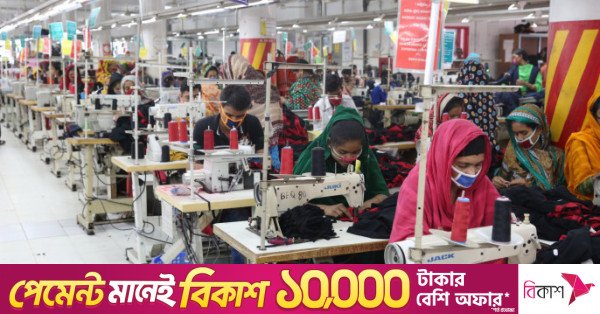
Workers at a readymade garment factory. File photo: TBS
“>

Workers at a readymade garment factory. File photo: TBS
New Eurostat data show Bangladesh’s apparel exports to the European Union, the country’s biggest market, fell by 18.9% during January-May, significantly steeper than the EU’s overall import decline of about 10%.
Besides, Bangladesh’s share of total EU apparel imports declined to 21.5% from 23.9% a year earlier.
Among Bangladesh’s competitors, imports from China fell by 4.20%, Vietnam 1.51%, India 13.33%, and Türkiye 15.66%, all outperforming Bangladesh during the period. Cambodia’s exports declined by 10.77%, while Pakistan’s shipments were down 17.01%.

Mohammad Hatem, president of the Bangladesh Knitwear Manufacturers and Exporters Association (BKMEA), said international buyers are gradually adjusting their sourcing strategies ahead of Bangladesh’s LDC graduation.
“Exports have declined across much of Europe. Buyers are gradually building sourcing capacity in India because they expect India to enjoy preferential market access while Bangladesh may face duties after graduation,” he told The Business Standard.
Hatem said buyers have already begun developing alternative sourcing bases well before Bangladesh’s preferential trade benefits expire.
MA Jabbar, managing director of DBL Group, said, “Bangladesh, India, Pakistan, and Cambodia are still heavily dependent on cotton-based products, while competitors such as Vietnam have built much stronger capabilities in man-made fibre products. When demand shifts towards man-made fibre, countries with that infrastructure are naturally in a stronger position.”
Jabbar said Bangladesh must accelerate investment in man-made fibre and product diversification while also preparing for a future shaped by sustainability requirements.
“Net zero and carbon-related requirements are becoming increasingly important. Buyers are looking at whether suppliers can demonstrate a credible transition towards renewable energy and lower carbon intensity. Countries such as India and Pakistan have advantages in renewable energy potential, and buyers are factoring these considerations into their future sourcing strategies,” he added.
Jabbar warned that Bangladesh has yet to demonstrate a clear long-term roadmap on net zero and renewable energy, potentially creating uncertainty among buyers planning their future sourcing strategies.
He added that Bangladesh still enjoys advantages in manufacturing capability, flexibility and efficiency, but energy shortages, rising costs and policy uncertainty are undermining those strengths.
Shovon Islam, managing director of Sparrow Group, said the latest data points to a clear market-share loss rather than merely weaker demand.
He said Bangladesh must urgently secure competitive post-LDC market access through trade agreements and prepare for EU due diligence and traceability requirements to prevent further order shifts.
He added that high lending rates, limited access to capital, rising energy prices, and unreliable supplies of gas and diesel are placing enormous pressure on exporters at a time when global competition is intensifying.
About The Author