Highlights:
- India’s courts may decide Hasina extradition
- ICT prosecutor calls extradition process India’s internal matter
- Bangladesh has formally sought Hasina’s return under extradition treaty
- India yet to clearly explain Hasina’s current status
- Hasina sentenced to death by ICT in November 2025
- Bangladesh wants India to return Hasina before December
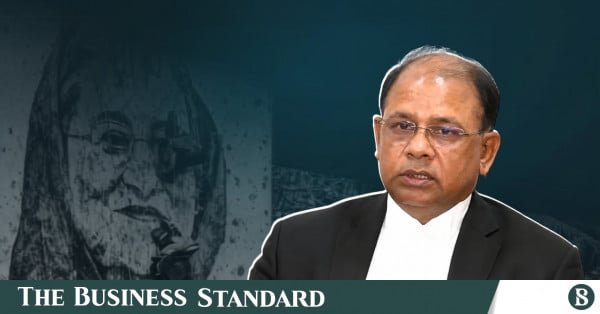
Whether Indian courts or the government will approve the extradition of ousted prime minister Sheikh Hasina to Bangladesh is an internal matter for India, said International Crimes Tribunal (ICT) Chief Prosecutor Md Aminul Islam.
He made the remarks while responding to questions from journalists at his office today (16 August).

Referring to a report published by The Indian Express, the chief prosecutor said the newspaper had reported that Indian courts’ approval may be required for Hasina’s extradition to Bangladesh.
“It is an internal matter of India,” he added.
Aminul Islam further said Bangladesh had already taken the necessary steps to bring Hasina back by following the established legal process.
“What steps Indian officials will take, what process they will follow, whether they will seek court approval or send her through government approval, is entirely a matter for India,” he said.
The chief prosecutor also said several cases against Hasina are pending in Bangladesh and that she has already been convicted in one of them.
“Hasina herself has said that she will return to Bangladesh in December. However, we believe the Indian government should send her back to Bangladesh before that. Since she has been convicted by a Bangladeshi court, she has to return to Bangladesh,” he said.
Indian courts’ role
Earlier, The Indian Express reported that Indian courts would ultimately decide whether to extradite Hasina, while New Delhi is holding discussions with Dhaka on the issue.
Citing a senior Indian government official, the report said the extradition decision would ultimately be taken by Indian courts rather than through a political or diplomatic decision.
The judicial process could also examine whether the offences alleged against Hasina constitute offences under Indian law, according to the report.
The development comes as the government of Prime Minister Tarique Rahman continues to press India to extradite Hasina, who was sentenced to death by the ICT in November 2025 after being convicted of crimes against humanity.
According to The Indian Express, Indian officials said Bangladesh’s extradition request contains the required legal documents under the 2013 extradition treaty between the two countries.
India’s Ministry of External Affairs, however, has maintained that the request is being examined under established procedures.
Asked about reports of Hasina receiving political asylum in India, Aminul Islam said Bangladesh had no information on whether such an arrangement existed.
“We do not know whether there is any provision for political asylum in India. Therefore, we have no scope to comment further on the report published by the Indian media,” he said.
Extradition treaty
On the extradition treaty between Bangladesh and India, the chief prosecutor said the issue had been discussed previously and that the two countries have an existing agreement on extradition.
Under the agreement, India previously took custody of Bangladeshi fugitive Anup Chetia, he said.
Aminul Islam said the Indian government had so far not clearly explained Hasina’s current status in the country.
“The matter has been conveyed by the Bangladesh government, but we are not aware of any clear explanation from the Indian government on this issue,” he said.
He said Bangladesh had sought Hasina’s extradition in accordance with the provisions of the existing extradition treaty.
“Bangladesh has sought her return in the manner provided for in the extradition treaty. Now it remains to be seen what decision the Indian government takes,” he said.
About The Author