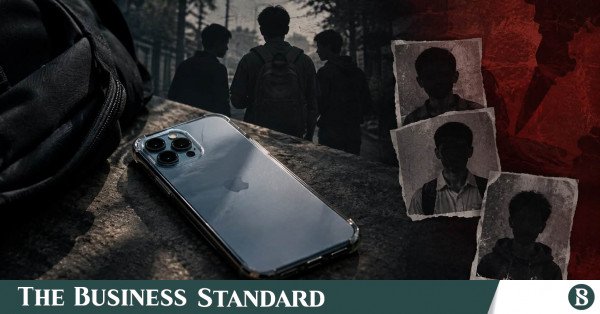
Four classmates allegedly lured him away, killed him and took his phone and money.
Representational Image. Photo: GPT
“>

Representational Image. Photo: GPT
A smartphone can be stolen in seconds, hidden with ease and sold for quick cash. But recent murder cases in Bangladesh show how a device that fits in a pocket can become the trigger for deadly violence.
The latest case involves 13-year-old Ishayat Shahriar Apratim in Cumilla. Apratim left home carrying his mother’s iPhone and later went missing.
His body was found the next day in the Lalmai area. Police detained three youths and recovered the phone from the home of one of them.

Investigators are now examining the circumstances of the killing and whether the iPhone was connected to the crime.
The case echoes another recent murder in which a mobile phone allegedly became the motive.
In Gopalganj, 17-year-old Siam Molla was allegedly killed in March over his iPhone, according to police.
Four classmates allegedly lured him away, killed him and took his phone and money.
Investigators said the iPhone was later sold for Tk25,000, with the suspects allegedly planning to use the money to buy drugs.
In Kishoreganj, 14-year-old Opu Mia was killed in June after being accused of stealing a mobile phone. Police said Opu’s 15-year-old cousin suspected him of taking his phone.
A local arbitration reportedly found no evidence against Opu, but the suspicion persisted. The cousin later called Opu to a place near a bridge, where he was stabbed during an argument, police said.
The three cases are not the same. Police say the phone itself was the target in Siam’s case, while Opu was allegedly killed after being accused of theft. Investigators have yet to establish what led to Apratim’s death.
Yet together, the cases raise a troubling question: How did an everyday device become valuable enough to steal and how can suspicion over a phone escalate into deadly violence?
About The Author