She stresses cooperation with Bangladesh to tackle shared challenges.
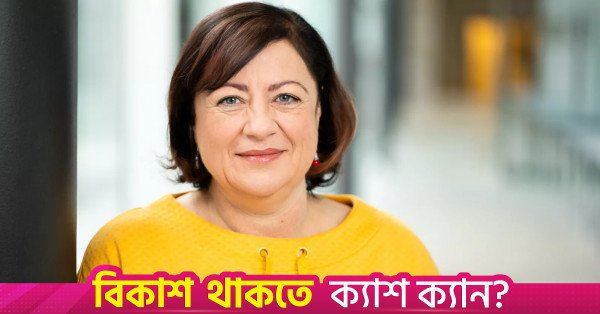
File photo of Dr Bärbel Kofler, vice minister, Federal Ministry for Economic Cooperation and Development (BMZ), Germany. Photo: Courtesy
“>

File photo of Dr Bärbel Kofler, vice minister, Federal Ministry for Economic Cooperation and Development (BMZ), Germany. Photo: Courtesy
German Vice Minister for Economic Cooperation and Development (BMZ) Dr Bärbel Kofler has stressed the need for closer cooperation with Bangladesh and European partners to address global challenges, including climate change, rising prices, energy security and economic reforms.
“We are here to stay,” the visiting vice minister said, reaffirming Germany’s commitment to maintaining a reliable and long-term partnership with Bangladesh.
She expressed appreciation for the partnership with Bangladesh and said Germany would continue to work with the country to address shared challenges.

Dr Kofler joined the celebration of German Reunification Day at the Franco-German Embassy in Dhaka, commemorating the reunification of East and West Germany in 1990, following decades of division during the Cold War.
Environment, Forest and Climate Change Minister Abdul Awal Mintoo spoke as the chief guest at the reception hosted by Ambassador of the Federal Republic of Germany Dr Rüdiger Lotz and Ivana Lotz.
The event brought together senior government leaders, civil society representatives, members of the diplomatic community, and prominent cultural and media figures both from Bangladesh and Germany.
The vice minister said global challenges could be overcome only through unity, solidarity and cooperation among countries sharing common goals.
She said Germany wants to work with Bangladesh and its European partners not only to recognise the challenges facing the country but also to find practical ways to address them.
Referring to Bangladesh’s upcoming graduation from the Least Developed Country (LDC) category, the vice minister congratulated the country and stressed the importance of reforms in the economic, financial, social and environmental sectors.
She said discussions on a possible free trade agreement with the European Union would require sustained engagement and reforms to strengthen Bangladesh’s economic foundations.
The vice minister acknowledged that rising prices were putting pressure on households and businesses in Bangladesh and beyond, noting that Germany is also facing similar challenges.
She said climate change, rapid technological transformation, digitalisation and artificial intelligence are creating new challenges, while countries also needed to generate decent employment opportunities for young people and provide them with better prospects.
The visiting official highlighted the 55-year partnership between Germany and Bangladesh, saying German development cooperation had worked closely with the country across different sectors of society, including government, the private sector and civil society.
She said the two countries had achieved significant progress through their cooperation, despite an increasingly challenging global political and economic environment.
Referring to climate change, she highlighted joint efforts on climate adaptation and energy issues, stressing the importance of international cooperation in helping countries manage climate-related risks.
The vice minister also emphasised the need for a sustainable development path that balances environmental protection, economic growth and social progress.
She said energy security has become increasingly important amid global conflicts and disruptions to supply chains, citing the impacts of the wars on energy supplies, prices and food security.
The vice minister said closer cooperation among Bangladesh, Germany and European partners could help advance a more sustainable and resilient future.
The vice minister, who is visiting Bangladesh for the third time, said she had met representatives of civil society and trade unions on the first day of her visit, engaged with business leaders the following day, and held meetings with government officials, ministers and political representatives.
She said the engagements had given her an opportunity to gain a broader understanding of Bangladesh, its people and their aspirations for the future.
The vice minister said German Unity Day represented peaceful engagement, solidarity and the overcoming of divisions, values that remained important for international cooperation.
As Bangladesh stands on the threshold of a crucial economic transformation, Germany is looking to reaffirm its long-standing partnership with the country through high-level talks on development cooperation.
As Bangladesh takes its next steps onto the global economic stage, Dr Kofler’s visit underscored Germany’s continued commitment to standing alongside the country as a strategic partner in sustainable progress.
The discussions in Dhaka looked beyond traditional aid frameworks to focus on long-term resilience, economic adaptability and sustainable growth.
The three-day official visit marked an important moment in bilateral relations, with government-to-government (G2G) negotiations aimed at shaping the future of Bangladesh-German development cooperation.
The visit came at a significant juncture as Bangladesh navigates economic transformation and prepares for its graduation from Least Developed Country (LDC) status.
Germany has long been one of Bangladesh’s most steadfast development partners.
Yet, as Bangladesh moves beyond the safety net of LDC status, the nature of international cooperation must also evolve, Germany said.
About The Author