Washington says Hasina’s presence strains bilateral ties.
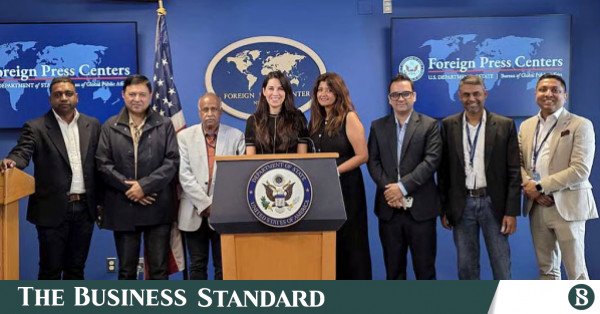
A briefing, titled “US Policy in Support of a Stable, Prosperous and Sovereign South Asia”, was held at the New York Foreign Press Centre on 23 September 2026. Photo: Collected
“>

A briefing, titled “US Policy in Support of a Stable, Prosperous and Sovereign South Asia”, was held at the New York Foreign Press Centre on 23 September 2026. Photo: Collected
The United States hopes Bangladesh and India will reach an agreement on what should happen to ousted prime minister Sheikh Hasina, saying her presence in India has become a major source of friction between the two neighbours.
Hasina has been living in India since she was ousted from power following the 2024 mass uprising.
Washington, however, has not taken a formal position on Hasina’s fate, a US State Department official said at an on-background briefing in New York on Wednesday, reports bdnews24.com.

“We understand that this has become a major source of hostility between India and Bangladesh,” the official said. “So we hope that they will discuss it among themselves and reach a solution. And we have not yet specified what should happen to Hasina.”
The briefing, titled “US Policy in Support of a Stable, Prosperous and Sovereign South Asia”, was held at the New York Foreign Press Centre and attended by journalists from Bangladesh, India, Nepal and Sri Lanka.
Against this backdrop, the US official was asked about Washington’s position on Hasina.
“On this issue, the United States has not yet taken any formal position,” the official said.
The official was also asked whether Prime Minister Tarique Rahman was likely to meet US President Donald Trump or the US secretary of state.
Questions were also raised about the US position on lifting restrictions on the activities of the Awami League.
“I do not want to comment on Bangladesh’s domestic politics,” the official said. “But I would say that our relationship with Bangladesh, with the BNP, is in a very excellent position.
“We want to continue working with the elected government. We stand with the work that is being done to make Bangladesh stronger and safer. The United States has no shortage of willingness to help make Bangladesh more prosperous. So I do not think it is appropriate for me to comment on Bangladesh’s domestic politics.”
Asked specifically whether the restrictions on the Awami League should be lifted, the official said, “That decision has to be made by the Bangladesh government.”
About The Author