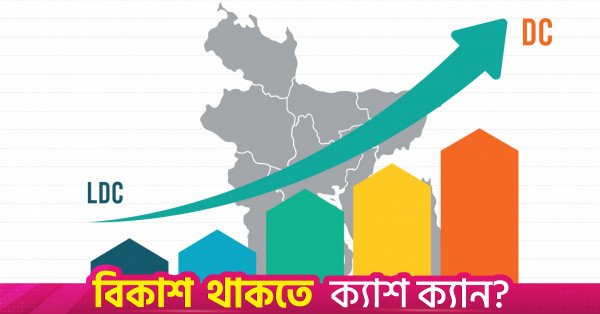
The United Nations Conference on Trade and Development (UNCTAD), in a report, has identified five key priority reform areas for Bangladesh to strengthen its investment climate, enhance competitiveness, and support sustainable, investment-led growth in the years ahead.
The report highlights both progress and persistent challenges in Bangladesh’s investment climate since the 2013 Investment Policy Review (IPR). While acknowledging important reforms, it stresses the need for deeper and more sustained structural changes—particularly as the country prepares to graduate from Least Developed Country (LDC) status.
It also underscores the importance of ensuring a smooth transition as Bangladesh faces the gradual withdrawal of preferential treatment under various international agreements, amid evolving global trade and geopolitical dynamics.

The United Nations Development Programme (UNDP), UNCTAD and the Investment Development Authority (Bida) jointly launched the UNCTAD Investment Policy Review (IPR) Implementation Report for Bangladesh at Bida building in the capital yesterday (27 April).
The high-level dialogue brought together senior government officials, private sector representatives, and development partners to discuss strengthening the country’s investment framework in preparation for LDC graduation.
To strengthen the investment climate, the report outlines five priority reforms as below:
Firstly, the report calls for the development of a national investment policy alongside a consolidated investment law to bolster investor confidence and support a coordinated, whole-of-government approach to attracting and effectively utilising foreign direct investment (FDI) in line with national development objectives.
Secondly, the report put emphasis on enhancing investment promotion and facilitation to improve service delivery and attract higher-quality investments.
Thirdly, it focuses on sectors identified in the Foreign Direct Investment (FDI) Heatmap, recommending targeted interventions to drive growth and stronger institutional coordination to ensure alignment on sectoral priorities.
Fourthly, the report underscores the need for mitigating the effects of losing preferential Least Developed Country (LDC) status by engaging key trade and investment partners and strengthening the competitiveness of the domestic private sector in the post-LDC context.
And lastly, the UN report stresses on removing key bottlenecks to investment by improving access to land and infrastructure, which remain critical constraints for the potential investors.
The report also found that Bangladesh lags significantly behind its regional peers in attracting foreign direct investment (FDI). According to the findings, Vietnam’s FDI stock is approximately 13 times higher than Bangladesh’s, Indonesia’s nearly 17 times higher, and Cambodia’s about three times higher. This relatively low FDI stock highlights weaker inflows and several underlying structural constraints.
In 2024, Bangladesh’s FDI stock stood at $18.29 billion, compared to $249.14 billion in Vietnam, $305.66 billion in Indonesia, and $52.66 billion in Cambodia, says the report.
Presenting the findings of the report, Legal Officer of UNCTAD’s Investment and Enterprise Division Kiyoshi Adachi noted that most of the Investment Policy Review recommendations for Bangladesh have only been partially implemented.
“It is a somewhat subjective grading, but most recommendations fall into the partially implemented category,” he said, adding that systematic tracking of progress remains essential.
He also highlighted weak inter-agency coordination, pointing to a mismatch between the sectors identified in Bida’s FDI Heatmap—such as semiconductors, electric vehicle batteries, and technical textiles—and their reflection in the national industrial policy.
Adachi also noted that the Investment Act of 1980 is outdated, lacking clear consolidation of FDI rules and well-defined investor treatment provisions. He pointed out that entry procedures still involve multiple approvals and suffer from limited transparency. Although digitalisation efforts are underway, they remain constrained by continued reliance on manual processes.
He further highlighted ongoing challenges related to foreign exchange repatriation, land access, infrastructure limitations, and restricted skilled labour mobility, including the absence of a dedicated personal visa scheme.
Bida Executive Chairman Chowdhury Ashik Mahmud Bin Harun stressed that Bangladesh must “shift gears” to attract global investment. “If we have been operating in second gear so far, we now need to move into fifth gear,” he said, underscoring the importance of competitiveness and alignment with global standards.
UNDP Resident Representative in Bangladesh Stefan Liller emphasised that coherent policies and strong institutional capacity are critical to attracting responsible investment that generates employment and promotes inclusive growth.
Chief Executive Officer of BUILD Ferdous Ara Begum said “Her organisation has compiled an updated business licensing guidebook covering more than 600 licences. Including renewals, the total number of licences may range from 500 to 1,200.”
She also noted that starting a business in Bangladesh—across manufacturing, services, or trade—initially requires around 23 licences. Based on data from citizen charters, obtaining these approvals takes an estimated 477 days.
Referring to a Cabinet Division directive issued in 2000, Begum further explained that ministries were instructed to publish timelines for administrative procedures. BUILD’s analysis, based on these official timelines, shows that completing the required processes to start a business takes approximately 477 days.
She said that if starting a manufacturing business alone takes this long, other sectors may require even more time. “In that respect, the top priority should be reducing the number of steps, shortening the time, and simplifying the process,” she said, adding that this remains one of the private sector’s biggest challenges. She also noted that the private sector has already submitted several recommendations to address these issues.
Ferdous Ara Begum also commented on the proposed plan to merge five investment-related regulatory and promotional agencies with Bida, PPP, Beza, Bepza, BHTPA and BSIC.
She said such institutional consolidation could help improve coordination, reduce duplication, and streamline investment services. However, she stressed that its success will depend on how effectively the reform is implemented and whether the merged structure can ensure faster and more efficient decision-making for investors.
Regarding the National Board of Revenue (NBR), Ferdous Ara Begum said the tax system remains one of the biggest challenges for Bangladesh’s private sector. She noted that although various reforms are underway, significant issues persist in tax policies.
The report concludes that key achievements include the establishment of Bida as the lead investment facilitation agency and the expansion of digital investment services. However, it recommends adopting a unified national investment policy, enacting a consolidated investment law, and fully digitalising investment procedures to enhance competitiveness ahead of LDC graduation.
About The Author