Workers say they are not only seeking unpaid salaries, but also leave encashment, annual increment arrears, notice pay, four months’ compensation and full service benefits under labour law.
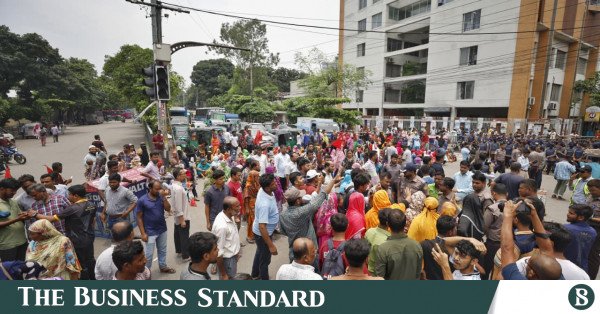
Workers of garment factories owned by NASSA Group block a road in Dhaka’s Tejgaon on 16 June 2026. Photo: Rajib Dhar/TBS
“>

Workers of garment factories owned by NASSA Group block a road in Dhaka’s Tejgaon on 16 June 2026. Photo: Rajib Dhar/TBS
Workers of garment factories owned by NASSA Group blocked a major road in Dhaka’s Tejgaon industrial area this morning (16 June), demanding payment of outstanding wages and other benefits, causing severe traffic disruption.
The workers occupied the main road adjacent to Love Road at around 10:15am and began a demonstration, bringing traffic on the route to a standstill, reports Prothom Alo.
According to Tejgaon Industrial Area police, the workers took to the streets to press home their demands for unpaid dues.

The blockade led to congestion on surrounding roads, with long queues of vehicles forming on both sides of the affected route, they said.
Tejgaon Industrial Area Police Station Officer-in-Charge Mahbubur Rahman said between 100 and 150 workers are participating in the protest.
Police are working to keep the situation under control, he said, adding that discussions with the workers are ongoing.
Meanwhile, the workers said they are not only seeking unpaid salaries, but also leave encashment, annual increment arrears, notice pay, four months’ compensation and full service benefits under labour law.
According to a leaflet issued by workers, from entry-level roles to managers, at NASSA Mainland, covering NASSA Knit, NASSA Apparels and Western Dresses, they demand payment of wages for May; payment of accrued leave encashment for 2025; payment of arrears related to a 2025 annual increment; and settlement of notice pay bills.
The workers are also demanding four months’ wages and allowances (equivalent to 120 days) in accordance with Bangladesh labour law and 100% payment of service benefits for all workers and employees as stipulated by labour regulations.
The leaflet further states that demands related to wages and service benefits should be paid directly in cash at the factories by 20 June 2026.
In addition, the workers called on authorities to refrain from any form of harassment, including police cases, intimidation, threats, demonstrations of force or physical abuse, during the payment process.
About The Author