Estimate includes Tk25cr for Nazrul Sarobar, cultural facility
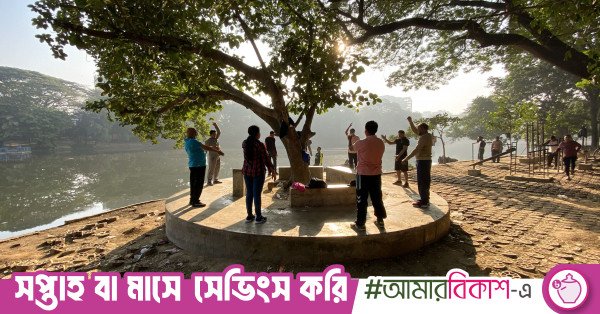
People doing physical exercise beside Dhanmondi Lake. Photo: Abir Abdullah
“>

People doing physical exercise beside Dhanmondi Lake. Photo: Abir Abdullah
Years of waterlogging, deteriorating infrastructure and environmental decline have taken a toll on Dhanmondi Lake, one of Dhaka’s most popular recreational spaces. Now, the Dhaka South City Corporation is planning a Tk75 crore makeover aimed at restoring the lake, improving its surroundings and creating new spaces for recreation and cultural activities.
Of the total allocation, Tk50 crore will be spent on renovating the lake and upgrading its infrastructure, while Tk25 crore will go towards developing a new cultural facility, Nazrul Sarobar, also to be known as Bidrohi Chattar.
Dhanmondi Lake covers around 86 acres, including about 55 acres of water. Developed in the 1960s around the remaining wetlands of the old Pandu River, it has become an important green space and recreational destination in the capital.

But the lake and its surroundings have struggled with waterlogging and ageing infrastructure. Parts of the lake and the nearby Rabindra Sarobar area can become waterlogged even after light rainfall.
Dhaka South says the proposed renovation will address these problems while making the lake safer, greener and more attractive.
The work will include protecting the lakebanks, stabilising slopes, improving drainage and upgrading walkways. Lighting, fencing and safety railings will also be repaired or improved.
The plan includes three floating decks, kiosks, a modern gym, library and exhibition gallery, cafeteria, amphitheatre, badminton court, outdoor exercise areas and parking facilities.
The corporation also plans to establish a specialised “tree hospital” to care for and treat trees around the lake. Safe drinking-water facilities, modern signage and wayfinding systems, CCTV cameras and a public announcement system are also planned.
Part of the project involves building Nazrul Sarobar at an estimated cost of Tk25 crore. A 50.967-katha plot beside Roads 13/A and 8/A in Dhanmondi, directly opposite the Kabi Nazrul Institute, will be developed for the project.
The proposed cultural space will feature an open-air amphitheatre for Nazrul Sangeet, cultural programmes and discussions, as well as green rooms for performers.
A restaurant serving some of poet Kazi Nazrul Islam’s favourite foods, public toilets and information panels on his life and literary works are also planned. The panels will also highlight the history of the July uprising.
A book corner dedicated to Nazrul’s literature and spirit of rebellion, an urban forest and a main plaza for gatherings and cultural activities will be developed. A ghat will connect the site to the lake, while dedicated walkways will improve pedestrian access.
Dhaka South officials say the facility is intended to revive public interest in Nazrul’s literature and provide a venue for cultural activities. They also expect its proximity to the Kabi Nazrul Institute to help promote the poet’s works.
Saiful Islam Joy, executive engineer (civil) of Dhaka South’s Zone-1 and the project’s engineer in charge, told TBS that a Chinese company has been assigned to conduct a pilot operation before the lakebed is cleaned.
The pilot operation is expected to take around 70 days. The main lake renovation and Nazrul Sarobar projects will be implemented together after the lakebed cleaning, he said.
Dhaka South plans to finance the Tk75 crore project from its own funds. However, implementation will begin only after final approval, fund allocation and completion of the necessary procedures.
Experts question new cultural venue
While welcoming efforts to improve the lake, urban planner and Institute for Planning and Development Executive Director Adil Muhammad Khan questioned the need for another cultural venue so close to Rabindra Sarobar, which already hosts cultural programmes.
He said loud events at Rabindra Sarobar are already affecting the residential environment in Dhanmondi and warned that holding programmes at two nearby venues could worsen noise pollution.
“Building the Nazrul stage is unnecessary and not a reasonable decision,” he said.
Khan also urged the authorities to avoid excessive concrete-based development and instead prioritise trees, open spaces and nature-friendly landscaping.
Local residents, urban planners and other experts should be involved in designing and implementing the project, he said, warning that otherwise the initiative could lead to unnecessary work and waste of public money as has happened with some previous renovation projects.
About The Author