IMED found major flaws as two major upgrades advance.
Infograph: TBS
“>

Infograph: TBS
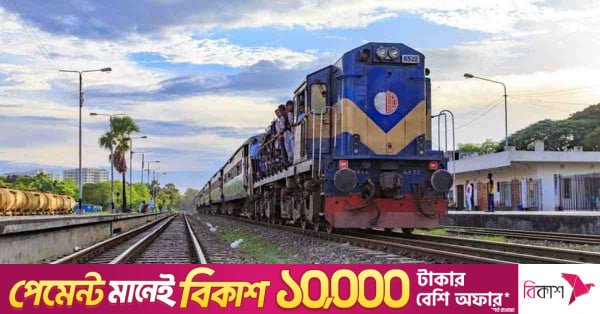
More than Tk135 crore was spent in two rounds of rehabilitation on the roughly 40km Sholashahar-Dohazari railway before Cox’s Bazar train services began, yet trains on the section remain restricted to 40km/h.
Railway officials said a speed of 60km/h had been approved after the rehabilitation, but trains are currently being operated at 40km/h under instructions from the engineering department.
An earlier inspection by the Implementation Monitoring and Evaluation Division (IMED) found serious shortcomings in the rehabilitation work, including a severe shortage of ballast, misaligned tracks and cracked sleepers.
The speed restriction, along with other operational bottlenecks, has lengthened journeys on the Dhaka-Cox’s Bazar and Chattogram-Cox’s Bazar routes, causing inconvenience to passengers.

Tk135cr-plus spent in two phases
The “Rehabilitation of Sholashahar-Dohazari and Fateyabad-Nazirhat Sections of Bangladesh Railway” project began in 2011 and was completed in 2018 at a cost of Tk197.49 crore, according to Railway data.
Of the total, about Tk110 crore was spent on the Sholashahar-Dohazari section.
Before passenger train services to Cox’s Bazar began in 2023, more than Tk25 crore was spent on another round of rehabilitation, taking spending on the section in the two phases to more than Tk135 crore.
Separately, the ageing Kalurghat Bridge over the Karnaphuli River was repaired at a cost of Tk44 crore after construction of a replacement bridge was delayed.
IMED found major gaps in rehabilitation
IMED inspected the rehabilitation project in June 2019 and found a severe shortage of ballast, the crushed stone used to support and stabilise railway tracks.
On the Sholashahar-Dohazari section, only 7,000 cubic metres of ballast were used against a requirement of 55,000 cubic metres. On the Fateyabad-Nazirhat section, 13,000 cubic metres were used against a requirement of 27,000 cubic metres.
The inspection team also found misaligned tracks and cracked sleepers. The report said the project director was changed nine times during implementation..
Railway officials said the contractor’s security guarantee was withheld and a penalty imposed over shortcomings in the work.
Bangladesh Railway Additional Director General (Infrastructure) Al Fattah Md Masudur Rahman also acknowledged problems with the earlier rehabilitation.
“During the first rehabilitation, the contractor did not carry out the work properly. The project was, in effect, closed with some work unfinished,” he told TBS.
Speed restrictions add to journey times
Two station masters and a locomotive master involved in operations on the route, speaking on condition of anonymity, said the stipulated 60km/h speed is listed in the Railway timetable, but locomotive masters are instructed to limit trains to 40km/h.
Masudur Rahman said limited maintenance funding was another factor preventing higher speeds even after rehabilitation.
Railway officials said the 40km/h restriction, the 10km/h limit on the old Kalurghat Bridge, single-line operations, train crossings and occasional locomotive failures contribute to delays.
The Cox’s Bazar Express and Tourist Express take around 8 hours 20–35 minutes, with delays of 30 minutes to an hour common during operational disruptions.
On the Chattogram-Cox’s Bazar route, Saikat and Probal Express share one rake for four daily trips, so one delay can affect later services.
Tk23,611cr in two major projects
Bangladesh Railway is now moving ahead with two major projects involving about Tk23,611 crore to address longstanding bottlenecks on the Chattogram-Dohazari-Cox’s Bazar corridor.
The roughly 102km Dohazari-Cox’s Bazar railway opened in 2023, but the older Chattogram-Dohazari section and Kalurghat Bridge continue to constrain faster operations.
The two projects are a major upgrade of the Chattogram-Dohazari railway and construction of a new rail-cum-road bridge over the Karnaphuli River.
Chattogram-Dohazari line to get major upgrade
The latest project documents put the cost of the Chattogram-Dohazari Railway Project at $991.46 million, equivalent to about Tk12,050 crore at the exchange rate used in the October 2025 project document.
Of this, the ADB will provide $688 million, or about Tk8,362 crore, through regular and concessional loans, while the government will provide the remaining $303.46 million.
The project will upgrade about 35km of existing railway and build a 2.5km bypass between Pahartali and Jhautala, allowing Dhaka-Cox’s Bazar trains to avoid stopping and reversing at Chattogram station and saving more than 30 minutes.
It also includes dual-gauge conversion, raising the railway embankment, improving drainage, installing modern signalling and procuring 30 locomotives.
Railway project information describes a wider 44km Pahartali-Dohazari corridor with 62.88km of total track after planned double- and single-track sections are counted.
New Kalurghat bridge to remove bottleneck
The second project will replace the ageing Kalurghat Bridge, where trains are currently limited to 10km/h.
The Tk11,560.77 crore rail-cum-road bridge project was approved in October 2024.
The Export-Import Bank of Korea will finance $810 million, equivalent to about Tk9,845 crore, for around 11km of new alignment, including the Karnaphuli river bridge.
The project includes a 700-metre, seven-span bridge with two dual-gauge railway tracks and a two-lane road, alongside associated rail and road viaducts and new railway.
About The Author