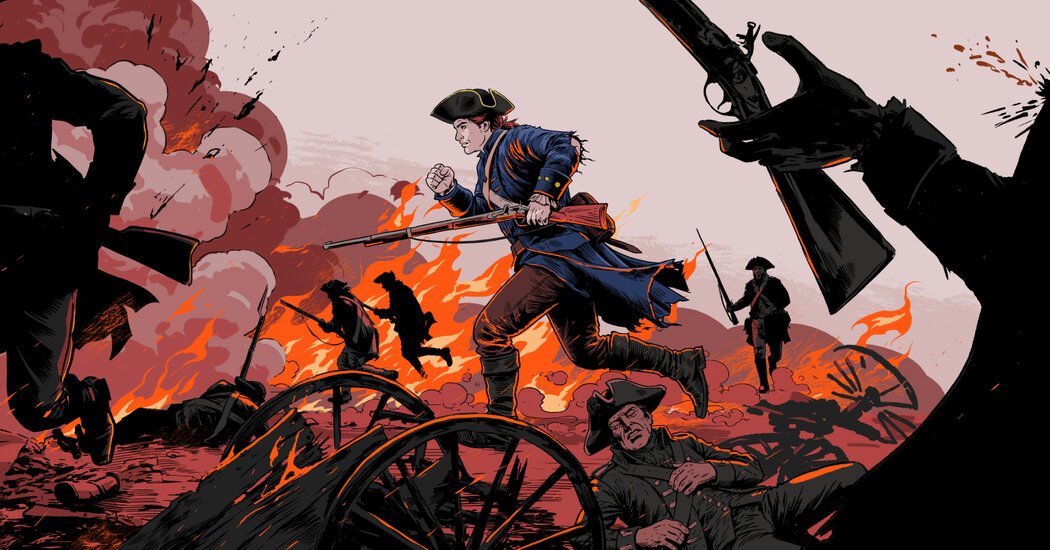
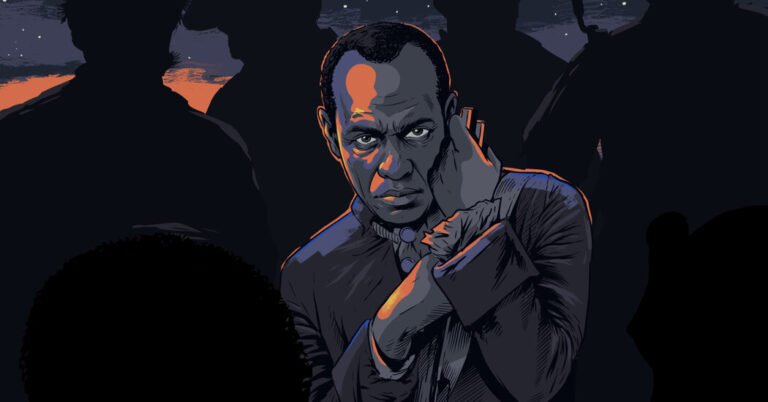
In the 50 years since the bicentennial, the last major celebration of the nation’s birth, our knowledge of the American Revolution has radically expanded. The founding fathers remain the central figures. But since the 1970s, historians have uncovered the fascinating, dramatic lives of many other players whose contributions were previously overlooked or lost in the archives.
To mark the country’s 250th anniversary, The New York Times Magazine asked seven leading historians to each write about one of these “everyday founders,” a participant in the great drama of the nation’s birth whose story has rarely been told.
Seen through these perspectives, the story looks different — and that’s the point. “To fully comprehend the American Revolution, we need both the towering few and the faceless many,” Jane Kamensky, the president of Thomas Jefferson’s Monticello and an emerita historian at Harvard, writes in her introduction to the project. “All were ordinary and made themselves extraordinary. All took advantage of a moment of possibility — of rupture — to pursue happiness for themselves, their families, their people, their country.”
Illustrations by Tim McDonaghJune 22, 2026
The story starts in 1763, when Britain defeated France in the Seven Years’ War and became the dominant power in North America. The Treaty of Paris ceded nearly all French territory east of the Mississippi to the British Crown. But the victory created a new political rift: King George III sought to limit westward expansion into Native territories to avoid expensive new frontier wars and protect the fur trade, while colonial farmers felt entitled to the soil that had just been won.
Land, not taxes, was the first grievance that sparked conflict between Britain and its colonies. And one Native leader knew that the fate of his people hung in the balance.
In the winter of 1765, a man and his wife set out on a 275-mile journey by snowshoe.
The man was an Oneida leader named Agwalongdongwas, translated as “breaking of the twigs.”
A pious Christian with a gentle manner and a gift for oratory, he was known to colonists as Good Peter.
He was traveling to Connecticut to request that a missionary be sent to his village in central New York.
Moving through settled territory was dangerous. Anti-Native sentiment ran high among the colonists.
But Peter carried an official pass to help ensure their safety.
The farther east they traveled, the more evident it became that colonists had transformed the land. Farms had replaced forests, and the growth of the colonial population was driving demand for land to the west — Native land.
Two years earlier, in 1763, King George III forbade settlement of Native territory beyond the Appalachian ridge. The settlers resented and sometimes defied this order.
As Good Peter and his wife trekked through New England, they must have wondered how Britain could possibly keep its colonists contained.
If the Oneida were to have a future on their land, he thought, they would have to find ways to coexist with the colonists.
Good Peter made a deal with the patriots — but he was ultimately betrayed.
Read his story or scroll to continue.
When the Revolutionary War broke out, Good Peter urged Oneida warriors to assist the patriots as scouts, spies and fighters. They became the colonists’ most important Native allies.
At war’s end, Good Peter sought to parlay the respect he had earned into securing Oneida ownership of their ancestral lands.
The thousands of farmers pushing into Native territories were driven in large part by economics.
For colonial farmers, land was a path to economic security, but good farmland near the coast was expensive or unavailable. In parts of the North, much of it was owned by elites who hired tenant farmers to work their land and charged them high rents to do so. Elsewhere, yeoman farmers complained of unjust taxes and extortion by local officials.
In the years leading up to the war, frustrated farmers in North Carolina and the Hudson Valley launched uprisings to defy corrupt officials and wealthy landlords. One of those early uprisings occurred in a place called Alamance.
The Revolutionary War began on April 19, 1775, the day British regulars killed eight militiamen in Lexington, Mass.
But the first battle of the founding era took place four years earlier near Great Alamance Creek in North Carolina.
On May 16, 1771, militiamen commanded by the colonial governor, William Tryon, faced off against about 2,000 farmers.
The farmers called themselves Regulators.
For years, they had tried to rein in corruption by “regulating” lawyers and local officials who charged more for their services than the law allowed.
They also objected to the grievous supplemental tax imposed on them to pay for Tryon’s lavish new palace near the coast.
The Regulators had endured endless meetings, adopted countless resolutions. Some had beat up attorneys and court clerks.
Tryon’s soldiers had artillery and a clear command structure, while the Regulators’ democratic principles prevented them from even selecting a military leader.
Tryon’s army easily defeated the Regulators, killing about 20 of them.
After the battle, the governor hanged a captured Regulator on the battlefield. But the man he wanted most wasn’t there.
Hermon Husband had not fought in the Battle of Alamance — he was a pacifist — but Tryon wanted him anyway, dead or alive.
With his fiery speeches and influential pamphlets, Husband had transformed his fellow farmers’ complaints into a cause. Husband fled north, and Tryon’s army laid waste to his farm and his home.
Hermon Husband’s radical egalitarianism would make him a thorn in the side of the founding fathers.
Read his story or scroll to continue.
Taking refuge in Pennsylvania in the early 1770s, Husband adopted a pseudonym — Tuscape Death — and resumed his battle against exploitation.
The end of the Seven Years’ War not only set in motion a fight over Western land; it also left the British government with enormous debts.
To pay them off, Parliament began imposing direct taxes on the colonies, through legislation like the Stamp Act. Opposition to the Stamp Act and other royal policies led to intensifying conflict between colonists and the British, particularly in Massachusetts. To maintain control, Britain garrisoned soldiers in Boston. On March 5, 1770, some of these soldiers were guarding a customs house from an angry mob when shots were fired into the crowd, killing five people. Colonial papers quickly spread news of the slaughter, which became known as the Boston Massacre.
The event solidified Massachusetts as the epicenter of the growing resistance. And one person who gave this movement a sense of noble purpose was an anonymous local playwright.
The American Revolution was a war of the pen as much as a war of the sword. Soaring calls for action made the fight for independence possible.
In 1772, before prominent works by people like Thomas Jefferson and Thomas Paine, a play arrived that set the colonial imagination on fire.
Called “The Adulateur,” the play was published anonymously in a Massachusetts newspaper.
In it, a “shameless tyrant” named Rapatio plots to enslave the people of a free society.
He was a thinly veiled version of the colonial governor, Thomas Hutchinson, who had presided over tax policy, repressive laws and the Boston Massacre.
As his avatar, Rapatio, declares: “Despotic rule my first, my sov’reign wish.”
“The Adulateur” ripped through the young city of Boston. If colonists didn’t read it in the paper themselves, they heard it spontaneously read aloud in their local taverns.
It affirmed the colonists’ growing outrage: Hutchinson and the British not only were limiting their rights but wanted to crush their liberty.
Most readers would have thought that the work, like most of what appeared in newspapers at the time, had been written by a man.
Mercy Otis Warren was inspired to write by her opposition to tyranny — and a personal grievance.
Read her story or scroll to continue.
But its author was Mercy Otis Warren, a Plymouth housewife.
That play, and Warren’s writings throughout the Revolution, helped change the course of history.
In 1774, Parliament passed a series of laws limiting colonial self-governance (they later became known as the Intolerable Acts), meant to punish Massachusetts for the Boston Tea Party.
In response, another wave of resistance swept through the colonies, leading to the First Continental Congress. George Washington and John Adams were among the representatives who gathered in Philadelphia to debate how they should respond to what most agreed was an outrageous disregard for their rights as British subjects. They resolved to boycott British goods, cease all exports to Britain and to meet again the following year.
Restiveness was growing, not only toward the British and not only on legal and political matters. As ideas of individual liberty and freedom of conscience spread through colonial society, conflicts with the established order were commonplace. One of the most vicious fights was over state sponsorship of religion, which was established practice. Virginia was an especially intense battleground, and one of the strongest advocates for religious freedom there was an itinerant preacher who had recently arrived from the Northeast.
In 1775, a Baptist preacher named John Leland arrived in Virginia, part of a wave of evangelical revivalists known as New Lights.
He was looking for converts.
ManyNew Lights were radicals. They directly challenged, and often infuriated, the Church of England, the official church in Virginia and many other colonies.
New Light preachers like Leland defied Anglican norms by baptizing women without the consent of their husbands and allowing them to speak at meetings. Some women even led prayer in public.
Evangelicals actively recruited African Americans as spiritual equals who, in Leland’s view, had a right to liberty of conscience.
As Baptist numbers grew, they faced increased persecution in Virginia. Leland found that “mobs, fines, bonds and prisons were our frequent repast.”
Local magistrates arrested Baptist ministers for preaching without a license or disturbing the peace.
Some avoided prison by signing legal documents promising not to evangelize in a particular county.
Others spent months locked up, defiantly preaching to large gatherings through the bars of their cells.
In response, jailers paid drummers to drown them out and burned hot peppers at prison doors to disperse the crowds.
By the eve of the Revolution, around half of all Baptist ministers had experienced imprisonment — often in brutal and degrading conditions.
John Leland took on the religious establishment in Virginia — and in the new nation to come.
Read his story or scroll to continue.
Independence would offer Leland a chance to challenge this oppression.
There were glaring inconsistencies with the emerging credo of individual liberty professed by the patriot movement. Most obvious was the issue of slavery.
Black people made up one-fifth of the population of the colonies, and a vast majority of them were held in bondage. As Britain and its North American colonies began moving rapidly toward war, this free and enslaved Black population wrestled with how to advance its own cause of equality.
In June 1775, after the first battles at Lexington and Concord, George Washington, a Virginia slaveholder, was appointed commander of the Continental Army. Among the troops he commanded were several thousand Black soldiers. Over the course of the war, a larger number of Black soldiers, more than twice as many, would fight with the British, believing this to be a better path to liberation.
The Black people who sided with the patriots included many who were forced to stand in for their enslavers, and others who saw economic and social opportunity in war that was denied them in daily life. Still others believed the rhetoric of patriot leaders, who spoke passionately of the fundamental rights of man. In July 1776, this principle found its sharpest expression in words written by Thomas Jefferson, himself a slaveholder from Virginia.
The Declaration of Independence announced to the world that the 13 American colonies were forming a new nation.
Two hundred copies were printed in Philadelphia on July 4, 1776.
They were transported by horse and by foot to be read aloud in taverns and town squares throughout the colonies.
For the patriot troops, the Declaration served as a rallying call to continue the war in spite of harsh defeats.
Lemuel Haynes, a free Black soldier, probably first heard the Declaration read to his regiment. He was moved by its revolutionary rhetoric.
The promise that “all men are created equal” held particular meaning for Black soldiers, both free and enslaved.
Perhaps all the talk about “liberty” and the criticism of tyranny suggested that a new day could dawn for everyone.
This was a matter of faith, but faith was at the center of Haynes’s life. He would become the first Black minister ordained in the colonies.
Haynes sat down to write a response to the Declaration. His essay, “Liberty Further Extended,” used Jefferson’s words to denounce the practice of slavery.
Lemuel Haynes argued throughout his life that people of African descent had a place in the American experiment.
Read his story or scroll to continue.
The essay, rediscovered in the 1980s, is the first known detailed analysis by a Black person of the contradictions created by our founding document.
Ideals alone don’t win wars. Despite the patriots’ sense that they had embarked on a righteous crusade, the British soon anchored a fleet in New York Harbor.
Washington’s army was in near-constant retreat through most of 1776. The patriot victory at Trenton after Washington’s midnight crossing of the Delaware brought a much-needed morale boost, but it didn’t change the balance of the war.
The British had a professional fighting force and the most powerful navy in the world. The patriots were a ragtag group of untrained recruits who enlisted for only months at a time, leaving Washington scrambling to lead an army that was regularly disbanding and reforming, plagued by chronic shortages of supplies, weapons, ammunition and funds.
As 1777 wore on, the British seemed unbeatable, and one Continental Army soldier was about to face his most harrowing battle yet.
In late 1777, George Washington’s army was on the brink of collapse.
It was the third year of a grinding war and the British had just captured Philadelphia, the capital of the new American republic.
British warships then converged on Fort Mercer, a key strategic position in New Jersey, along the Delaware River.
Every day, British cannon fire battered the fort’s walls, and every night, the soldiers would rush to rebuild them under cover of darkness.
A 16-year-old soldier named Joseph Plumb Martin wrote in his diary that he and his comrades were hungry, freezing and suffering from disease.
One day, under fire, Martin was about to volunteer to climb a pole to post a signal flag. But another soldier went up instead.
Martin watched as the soldier suffered a horrible fate.
The man was split in half by a cannonball.
After a week of incessant bombardment, the patriots abandoned the fort. “If ever destruction was complete,” Martin wrote, “it was here.”
As Martin retreated, he caught a sobering final sight:
His best friend lay among the dead.
Joseph Plumb Martin showed that the common soldier’s endurance was critical to the patriot victory.
Read his story or scroll to continue.
Martin’s diary, the only published book-length memoir of a Continental Army soldier, was a revelation to historians when it was rediscovered in the 1950s.
Over the next few years, an unlikely patriot victory took shape.
Washington’s approach of strategic retreat wore down the redcoats; the British surrender at Saratoga in 1777 persuaded the French to enter the war and provide troops, money and ships to the patriot cause; and the patriot general Nathanael Greene ultimately prevailed in the South, where loyalist and patriot militias were fighting a brutal civil war.
Americans across the colonies began to imagine their new country. How would it fare on its own? Who would be in charge? What would it look like to put into action the rhetoric about liberty that had powered the movement for independence?
Everyone had their own answers to these questions. And as the war drew to a close, they began trying to enact them. One such person was an enslaved woman living in a small town in Massachusetts.
In August 1781, an enslaved woman named Elizabeth Freeman headed to a law office near her home in Sheffield, Mass.
She had an urgent question.
The Revolutionary War was nearing its conclusion, and the roughly 700,000 enslaved people in the colonies were eager to test how far the patriots’ ideals might take them toward freedom.
For decades, Freeman had been held as the property of John Ashley, a wealthy landowner and an officer in the local militia.
In 1773, he hosted some of the town’s most prominent men to write a manifesto called the Sheffield Declaration.
Its call for liberty foreshadowed the Declaration of Independence.
Freeman had very likely heard talk of “natural rights” in the Ashley home as she took coats and capes, served refreshments and stoked the fire.
On Sundays, in the Negro pew at church, enslaved people whispered about whether liberating their masters from tyranny might liberate them too.
The law office Freeman sought that day belonged to Theodore Sedgwick, who had been among the men at Ashley’s who wrote the Sheffield Declaration.
Finding Sedgwick in, Freeman explained that she wanted to file suit against her owner to force him to emancipate her. She asked: “Won’t the law give me my freedom?”
Sedgwick agreed to take Freeman’s case — it was time to test the reach of the Revolution’s highest principles.
Elizabeth Freeman’s case would be a critical first step toward ending slavery in Massachusetts — and in the country at large.
Read her story or scroll to continue.
Freeman was the first enslaved woman to use the new State Constitution as the basis to sue for her freedom.
The British surrendered at Yorktown, Va., on Oct. 19, 1781. Peace negotiations led in September 1783 to the Treaty of Paris, which formally recognized the United States of America as an independent nation.
A world-historic experiment had begun. For the first time in history, a large-scale republic would derive its authority solely from the consent of the governed.
But an early dispute between the British and the Americans over the handling of formerly enslaved people demonstrated that the ideals of the Revolution were still limited in their application. Washington interpreted the Treaty of Paris as requiring the British to hand over enslaved people who had escaped behind British lines so they could be returned to what he saw as their rightful owners. Instead, the commander of the British forces evacuated thousands to Nova Scotia rather than return them to bondage. It was an early indication that, as Lemuel Haynes and Elizabeth Freeman had understood, much work remained to extend the promise of liberty — not only to enslaved people but also to women, tenant farmers and even the triumphant soldiers of the Continental Army.
The seven people in this project were all captivated by that promise, though it meant something different to each of them. Their stories, and the many more brought to light by historians over the past 50 years, remind us that actions large and small contribute to the movement of history — a useful reminder as we contemplate our own roles in the country’s present. Two hundred and fifty years later, we stand at our own moment of rupture and possibility. “Who else was a founder?” Kamensky asks in her introduction. “And, dear reader, might you become one, too?”