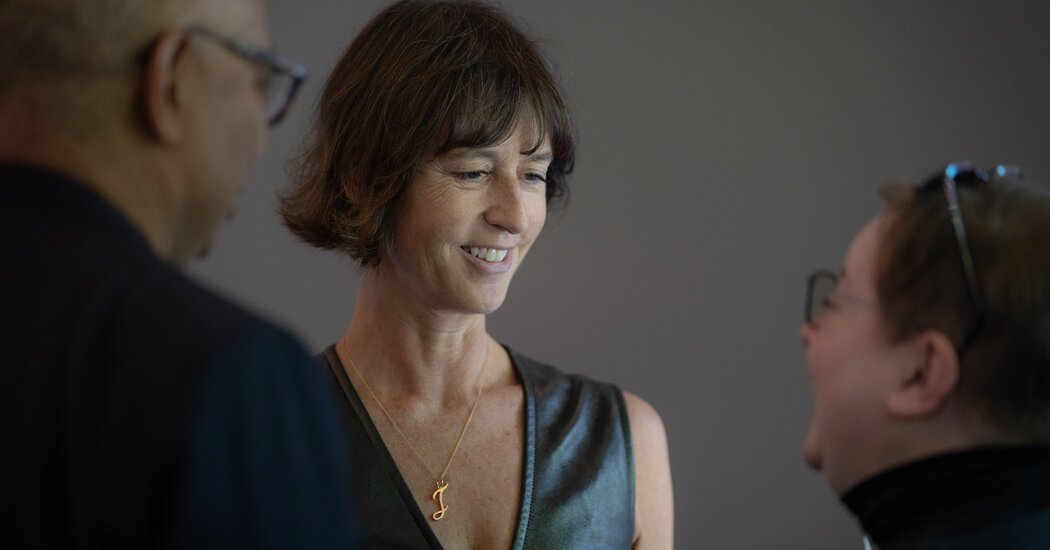
She has also held curatorial positions at the Museum of Contemporary Art in Chicago and the Institute of Contemporary Art in Boston. She is scheduled to take up her new Tate role on Jan. 1.
Most museum professionals in Britain get paid far less than their American counterparts, and Morgan will likely take a significant pay cut at Tate. At the Dia Foundation, she was paid about $840,000 in 2024, according to tax filings; at Tate, Maria Balshaw, the previous director, was paid about 222,000 pounds, or about $296,000, according to Tate’s latest accounts.
After decades of curatorial experience, Morgan’s reputation as a museum leader has solidified since 2014, when she joined the Dia Art Foundation. The organization is best known for its Dia: Beacon site in upstate New York and for overseeing site-specific art installations across the United States, including Robert Smithson’s “Spiral Jetty” in Utah.
At Dia, Morgan opened a renovated site in Chelsea, bought its first works by African American artists and oversaw acclaimed shows like Steve McQueen’s “Bass,” a retrospective by the performance artist Tehching Hsieh, and “Party/After-Party,” in which the D.J. Carl Craig turned Dia Beacon’s basement into a lonely nightclub.
Jason Farago, reviewing that show for The New York Times, called it a “triumph for Dia, which has been quietly broadening its roster of participants without dissolving its commitment to a cool, narrow strain of minimal, conceptual and environmental art.”
These successes, and her past work at Tate, meant British art critics long considered Morgan the front-runner for the Tate job. In May, when she opened a retrospective at the Venice Biennale of work by Lee Ufan, the minimalist South Korean artist, journalists asked her if she was about to take the position. “Everyone’s asking me that,” she told one art critic, adding, “We’ll see.”
About The Author