This reduction translates to roughly Tk 8,987 crore in yearly electricity cost savings and could avert over $4 billion in planned capital expenditure for new coal-fired power plants.
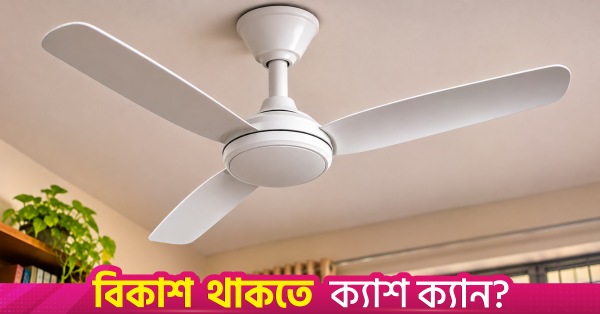
Representational Image. Photo: AI
“>

Representational Image. Photo: AI
Replacing standard household ceiling fans with energy-efficient models could slash Bangladesh’s peak summer power demand by up to 2,590 megawatts (MW) and spare $4 billion in future fossil-fuel infrastructure investments, a new study released today (2 November) shows.
According to the report by the Institute for Energy Economics and Financial Analysis (IEEFA), household cooling currently accounts for up to 5,212 MW of peak power demand.
However, highly efficient Brushless Direct Current (BLDC) fans account for less than 2% of the country’s existing residential fan stock.

The analysis estimates that transitioning to 35W BLDC alternatives, which consume half the power of standard 70W units, would save 6,913 gigawatt-hours (GWh) annually.
This reduction translates to roughly Tk 8,987 crore in yearly electricity cost savings and could avert over $4 billion in planned capital expenditure for new coal-fired power plants.
The findings come as Bangladesh’s import-dependent power sector grapples with severe grid strain and persistent load-shedding, with peak demand surging past 19,000 MW during the summer months.
While 96% of surveyed households expressed a willingness to adopt efficient fans upon learning of their utility savings, the report finds a major financial bottleneck: high upfront capital costs. Standard fans retail near Tk 2,000, whereas BLDC models command between Tk 5,000 and Tk 6,300.
To overcome adoption hurdles, IEEFA recommends that Bangladesh should implement a national rollout modeled on regional bulk-procurement programs, akin to India’s successful LED bulb distribution, while leveraging carbon finance revenues to subsidize consumer prices and embedding installment options directly into monthly utility billing.
About The Author