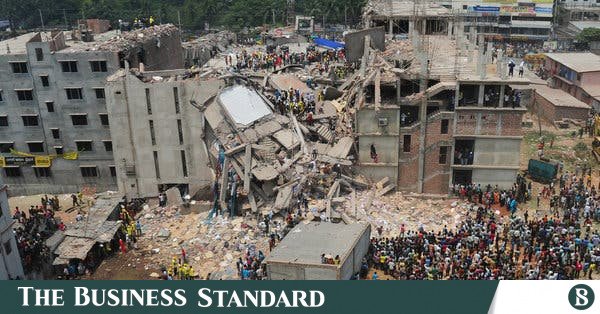
On the 13th commemoration of the Rana Plaza collapse, survivors and labour organisations gathered in Savar this evening for a candlelight vigil in remembrance of the workers who never made it home from one of the country’s darkest industrial tragedies.
In front of the ruins, at a makeshift altar set up where the building once stood, families of the deceased, injured survivors, and labour rights activists stood together in silence and flickering light. One by one, candles were lit – small flames held against a memory too heavy to fade – honouring lives lost beneath concrete and time.
Among those who returned to the site were survivors still carrying what the years have not been able to heal. Bulbuli (32), who suffered severe spinal injuries along with head and arm trauma, said she has not been able to work since the collapse.

Her voice breaking at moments, she described the last 13 years as a slow struggle through pain, uncertainty, and repeated appeals for compensation, rehabilitation, and medical care that never fully arrived.
Masuda Akter, another survivor who had been working on the seventh floor and narrowly escaped death, spoke of a wound that time has not softened. She said the memories remain as vivid as the injuries she still carries, and that survival itself has often felt like an unfinished burden.
At the programme, labour organisations held a joint press conference, renewing calls for justice and accountability. They said that even after more than a decade, victims’ families and injured workers are still forced to stand in public spaces to demand recognition, compensation, and dignity, calling it a continuing national failure.
The organisations placed a set of demands before the authorities, including reassessment of compensation and rehabilitation for victims of Rana Plaza and the Tazreen Fashions fire, proper medical treatment through specialised care teams, and inclusion of all affected workers under an employment injury protection scheme developed with the government, the ILO, and international partners.
They also demanded a special tribunal for swift prosecution of those responsible for worker deaths, full disclosure of all funds collected and distributed by government agencies, BGMEA, NGOs, and hospitals involved in rehabilitation, and the confiscation of assets belonging to the Rana Plaza owner and factory owners for the welfare of affected workers.
Other demands included permanent memorials in front of Rana Plaza and at Jurain cemetery, declaration of 24 April as a day of mourning for workers, along with a public holiday in the garment sector, and ensuring ethical and legal accountability of international brands that sourced from the affected factories.
About The Author