She noted what she described as a social imbalance in accountability, saying allegations are more easily directed at women than men in many cases.
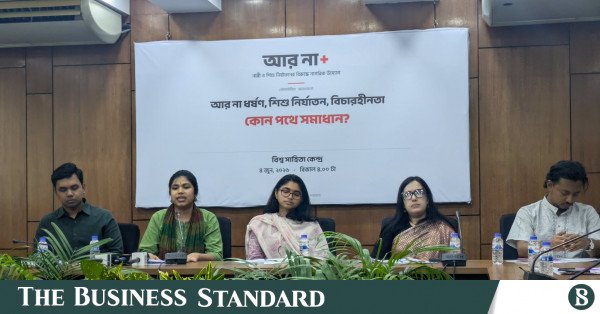
Rumeen Farhana attends an event titled “No More Rape, Child Abuse, Impunity: What is the Solution?” organised by the civic platform Ar Na+ in Dhaka on 4 June 2026. Photo: TBS
“>

Rumeen Farhana attends an event titled “No More Rape, Child Abuse, Impunity: What is the Solution?” organised by the civic platform Ar Na+ in Dhaka on 4 June 2026. Photo: TBS
Brahmanbaria-2 lawmaker Rumeen Farhana has called for making the judiciary more gender-sensitive, saying that a more active, “women-friendly and victim-friendly” justice system could help build a safer Bangladesh for women.
“Rape is closely linked with power structures in society and the rapists are either economically, socially or politically powerful, or they feel empowered because of their gender identity”, she said at an event titled “No More Rape, Child Abuse, Impunity: What is the Solution?” organised by the civic platform ‘Ar Na+’ in Dhaka today (4 June).
She noted what she described as a social imbalance in accountability, saying allegations are more easily directed at women than men in many cases.

Raising concerns over child abuse in religious educational institutions, she said parents often send their children to madrasas with trust and faith, and violations of that trust constitute a severe crime that contradicts expectations from such institutions.
Rumeen Farhana further said that child sexual abuse is particularly devastating, as victims often remain silent, suffer psychological trauma, and in some cases may even take their own lives.
Speakers at the event said rape, child abuse and sexual and gender-based violence have become a serious social and human rights crisis, requiring reforms in legal and institutional frameworks to ensure justice for victims.
Arif Sohel, representative of Gonobiplobi Udyog, said state initiatives alone are not enough and called for a broader social reform movement to address violence against women.
He said discriminatory social attitudes and attempts to control women often contribute to sexual violence.
Nazifa Jannat, spokesperson for Network for People’s Action (NPA), said sexual violence is a complex social problem that cannot be solved by any single organisation, stressing the need for stronger roles from relevant ministries and state institutions.
At the event, the Rape Law Reform Coalition presented a revised 10-point demand, including expansion of the legal definition of rape, victim and witness protection laws, gender-sensitivity training for justice sector actors, inclusion of consent education in curricula, sentencing guidelines, and a state compensation fund for survivors.
Speakers said that beyond legal reform, breaking the culture of impunity, raising social awareness, and establishing a victim-centred justice system are essential to effectively prevent sexual violence.
About The Author