Damaging solar equipment carries a maximum penalty of five years in jail, a fine of Tk 5 lakh, or both.
Representational image.Photo: Collected
“>

Representational image.Photo: Collected
The government has issued the Special Solar Power Installation Ordinance, 2026, introducing strict penalties for theft of solar power and equipment damage, as it seeks to expand the use of solar energy, attract private investment and bring greater discipline to the sector.
Under the ordinance, stealing solar power or its equipment is punishable by up to three years in prison, a fine of Tk 50,000, or both.
Damaging solar equipment carries a maximum penalty of five years in jail, a fine of Tk 5 lakh, or both.

The ordinance was issued last night (19 October) by the Legislative and Parliamentary Affairs Division of the Ministry of Law, Justice and Parliamentary Affairs.
The Cabinet gave policy and final approval to its draft at a meeting chaired by Prime Minister Tarique Rahman on Sunday.
Briefing reporters after the meeting, Cabinet Secretary Nasimul Gani said solar power has long been important for Bangladesh but had become even more crucial in the wake of the ongoing energy crisis.
“The impact of the war has shown how vulnerable Bangladesh could become in the energy sector when a war breaks out. For this reason, the government has placed additional emphasis on solar power,” he said.
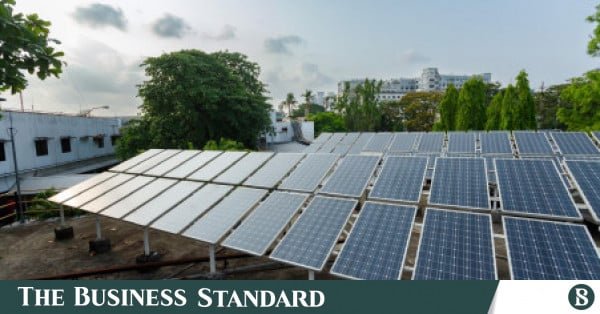
Under the ordinance, solar power systems can be installed on government buildings, residential rooftops, courtyards, vacant land adjacent to buildings and water bodies, with a maximum capacity of five megawatts.
The provisions also cover solar-powered irrigation pumps, cold storage facilities, electric vehicle charging stations, tea gardens, floating solar installations and agrivoltaic systems that combine solar power generation with agricultural activities. However, large-scale ground-mounted solar power projects will remain outside the ordinance’s scope.
The government has introduced two investment models — operational expenditure (OPEX) and capital expenditure (CAPEX). Under the OPEX model, investors will bear the cost of installing solar power systems, while under the CAPEX model, customer organisations can finance projects themselves and retain ownership.
The ordinance requires a tripartite agreement among customers, service providers and the competent authority. The agreement will cover equipment quality, safety, maintenance, electricity distribution, bill payments, ownership and dispute resolution.
It also allows customers under the net-metering system to supply surplus electricity to the national grid after meeting their own needs. The electricity supplied to the grid will be adjusted against their bills, while customers may also receive payment for surplus power at government-determined tariffs.
For procurement of goods and related services under the CAPEX model, the ordinance sets a maximum financial limit of Tk 5 crore for the limited tendering method, without making the electronic government procurement (e-GP) system mandatory.
To guide policy and promote solar power, the ordinance also provides for the formation of a National Policy Council, along with technical and coordination committees at district and upazila levels.
Sections 12 to 16 of the ordinance specify penalties for theft, damage to equipment, illegal connections, obstruction of work, and aiding or abetting offences. Buying, selling or possessing stolen solar equipment will carry the same penalties as theft.
Illegal connections and obstruction of installation, inspection and maintenance work are punishable by up to three years in prison, a fine of Tk 5 lakh, or both.
Offences under the ordinance will be tried by courts of first-class magistrates or metropolitan magistrates.
Cases involving offences listed in the schedule of the Mobile Court Act may also be tried by mobile courts.
About The Author