Across the country, search interest for “solo travel” was highest among people in Khulna division, while Rangpur recorded the lowest search interest.
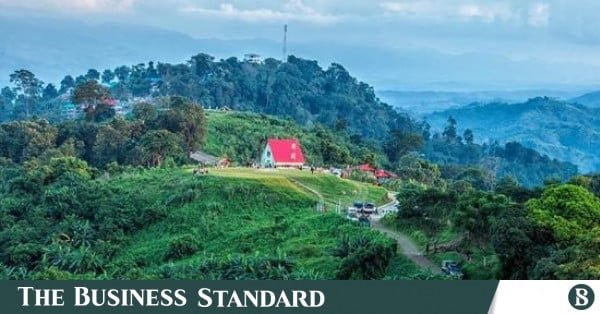
Representational image. Photo: AI Generated
“>

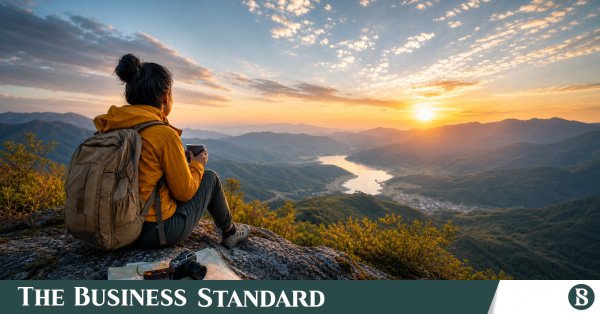
Representational image. Photo: AI Generated
Solo travel has hit peak search popularity on Google Trends in Bangladesh for the past two months, while the growing urge to travel alone in pursuit of self-discovery gains a name: “MeMooning”, a honeymoon-inspired term for travelling solo.
Across the country, search interest for “solo travel” was highest among people in Khulna division, while Rangpur recorded the lowest search interest.
Khondokar Jahirul Alam, CEO, Meghdoot Tourism, told The Business Standard (TBS), “Solo travel has existed in Bangladesh for years, with his experience dating back to 2016–17, but social media has made the trend more visible. Many solo travellers are working professionals who travel alone because their schedules do not match those of family members or friends. Some join organised group tours but prefer separate rooms to maintain their privacy, paying extra for single accommodation.”

The tour operator also said solo travellers come from different professional backgrounds, including multinational companies, financial institutions and pharmaceutical firms.
“While some travel independently to take a break from work or complete professional assignments in a quieter environment, others focus on outdoor activities, particularly cycling. Cox’s Bazar’s Marine Drive, the Khagrachhari–Rangamati route and roads connecting Rangamati with Bandarban are popular among cycling enthusiasts,” he added.
Infographic: TBS
“>

Infographic: TBS
According to Alam, a group of cycling enthusiasts he serves travels three to four times a year. He also believes solo travel among students may be growing, although his business primarily caters to corporate professionals. He emphasised that solo travel does not always mean travelling entirely alone; many people join group tours while maintaining their independence and personal space.
Google Trends uses a normalised 0-100 scale to measure relative search interest rather than raw search counts, with 100 marking the peak.
Meanwhile, the global solo travel market is projected to expand significantly, from $489 billion in 2025 to $1 trillion by 2031, according to the global market research firm Research and Markets.
To explore why interest in solo travel is rising in Bangladesh, TBS also spoke to four solo travellers.
A female solo traveller, Shamsunnahar Leepi, a business system analyst at BRAC IT, said her first solo trip was unplanned after her travel companion cancelled. The solo experience boosted her confidence, pushed her out of her comfort zone and encouraged her to take more trips like that.
“I enjoy being more open to new people and places when I travel alone, something I do not get to do as much in a group. You are never the same after a big adventurous solo trip. You return with a lot more courage. That is the beauty of it,” she said.
To point out the major qualities of a solo traveller, she suggested, “Research and flexibility are the most important qualities for a solo traveller, as one needs to prepare well, stay calm when plans change and find solutions.”
Another solo traveller, Shifat Rahman Susmoy, a bancassurance sales support officer at MetLife Bangladesh, said, “Solo travel came from a desire to move beyond familiar circles and understand how different communities live. I would call it an anthropological curiosity.”
“Safety can be an issue when travelling alone in remote areas, but it has made me more alert and adaptable. It has become a way of discovering not only new places and people, but also myself. For me, the ability to adapt, communicate and keep an open mind is what makes someone a good solo traveller,” he added.
UK-based video editor Sumit Majumder took up solo travel to break the monotony of everyday life. “I was tired of the same cycle every day – work, sleep, and repeat – so I wanted something different,” he said.
“I have once missed a train and had to figure out on my own how to reach my destination. It taught me to be more self-aware and expect the unexpected. I value the freedom to make my own plans without any distractions and figuring things out as I go,” he added.
Meanwhile, Muaz Abdur Rahim, a student at BRAC University, has travelled to 13 countries and all 64 districts of Bangladesh.
He said, “For solo travelling, one needs courage to live by oneself and handle all the upcoming challenges.”
“Cost is one of the biggest challenges, as expenses cannot be divided among fellow travellers. Still, I enjoy having complete control over my schedule and choices while stepping away from the responsibilities and chaos of everyday life,” he mentioned.
“It makes me feel free, clears my mind and gives me the courage to face challenges on my own,” he added.
The growing interest raises broader questions about the psychological aspects of solitude, shifting social attitudes towards being alone and how businesses are adapting to solo customers.
Global businesses built around solo customers
The rise of solo travel is also exposing an old assumption in the consumer market that people usually arrive in pairs or groups. Hotels traditionally price rooms around double occupancy, while restaurants and entertainment venues often design experiences around two or more people.
This growing market has contributed to a broader shift towards the idea of the “solo economy”, built around people who live, spend and make decisions on their own.
For example, one of the world’s luxurious hotel companies, Hilton is adapting its hotels for solo travellers by offering flexible seating and dining options.
The trend extends beyond travel, with The Washington Post highlighting how businesses are adapting to the idea of doing things alone.
In South Korea, the concept of “honjok”, or the “alone tribe”, has helped normalise products and services designed around solo living.
Meanwhile, Japan’s Ichiran ramen chain uses private booths to encourage solo dining and reduce distractions.
In the United States, Disney theme parks and some of their competitors have used single-rider lines that offer solo visitors shorter waits.
According to Forbes, companies can leverage the solo economy by treating it as a distinct consumer segment and focusing on individual buying patterns and frequency rather than benchmarking single consumers against groups.
For now, the rising interest suggests that solo travel has found a place in Bangladesh’s changing travel culture. Whether it stays depends on how the market, social attitudes and travellers themselves evolve.
About The Author