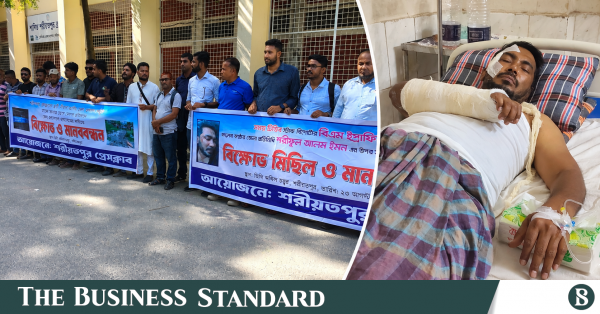
He testified about the recovery of an unidentified body allegedly linked to a former BDR member who had reportedly been abducted months earlier.
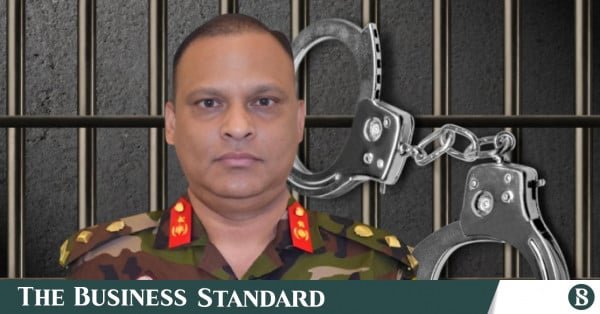
Former major general Ziaul Ahsan. Illustration: TBS
“>

Former major general Ziaul Ahsan. Illustration: TBS
A retired additional superintendent of police testified before the International Crimes Tribunal-1 today (23 August) in a case against former major general Ziaul Ahsan over allegations of crimes against humanity involving the enforced disappearance and killing of more than 100 people during the Awami League government.
Retired additional superintendent of police Nizam Uddin Howlader gave his deposition before the tribunal and was later cross-examined by lawyers for Ziaul Ahsan, according to tribunal sources.
In his testimony, Nizam said he was serving as officer-in-charge of Sharankhola Police Station in Bagerhat on 17 May 2010 when a police chowkidar informed him that an unidentified body had been found on the western bank of the Baleshwar River in the Chalerayenda area.

The body was decomposed, with cement sacks tied around it, its abdomen cut open, its head covered with cloth and its hands and feet tied, he testified.
Nizam said he informed Sub-Inspector Iqbal, who went to the scene, prepared an inquest report and arranged to send the body to Bagerhat Sadar Hospital for autopsy. As it was already evening, the body was brought to the police station and sent to the hospital the following morning.
After an autopsy, the unidentified body was buried through Anjuman Mufidul Islam, he said.
Around two days later, a man contacted Nizam and claimed that the body was his brother’s. He said his brother had been abducted from Kotalipara in Gopalganj around two to three months earlier and that an abduction case had been filed with Kotalipara Police Station.
Four to five days later, two brothers, the wife and an uncle of the deceased came to the police station and identified the body from the shirt and trousers kept there, Nizam testified.
They identified the deceased as Nazrul Islam, a former member of the then-Bangladesh Rifles (BDR), and his wife claimed the body was that of her husband.
Nizam said he informed them that the body had already been buried in a Bagerhat cemetery as it was unidentified. The family wanted to take the body to their locality, but he told them they could do so through the district administration after DNA testing confirmed the identity.
He further testified that around four to five days after the body was recovered, a colonel from the Khulna BDR sector contacted him after learning about the case from newspapers and sought details about the body.
The officer also said a BDR member would visit the police station and asked Nizam to provide assistance with the necessary documents.
The family agreed to a DNA test, Nizam said. About two weeks after the incident, he was transferred to Rampal Police Station.
Nizam also told the tribunal that he later learned from newspaper reports that bodies of people with gunshot wounds were being recovered from different parts of the country during that period.
The prosecution had formally brought three allegations against Ziaul on 17 December last year over the enforced disappearance and killing of more than 100 people.
The tribunal framed charges against him on 14 January and ordered the trial to begin.
Ziaul Ahsan was the former director general of the National Telecommunication Monitoring Centre (NTMC), the country’s national telecommunications surveillance agency.
He was arrested in mid-August 2024 following the fall of the Awami League government.
About The Author