Mariners cite congestion, strong currents and traffic coordination gaps
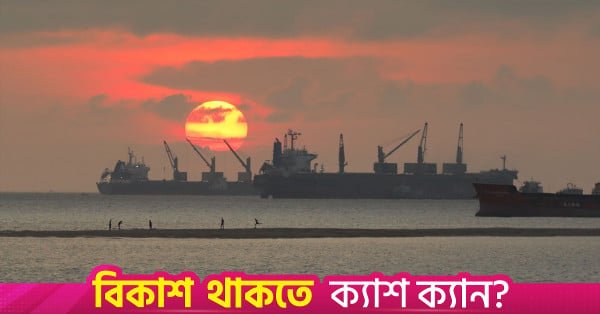
Island hazard: Lighterage workers play on an island in the Bay of Bengal during low tide. The increasing number of underwater islands near Chattogram Port threatens this crucial economic lifeline of the country. Lighterages, barges and other vessels often run aground on the shoals at low tide. Mother vessels have to anchor in deeper waters at the port’s outer anchorage to avoid the submerged hazards. This photo was taken from Chattogram’s Patenga on Thursday. Photo: Minhaz Uddin
“>

Island hazard: Lighterage workers play on an island in the Bay of Bengal during low tide. The increasing number of underwater islands near Chattogram Port threatens this crucial economic lifeline of the country. Lighterages, barges and other vessels often run aground on the shoals at low tide. Mother vessels have to anchor in deeper waters at the port’s outer anchorage to avoid the submerged hazards. This photo was taken from Chattogram’s Patenga on Thursday. Photo: Minhaz Uddin
Highlights:
- At least eight collision-related incidents reported over past year
- Experts warn major accident could disrupt supply chains
- Strong tidal currents of 5-6 knots complicate navigation
- Safe vessel spacing often difficult to maintain
- Mariners allege weak traffic coordination near pilot station
- International mariners raise concerns over VTS communication
- CPA rejects allegations of negligence in VTS operations
Repeated collisions, near misses and vessel mishaps at Chattogram Port’s outer anchorage have brought navigational safety under renewed scrutiny, with maritime experts and international mariners warning that congestion, strong tidal currents and traffic coordination gaps could threaten operations at Bangladesh’s main trade gateway.
Chattogram Port handles nearly 90% of the country’s external trade, making safety at its outer anchorage an economic concern, not only a maritime one.

According to port officials, at least eight collision-related incidents have taken place in the port and anchorage areas over the past year.
The concerns intensified after two accidents occurred within three days in the port area.
Infographic: TBS
“>

Infographic: TBS
According to port sources, Maersk-operated container vessel Maersk Chattogram, carrying import cargo from Singapore, collided with domestic vessel HR Turag at the Alpha anchorage on 1 May morning.
The collision caused structural damage to both vessels and left around 2,800 import containers in uncertainty, raising concern among importers, shipping agents and clearing and forwarding operators.
Authorities have formed an investigation committee to determine the cause of the accident.
Just two days earlier, on 28 April, tanker Prive Angel struck Dolphin Oil Jetty-6, operated by Padma Oil Company, during berthing operations, causing extensive damage to the structure.
A joint assessment committee later estimated the rehabilitation cost at Tk3.40 crore. Including VAT and other taxes, the total compensation claim rose to around Tk4.25 crore.

Maritime experts attributed the repeated incidents to strong tidal currents, congestion at the anchorage, alleged weaknesses in vessel traffic management and pressure on vessel movement.
They warned that a major maritime accident blocking the port channel could disrupt national supply chains and severely affect the economy.
Pattern of accidents
The recent collisions are part of a broader pattern of maritime incidents reported around the outer anchorage in recent years.
On 20 January this year, LPG carrier Gas Harmony lost control due to mechanical failure while attempting to berth at the United Tank Terminal jetty and veered towards the KAFCO ammonia jetty. The onboard pilot managed to avert a collision at the last moment.
On 17 October 2025, lighter vessel MV Zayan, carrying ball clay for the ceramic industry, suffered a hull breach near Patenga Sea Beach.

On 7 September 2025, lighter vessel Char Shamayel sank at Kutubdia anchorage after losing control while unloading cargo from MV New Legacy. Two crew members died after the vessel became trapped between two larger ships.
‘One of the world’s most difficult anchorages’
Captain Jalal Uddin, nautical surveyor and principal officer in-charge at the Mercantile Marine Department, said the geography of the Bay of Bengal makes navigation around Chattogram particularly challenging.
“The Bay of Bengal is one of the most turbulent seas in the world. The outer anchorage near Chattogram is especially difficult because the coastal shape generates strong natural currents of 5-6 knots,” he told TBS.
“Controlling large vessels in such conditions is much more difficult than in many other international ports,” he said.
According to him, maintaining at least one nautical mile distance between anchored mother vessels is necessary to safely manage tidal currents.

“But due to rising import and export pressure, vessel traffic has increased sharply, leaving little room to maintain safe distance between vessels. This often results in collisions between vessels and with fixed structures,” he said.
Captain Jalal also pointed to congestion caused by operators avoiding costly lightering operations.
He said vessels with drafts above 12 metres are usually advised to anchor at Kutubdia, where the sea is deeper. However, many operators prefer to anchor closer to the estuary at Alpha, Charlie and Bravo anchorages to reduce operational costs.
“That further increases congestion and the risk of collision,” he added.
Concerns over VTS operations
Veteran maritime expert and Bangladesh Merchant Marine Officers’ Association President Captain Anam Chowdhury said weak traffic coordination, congestion near the pilot station and inadequate communication from the vessel traffic system (VTS) had increased navigational risks at the outer anchorage.
“When vessels receive berthing schedules, many are instructed to gather at the same piloting station around the same time. As a result, ships rush simultaneously towards the station, increasing the risk of collision,” he said.
Referring to the 1 May collision, Captain Anam said the accident occurred near the piloting station where both vessels were attempting to secure berthing positions.
He said rising vessel movement and congestion had made navigation riskier, while international mariners had also raised concerns over instructions from the VTS control room.
“Conflicting or inadequate communication sometimes pushes vessels into dangerous situations,” he added.
International mariners speak out
The latest collisions also triggered discussion among international mariners on professional networking platform LinkedIn.
Master mariner Jeff Seale described incidents around Chattogram outer anchorage as “not particularly rare”.
“The area is regarded by many mariners as one of the more challenging anchorages globally due to tidal currents reportedly reaching 4-6 knots or more during spring tides, poor holding ground, severe congestion, dense local traffic and constant lightering operations,” he wrote.
Another master mariner, Parveen Ahlawat, said anyone who had navigated Chattogram waters understood the seriousness of the risks.
“I personally feel local VTS can do a lot to make it safe; however, they work in contrast,” he commented.
A mariner identified as Hitesh R alleged that non-mariners were operating the VTS system.
“Mariners have to follow conflicting instructions which are often bereft of domain knowledge,” he wrote.
Another mariner, identified only as Theodoros, claimed that during a 41-day stay at Chattogram anchorage, he witnessed four collisions and two groundings.
CPA rejects criticism
Commodore Ahmed Amin Abdullah, member for marine and harbour at Chittagong Port Authority (CPA), rejected allegations of negligence and defended the professionalism of VTS operators.
Speaking to TBS, he said vessels are assigned berthing sequences in advance and the 1 May collision occurred before any pilot had boarded the vessel.
“If a captain rushes on his own before port pilot boarding, there is little scope to blame the pilot,” he said.
He also dismissed allegations that inexperienced personnel operate the VTS system.
“The people working at the VTS are highly experienced professionals who have served for many years. Some of the online comments were emotional and not fully reflective of operational realities,” he said.
The CPA official, however, said the authority was reviewing all incidents carefully and was not being complacent.
According to him, vessel waiting time at the anchorage has recently dropped close to zero due to improved operational efficiency at the port.
Still, maritime experts said operational improvements alone would not be enough without stronger traffic management, stricter enforcement of navigational safety protocols and better coordination at the anchorage.
With Chattogram Port remaining Bangladesh’s primary trade gateway, they said ensuring safety at its outer anchorage had become an economic concern, not only a maritime one.
About The Author