The traditional Jalkeli festival, a joyous occasion for the Rakhine community, began in Cox’s Bazar today (17 April), marking the end of Rakhine year 1387 and the beginning of 1388.
According to the Rakhine calendar, the community bid farewell to the outgoing year yesterday and ushered in the new year today. The annual celebrations, observed for generations, combine religious rituals and cultural festivities.
Sources said the festival formally began on Tuesday with various religious programmes at Buddhist monasteries. From today, the final three-day water festival, known locally as Sangrain, will continue.

Members of the Rakhine community said people from all age groups join processions from Rakhine settlements to Buddhist monasteries in the morning, carrying clay pots and symbolic items. Religious rituals are then performed at the monasteries.
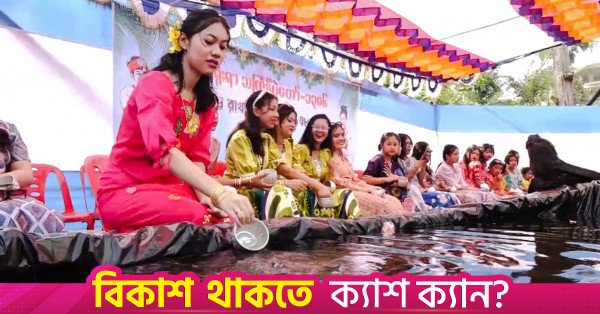
In the afternoon, young men and women gather at decorated festival pavilions accompanied by traditional musical instruments. The pavilions are adorned with flowers and colourful paper decorations, while water drums are placed at the centre.
Participants on both sides engage in playful celebrations by splashing “holy water” on one another amid music and dance.
Rakhine Buddhist Welfare Association Central President Mongchen Hla Rakhine said the water festival symbolises the washing away of past year’s sorrow, pain and misfortunes, while welcoming the new year with renewed hope.
He added that various areas of Cox’s Bazar city, including East and West Fish Market, Fulbagh Road, Kangpara, Hangorpara, Tekpara, Burmese School Road, Buddhist Temple Road and Chaul Bazar, will host the celebrations.
The festival is also being held in several upazilas, including Maheshkhali, Teknaf, Chakaria, Harbang, Ramu and Chowfaldandi, with at least 50 pavilions set up across the district.
Authorities have taken extensive security measures to ensure peaceful celebrations. Police presence will be maintained at all pavilions, along with surveillance in plain clothes.
Cox’s Bazar District Police media officer and Additional Superintendent of Police (Traffic) Debdut Majumdar said security arrangements have been strengthened to ensure a safe and peaceful celebration of the traditional water festival.
He expressed hope that the festival would conclude in an atmosphere of harmony and communal unity.
About The Author