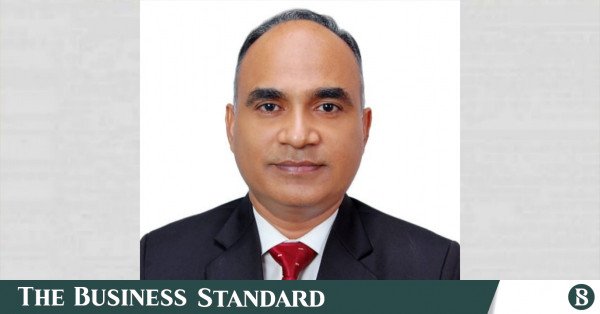
Md Rafiqul Islam was previously ordered to be transferred to the Ministry of Women and Children Affairs as an additional secretary. The government has now cancelled that posting and appointed him to head BPC instead.
Chairman of Bangladesh Petroleum Corporation, Dr Md Rafiqul Islam. Photo: Collected
“>

Chairman of Bangladesh Petroleum Corporation, Dr Md Rafiqul Islam. Photo: Collected
After months of changes at the top, the government has appointed Additional Secretary Md Rafiqul Islam as chairman of Bangladesh Petroleum Corporation (BPC).
The Ministry of Public Administration issued a notification to this effect yesterday (6 September), appointing him to the post on deputation.
According to the notification, Rafiqul, currently a member of the Bangladesh Energy and Power Research Council (BEPRC), has been transferred to the Energy and Mineral Resources Division and posted as BPC chairman on deputation.

He was previously ordered to be transferred to the Ministry of Women and Children Affairs as an additional secretary. The government has now cancelled that posting and appointed him to head BPC instead.
The order, signed by Deputy Secretary Mohammad Nur-e-Alam of the Public Administration Ministry’s Deputation-1 branch, says it was issued in the public interest and will take effect immediately.
Frequent changes at BPC
Rafiqul takes charge after a series of changes in BPC’s top position since the beginning of the year.
On 29 January, the government removed Md Amin-Ul-Ahsan as BPC chairman and posted him as an officer on special duty (OSD) in the Public Administration Ministry.
On 1 February, Additional Secretary Md Rafiqul Alam of the Energy and Mineral Resources Division was given the additional responsibility of BPC chairman.
A day later, on 2 February, Additional Secretary Md Rezanur Rahman was appointed BPC chairman. He had previously served as chairman of Petrobangla.
Rezanur, however, was transferred to the Public Administration Ministry as an additional secretary (attached) on 26 July, about six months after taking charge. The government did not specify a reason for his transfer.
Following his removal, Additional Secretary Md Ziaul Haque of the Energy and Mineral Resources Division was given the additional responsibility of BPC chairman on 2 August.
The post remained vacant for about a week before Additional Secretary Md Manzur Alam Pradhan was appointed acting BPC chairman on 12 August.
The latest appointment makes Rafiqul Islam the first full-time chairman of BPC following the recent string of interim and additional appointments.
Who is Rafiqul Islam?
Md Rafiqul Islam is a member of the 18th Bangladesh Civil Service (BCS) batch.
He studied applied chemistry and chemical engineering at the University of Dhaka, completing both his bachelor’s and master’s degrees there. He later obtained an MPhil in chemistry from Bangladesh University of Engineering and Technology (Buet).
In 2004, he earned a PhD in materials engineering from Iwate University in Japan.
In 2013, he worked in South Korea as a postdoctoral researcher and research professor in nanotechnology.
Rafiqul began his government career in 1999 as an assistant director at the Implementation Monitoring and Evaluation Division (IMED).
He subsequently held several positions in the Power Division and the Energy and Mineral Resources Division.
He served as assistant chief at the Power Division from 2004 to 2008 and as senior assistant chief from 2008 to 2010.
He then worked as deputy secretary at the Energy and Mineral Resources Division from 2013 to 2020.
From 2020 to March 2024, he served as joint secretary (planning) at the division.
He was appointed additional secretary of the Energy and Mineral Resources Division in April 2024 and remained there until September of that year.
Since October 2024, he has served as a member of the BEPRC as an additional secretary.
Rafiqul has also served for six months as director general of the Hydrocarbon Unit on an additional-charge basis.
He previously chaired the board of directors of Sundarban Gas Company Ltd.
His appointment comes at a time when BPC, the state-owned entity responsible for importing, storing, and distributing petroleum products, faces the challenge of ensuring stable fuel supplies while managing procurement, pricing, and the country’s growing energy demand.
About The Author