305 women and children suffered various forms of abuse during the month
Logo of Human Rights Support Society
“>

Logo of Human Rights Support Society
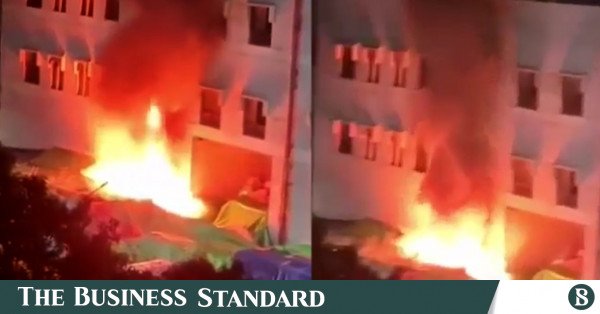
At least five people were killed and 289 others injured in 64 incidents of political violence across Bangladesh in May, according to a monthly human rights monitoring report released by Human Rights Support Society (HRSS).
The report, published today (5 June), also documented 31 deaths and 68 injuries in incidents of mob violence and lynching, while 305 women and children suffered various forms of abuse during the month.
According to HRSS, the findings were based on reports published in 16 national media outlets as well as its own fact-finding investigations.

The report said political violence declined compared with April, when 98 incidents left six people dead and 533 injured.
Of the 64 incidents recorded in May, 18 were linked to internal conflicts within the BNP, leaving at least 114 people injured.
In 10 clashes between BNP and Jamaat resulted in one death and 49 injuries, while in 14 BNP-Awami League confrontations left two people dead and 72 injured.
Among the five victims killed in political violence were one BNP activist, one Jamaat member, two members of the United People’s Democratic Front, and one woman.
The report identified political rivalry, factional disputes, extortion and struggles for dominance as the main drivers of violence.
HRSS expressed concern over the continuing trend of mob attacks and lynchings. It recorded 66 incidents of mob violence in May, resulting in at least 31 deaths and 68 injuries.
The incidents stemmed from allegations including theft, robbery, mugging, verbal disputes, territorial dominance and religious insult.
The rights group reported that 78 journalists were subjected to harassment or abuse in 39 separate incidents during May.
At least 42 journalists were injured, 18 were assaulted, nine received threats, and one was detained. Additionally, eight journalists were accused in two separate cases.
The report also alleged that law enforcement agencies directly or indirectly obstructed at least 10 public meetings and rallies, leaving more than 41 people injured.
HRSS said freedom of expression remained under pressure, with six people detained and seven cases filed in connection with 11 incidents related to online speech and public commentary.
Among those detained were individuals accused of criticising Prime Minister Tarique Rahman, BNP leaders, or religious beliefs on social media.
The report noted that 12 people were also accused in five separate cases filed under provisions of the Cyber Security Ordinance 2025.
The organisation expressed concern over alleged extrajudicial killings and deaths in custody.
It reported that two people died during separate operations, including one who was allegedly shot by a Forest Department official in the Sundarbans and another during an anti-drug operation.
At least seven inmates died in prisons across the country in May, including four convicted prisoners and three detainees awaiting trial.
HRSS also documented six deaths and 20 injuries in six incidents along the Bangladesh-India border, while India’s border force allegedly detained 14 Bangladeshis during the month.
Along the Bangladesh-Myanmar border, three people were killed and one injured in landmine explosions. The report also said 18 people were detained by the Arakan Army in four separate incidents.
The report said 305 women and girls were subjected to violence in May.
Among them, 83 women and children were victims of rape, including 57 minors. Seventeen women and girls were subjected to gang rape, while 76 experienced sexual harassment or assault.
Domestic violence claimed the lives of 63 women, injured 31 others and drove 45 women to suicide, according to the report.
HRSS also reported that at least 215 children suffered abuse during the month, with 56 children losing their lives.
The organisation recorded 57 incidents involving workers, resulting in 20 deaths and 130 injuries.
An additional 41 workers died in workplace accidents that HRSS attributed to unsafe working conditions and inadequate safety equipment.
In its overall assessment, HRSS Executive Director Ejazul Islam said the continued prevalence of political violence, mob attacks, restrictions on freedom of expression, attacks on journalists, violence against women and children, border-related violence and lab our abuses remained deeply concerning.
He called on the government to take a more accountable role in protecting human rights and urged civil society, media and rights organisations to play a more active role in addressing the situation.
About The Author