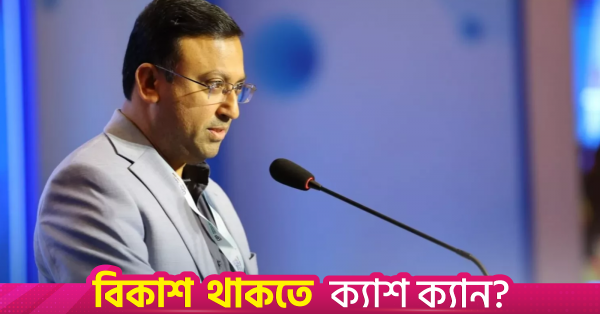
Humaiun Kobir said the visit would feature detailed discussions on cooperation and reciprocal investment opportunities in trade, investment and development.
State Minister for Foreign Affairs Humaiun Kobir. Photo: Collected
“>

State Minister for Foreign Affairs Humaiun Kobir. Photo: Collected
Strengthening economic ties and attracting investment will top Bangladesh’s agenda during Prime Minister Tarique Rahman’s upcoming visit to Japan, State Minister for Foreign Affairs Humaiun Kobir said today (10 October).
Tarique Rahman will leave for a four-day visit to Japan on 26 October, during which Bangladesh will seek reciprocal investment partnerships and explore sector-specific cooperation.
“Our main priorities during the Japan visit will be to strengthen bilateral relations, deepen economic partnerships and increase investment,” Humaiun told journalists after a seminar on Bangladesh-Saudi Arabia relations at the Foreign Service Academy in Dhaka today.

Describing Japan as one of Bangladesh’s largest and longstanding development partners, he said Japanese investments in several mega projects had helped strengthen bilateral ties.
The visit would feature detailed discussions on cooperation and reciprocal investment opportunities in trade, investment and development, he added.
We are having positive discussions on the Makkah Defence Agreement. We are viewing it positively.
State Minister for Foreign Affairs Humaiun Kobir
Separately, Humaiun said Bangladesh was holding positive discussions on the proposed Makkah Defence Agreement, with any decision to be guided by national interests and the potential contribution of the country’s peacekeeping expertise to regional stability.
“We are having positive discussions on the Makkah Defence Agreement. We are viewing it positively,” he said at the seminar, jointly organised by the Bangladesh Institute of International and Strategic Studies (BIISS) and North South University’s Center for Migration Studies.
Bangladesh could take a favourable decision if participation served its national interests and allowed its peacekeeping expertise to contribute to the welfare of Muslim nations and peace in the Middle East, he said.
Maintaining peace and stability in the region encompassing Makkah and Madinah was a key consideration, he added, noting that Bangladesh could deploy its peacekeeping expertise more extensively around the world.
On bilateral ties with Saudi Arabia, Humaiun said Prime Minister Tarique Rahman had accepted an invitation from the Saudi Crown Prince to visit the Kingdom. The Crown Prince had also expressed interest in visiting Bangladesh, which Dhaka would welcome at a mutually convenient time.
Saudi Arabia’s Vision 2030 and Bangladesh’s economic transformation had created opportunities for cooperation in investment, human capital, technology and connectivity, he added.
Discussions were underway on a possible investment fund to facilitate joint investments in priority sectors, including renewable energy, infrastructure, ports, logistics, agriculture, fisheries, food security, healthcare, pharmaceuticals, information technology and artificial intelligence.
He also stressed the need to send more highly skilled and certified professionals to Saudi Arabia, with training aligned with the Kingdom’s changing labour market requirements. Protecting the welfare, dignity and rights of Bangladeshi workers would remain a government priority, he added.
“The next chapter of Bangladesh-Saudi Arabia relations should therefore be defined by value creation rather than volume alone,” he said.
The seminar was attended by Saudi Ambassador to Bangladesh Dr Abdullah Zafer bin Abiyah; Foreign Ministry Secretary (Bilateral) Md Nazrul Islam; Expatriates’ Welfare and Overseas Employment Secretary Md Mokhtar Ahmed; BIISS Director General Major General ASM Ridwanur Rahman; and NSU Vice-Chancellor Professor Abdul Hannan Chowdhury.
Professor Sk Tawfique M Haque, director of NSU’s South Asian Institute of Policy and Governance, delivered the introductory remarks. Keynote presentations were delivered by Dr Mohammed Nuruzzaman, professor in NSU’s Department of Political Science and Sociology, and Dr Selim Reza, associate professor in the same department and coordinator of the university’s Center for Migration Studies.
Rashed Uz Zaman, professor of international relations at the University of Dhaka, moderated the panel discussion.
About The Author