Prime Minister Tarique Rahman yesterday (8 August) urged Upazila Nirbahi Officers (UNOs) to work with the highest sense of responsibility and humanity for the development of the country and welfare of its people, saying public service is a major trust and blessing for those entrusted with state responsibilities.
“Today we are here, tomorrow we will not be. Let us all try to leave a safe Bangladesh for the next generation, where everyone can live a little better,” he said.
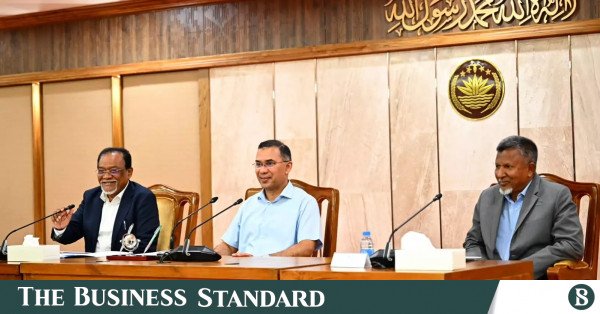
The prime minister is speaking at a meeting with UNOs from different upazilas at his office in Tejgaon, said a release issued by the PM’s Press Wing.

Describing field-level officials as a bridge between the government and the people, he said an upazila where an UNO is posted may not be his or her own, but it is still a part of Bangladesh and its people should be treated like their own. “If we want to put this small country in order, we all have to work together,” he said.
Tarique Rahman also urged the UNOs to play a more active role in raising public awareness, saying every social problem cannot be solved simply by making or enforcing laws.
He stressed the need for stronger local initiatives to protect the environment.
The prime minister noted that Dhaka has long remained among the world’s most polluted cities, but said recent improvements are a positive sign that should be built upon.
He urged UNOs to encourage people and local authorities to plant more trees. “If officials motivate people who already want to plant trees, an individual who plants 10 trees could be encouraged to plant 50.”
Tarique Rahman also asked the field administrators to promote sports at the local level, saying sports help young people develop discipline and positive habits.
He said sports events need not be limited to national occasions such as Victory Day or Independence Day and could be organised around any meaningful local occasion.
The prime minister expressed concern over what he described as a decline in compassion and humanitarian values in society.
“People are gradually losing their sense of kindness and becoming crueller,” he said, adding that various forms of mental and social pressure could be contributing to the trend.
Tarique Rahman called for initiatives at the local level to strengthen empathy and compassion among people.
“If we are the best of creation, then we have to think not only about ourselves but also about others,” he said, urging people to care for animals, birds and nature as well.
The prime minister suggested that UNOs visit schools and help raise children’s awareness about humanity, compassion and care for animals and nature.
He said such values, once taught through family, society and religious practices, have weakened over time.
Tarique Rahman said efforts are being made to bring them back, including by incorporating lessons on humanity and compassion for animals at the primary level.
At the meeting, he praised and thanked UNOs from 83 upazilas for completing canal re-excavation projects and returning surplus funds to the government treasury.
The prime minister said their actions have set a positive example for both the government and the people. “You have set a positive example for the government and the people. I believe you can do many good things for the people,” he said.
He told the officials that they have reached their positions through their own merit and have been given an opportunity to serve the people and the state.
“Realising the importance of this opportunity, you have to use it for the welfare of the people,” Tarique Rahman said.
During the meeting, UNOs shared the impact of canal re-excavation projects in their respective upazilas, particularly on agriculture, water management and people’s daily lives.
They said areas that previously produced two crops a year are now producing three crops following the re-excavation of canals.
Improved drainage and irrigation have also brought positive changes to farming and local water management, the UNOs said.
They also conveyed messages of thanks and gratitude from beneficiaries to the Prime Minister.
Receiving the messages, he said the main objective of re-excavating canals is to restore the traditional riverine character of Bangladesh.
Tarique Rahman warned that the country’s groundwater level is gradually falling, which could create a serious crisis in the future. “We have to prepare from now to face that situation,” he said.
He said the government plans to re-excavate 20,000 kilometres of canals across the country in phases.
The prime minister expects the programme to bring long-term benefits by conserving water, increasing agricultural production, reducing waterlogging and maintaining environmental balance.
He said national development is not limited to infrastructure or economic growth; building humanity, compassion, and a sense of responsibility among people is also an important part of development. “Our main issue is one. Our goal and objective are also one,” he said.
Tarique Rahman again urged field-level officials to remain responsible and humane in dealing with people and called for an end to cruelty towards wildlife and animals.
“Let Bangladesh be a safe place for all living beings,” he said.
The meeting was attended by 83 UNOs who returned surplus funds from canal re-excavation projects.
Prime Minister’s Adviser on Public Administration Ismail Zabiullah, State Minister for Public Administration Abdul Bari, Cabinet Secretary Dr Nasimul Ghani, Prime Minister’s Principal Secretary ABM Abdus Sattar, Press Secretary Saleh Shibli and Additional Press Secretary Atikur Rahman Rumon, among other senior officials, were present.
About The Author