The prime minister identified waste and uncleanliness as among the major problems facing Dhaka, saying they could not be resolved in a day or even a week.
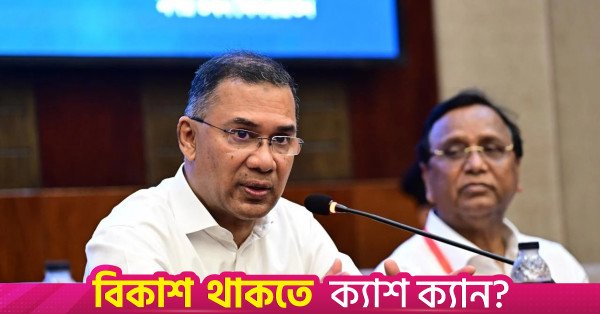
Prime Minister Tarique Rahman. Photo: Collected
“>

Prime Minister Tarique Rahman. Photo: Collected
Prime Minister Tarique Rahman today (19 October) urged Dhaka South City Corporation (DSCC) officials and employees to work sincerely to make the capital clean, healthy and liveable, saying everyone should contribute to building a healthier city for the sake of their children.
“Forget about everyone else; let us build a healthy environment and a healthy city for our own children. Let us all work together to make that happen,” he said while exchanging views with DSCC officials and employees at Nagar Bhaban this morning, according to the PM’s Deputy Press Secretary Hasan Shiplu.
Tarique Rahman said no parent wanted their children to grow up in a dirty, germ-infested and unhealthy environment. He noted that children travel across the city to schools, colleges, playgrounds and other places rather than staying only in their own neighbourhoods.

“Your children will not stay only in your neighbourhood; they will move around the entire city. So, let us all work together. If we try, we can do it,” he said.
The prime minister identified waste and uncleanliness as among the major problems facing Dhaka, saying they could not be resolved in a day or even a week. However, he said the situation could gradually improve if everyone made a sincere effort.
Addressing the city corporation’s officials and employees, he said they were directly or indirectly involved in addressing the problem and should remain confident that sustained efforts would bring change.
“It may take time, but if you keep trying, change will come. You must have that confidence. The most important thing is the willingness to act,” he said.
Urging officials to take personal initiative in identifying and resolving problems, Tarique Rahman said he regularly observed problems during his visits to different places and contacted the people concerned to address them.
“If you also identify problems in this way and take steps to resolve them, change will certainly be possible,” he said.
Citing London as an example, the Prime Minister said many areas of the British capital had also suffered from waste and uncleanliness in the 1960s and 1970s, but sustained efforts and public awareness had helped improve the situation.
He said people often returned from visits to clean and well-maintained foreign cities, wishing Dhaka could be similar. However, simply regretting the situation would not help unless everyone fulfilled their own responsibilities.
Referring to a recent conversation with a senior executive of a South Korean company that had been doing business in Bangladesh for a long time, Tarique Rahman said the executive had observed some improvement in Dhaka’s cleanliness.
“He did not say there had been a lot of change. He said it had improved somewhat. That means change is possible. If we all work together, we can do even better,” he said.
The Prime Minister also spoke about his efforts to monitor the condition of roads and waste management facilities in the capital, noting that new road dividers were being installed in some places and conditions at some waste transfer stations had improved. He stressed the need to continue such initiatives.
Urging officials and employees to practise self-criticism, he said they could criticise him but should also assess whether they were properly fulfilling their own responsibilities and making sufficient efforts.
Earlier, Tarique Rahman visited the emergency operations centre at Nagar Bhaban, where he reviewed websites providing weather information, updated earthquake data from the United States Geological Survey (USGS), wind speed, flood forecasts and air quality monitoring.
He also enquired about how the information was monitored and how emergency situations were identified.
The prime minister also observed the city’s cleanliness activities through Facebook Live and watched a video presentation on the DSCC’s urban development and other activities.
State Minister for Local Government, Rural Development and Cooperatives Mir Shahe Alam, DSCC Administrator Abdus Salam, Dhaka North City Corporation Administrator Shafiqul Islam Khan Milton and Local Government Division Senior Secretary Shahidul Hassan were present on the occasion.
About The Author