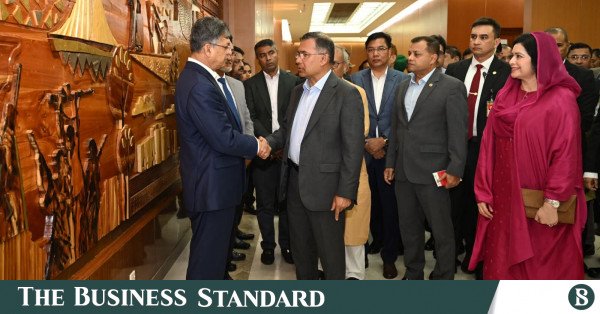
Prime Minister Tarique Rahman left Dhaka for Japan early Monday (26 October) on a four-day state visit at the invitation of Japanese Prime Minister Sanae Takaichi, aiming to deepen bilateral ties, attract investment and expand trade and development cooperation.
A Biman Bangladesh Airlines commercial flight carrying the prime minister, his wife Dr Zubaida Rahman and other members of the entourage departed from Hazrat Shahjalal International Airport at 12:15am, said Prime Minister’s Additional Press Secretary Atikur Rahman Rumon.
The flight is scheduled to reach Narita International Airport in Tokyo at 9:25am local time, he said.

“Prime Minister Tarique Rahman is going to Japan on a state visit. He is travelling on a commercial flight of Biman Bangladesh Airlines,” Rumon said.
Home Minister Salahuddin Ahmed, Prime Minister’s Political Adviser and BNP acting Secretary General Ruhul Kabir Rizvi, Chief Whip Nurul Islam Moni and Cabinet Secretary Nasimul Ghani saw the prime minister and his wife off at the VIP lounge of the airport.
The prime minister is leading a 15-member high-level delegation during the visit.
The prime minister’s tentative programmes include engagements with the Japan-Bangladesh Parliamentary Friendship League and the chairman of the Japan-Bangladesh Committee for Commercial and Economic Cooperation.
Meetings are also being planned with the president of the Japan International Cooperation Agency (Jica), the governor of the Japan Bank for International Cooperation (JBIC), the president of the Japan External Trade Organization (JETRO) and the chairman of the Sasakawa Peace Foundation.
The proposed itinerary includes visits to an LNG terminal and power plant in Futtsu City, Chiba, the headquarters of UNIQLO and a Toyota factory in Nagoya.
The foreign secretary said the two sides are discussing draft memoranda of understanding (MoU) and cooperation agreements covering agriculture, fisheries, human resource development, skills enhancement, civil aviation, trade, environmental conservation and local government modernisation.
“We hope that many of these MoUs will be signed during the visit,” he said.
Around eight MoUs are under discussion, of which three to four could be signed during the visit. Separate agreements are also being pursued in education and human resource development.
Detailed discussions are planned on Japanese support for establishing factories in Bangladesh, generating employment and developing human resources in line with the Prime Minister’s priorities.
The two sides are also expected to discuss regional and international peace and stability, a sustainable and peaceful solution to the Rohingya crisis, stronger cooperation in addressing the energy crisis and efforts to end international conflicts.
The visit follows the prime minister’s participation in an online meeting in April at the invitation of the Japanese prime minister, during which Bangladesh welcomed a Japan-led initiative to address energy challenges across Asia.
About The Author