Food and drinking water shortages worsen amid prolonged inundation.
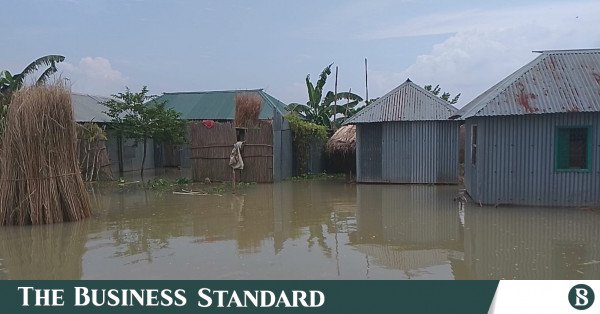
Floodwaters inundate homesteads in a village along the Padma River in Kushtia’s Daulatpur, leaving houses partially submerged as water levels rise. Photo: TBS
“>

Floodwaters inundate homesteads in a village along the Padma River in Kushtia’s Daulatpur, leaving houses partially submerged as water levels rise. Photo: TBS
The rise in the Padma River has slowed in Kushtia’s Daulatpur, but 30,000-35,000 people have remained stranded for more than a week, with food and safe drinking water becoming increasingly scarce.
The river rose by just 1cm in the 24 hours till today (13 September), according to the Bangladesh Water Development Board (BWDB). But the prolonged inundation has continued to worsen conditions in the char areas.
Official figures put the number of stranded people at around 30,000-35,000 from nearly 8,000 families. Local representatives, however, estimate the number to be much higher, saying at least 60,000 people in 40 villages of Chilmari and Ramkrishnapur unions are waterlogged and waiting for relief.

According to the Hydrology Division of the Pabna Water Development Board, the Padma’s water level at the Hardinge Bridge point stood at 13.06 metres at 9am today.
The danger level there is 13.80 metres, leaving the river 74cm below the threshold. The level was 13.05 metres at the same time yesterday.
Ilias Hossain, executive engineer of the BWDB’s Hydrology Division, said the river had risen rapidly due to upstream water and heavy rainfall, but the rate of increase had slowed.
“Water rose by only 1cm in the past 24 hours. However, it is too early to say whether this slower rise will continue,” he said.
The water level also remained unchanged between 6pm on Saturday and 9am on Sunday, he added.
Despite the slower rise, prolonged flooding has created acute shortages of food and safe drinking water across the char areas.
Farmers and small-scale livestock owners are also struggling to protect their cattle, with many unable to find higher ground for their animals.
The agricultural losses are mounting as well.
Daulatpur Upazila Agriculture Officer Rehena Parvin said crops on around 1,000 hectares of farmland in the char areas of Chilmari, Ramkrishnapur, Philipnagar and Moricha unions had been submerged.
Chilli and banana growers have suffered the most, she said, warning that continued flooding could cause further losses.
Floodwater has also inundated educational institutions in the char areas, forcing 30 of them to suspend classes.
According to the upazila education office, the affected institutions include 25 government primary schools, three secondary schools and two madrasas.
Administrative and official activities at the institutions, however, are continuing.
Chilmari Union Parishad Chairman Engineer Abdul Mannan said water levels had not risen significantly since Saturday, but the prolonged inundation had intensified people’s suffering.
“Government assistance will start reaching affected families in the union from Monday,” he said.
Daulatpur Upazila Project Implementation Officer Shubhagata Biswas said the existing relief allocation was inadequate compared with the number of affected families.
The deputy commissioner had contacted the relevant ministry seeking an increased allocation, and additional assistance was expected soon, he said.
The existing relief supplies would be distributed by Tuesday, he added.
Based on information from the BWDB, there is now less likelihood of another major rise in the river, Shubhagata said. Water levels could remain stable for a day or two before beginning to recede.
However, he identified prolonged waterlogging as the biggest challenge.
Local residents have called for urgent supplies of food and safe drinking water and urged affluent individuals and organisations to come forward to support flood-affected communities.
About The Author