According to committee sources, opposition members did not oppose the bill outright but urged that it not be rushed through without consultation with stakeholders.
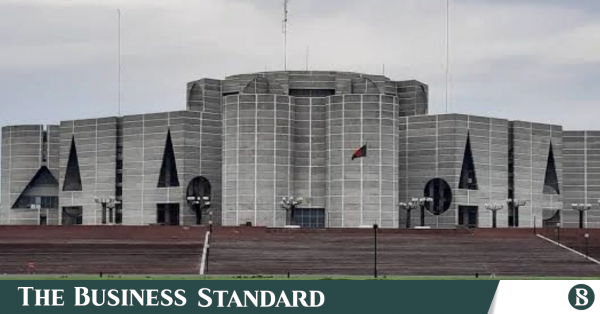
Bangladesh Parliament building. Photo: UNB
“>

Bangladesh Parliament building. Photo: UNB
Opposition members of the parliamentary Standing Committee on the Ministry of Home Affairs have registered notes of dissent on eight issues in the Special Response Battalion (SRB) Bill, sources said.
The committee met at the Jatiya Sangsad Bhaban today (8 September) to scrutinise the bill and finalise its report, during which the opposition submitted its objections in writing, sources present at the meeting told UNB.
The bill, which seeks to dissolve the Rapid Action Battalion (RAB) and replace it with a new force to be called the SRB, was placed in Parliament on 3 September before being referred to the committee for scrutiny.

According to committee sources, opposition members did not oppose the bill outright but urged that it not be rushed through without consultation with stakeholders.
They put forward their own proposals on record-keeping safeguards, independent investigation of complaints, regular oversight of operations, transparency in the detention process, adequate training, and protection for members who refuse unlawful orders – areas where they said the current draft falls short.
Key objections raised by the opposition
The proposed complaints redress committee, whose chairperson and member-secretary will themselves be SRB officers, risks a conflict of interest when investigating complaints against the force.
Opposition members proposed the committee instead be headed by a retired judge, with wider powers.
While the bill grants the SRB powers of arrest, search, seizure and criminal investigation, it lacks provision for regular oversight or reporting of its operations to the courts or senior district police officials.
The opposition proposed that the SRB submit monthly activity reports for every district in which it operates, detailing the names of those taken into custody, along with the time, place and reason for detention, the time of handover to police, and details of any search or seizure–to be submitted to the Chief Judicial Magistrate or Chief Metropolitan Magistrate, as well as the Superintendent of Police or Police Commissioner concerned.
The bill does not make clear where, or for how long, the SRB may detain civilians.
Although it allows the force to maintain its own holding cells and interrogation rooms, there is no requirement to disclose their locations or to keep complete custody records.
The opposition proposed that all SRB offices, camps, holding cells and interrogation rooms be published in the official gazette, and that a register be kept for every detainee recording their name, time and place of detention, the legal grounds, the officer responsible, medical details, and handover information–along with a fixed maximum time limit for handing detainees over to police.
A committee member and Jamaat-e-Islami MP said there had been a pledge to disband RAB altogether, but the force was effectively being retained in its existing form under a new name.
He said the opposition submitted notes of dissent on seven to eight aspects of the bill.
Following the meeting, a notice from the Parliament Secretariat said the committee held detailed discussions on examining and reporting on the “Special Response Battalion (SRB) Bill, 2026,” and recommended it be placed before Parliament in a revised form.
The meeting also noted that law enforcement agencies, including RAB, were in the past misused in various ways.
However, it was agreed that rather than disbanding an entire force over such misuse, its trained personnel and existing resources should be properly utilised, with emphasis placed on training, professionalism, transparency and accountability among its members.
The meeting was chaired by committee Chairman Zainul Abedin.
About The Author