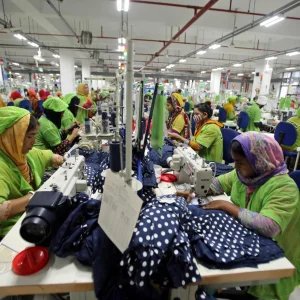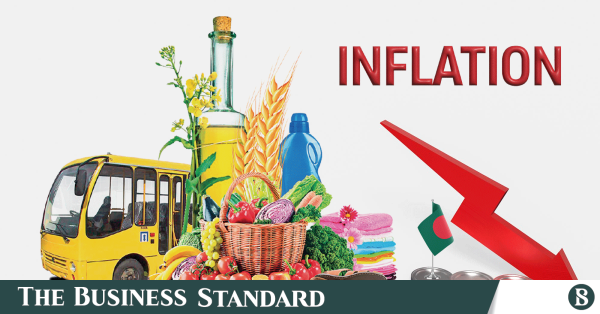
Rural non-food inflation crossed 10% in October, while wage growth slowed to 7.63%, remaining below inflation for the 57th consecutive month.
Illustration: Ashrafun Naher Ananna/TBS Creative
“>

Illustration: Ashrafun Naher Ananna/TBS Creative
Bangladesh’s overall inflation eased slightly in October, but non-food inflation climbed to a 41-month high, partly driven by the impact of higher fuel prices, according to the Bangladesh Bureau of Statistics (BBS).
Point-to-point national inflation stood at 8.27% in October, down from 8.34% in September, according to BBS data released today (9 November).
However, the rate was higher than the 8.17% recorded in October last year.

Food inflation fell to 6.40% in October from 7.22% in September, a decline of 0.82 percentage points in a month. The rate was the lowest in 54 months. The last time food inflation was lower was in April 2022, when it stood at 6.23%.
The decline came as early-season winter vegetables began reaching markets, easing pressure on food prices.
In contrast, non-food inflation rose to 9.89% in October from 9.30% in September. This was the highest level in 41 months, approaching the 9.96% recorded in May 2023.
M Masrur Reaz, chairman and CEO of Policy Exchange, a Bangladesh-based private think tank, said the slight decline in overall inflation was a positive sign, but persistently high non-food inflation meant there was little room for complacency.
He attributed the fall in food inflation to the arrival of early winter vegetables in markets, while higher fuel prices, increased transport costs and slower imports of raw materials were adding to non-food inflationary pressure.
Reaz said winter vegetable production begins before the onset of the season, with supplies starting to reach markets from October. This has helped ease food prices and bring down food inflation.
However, he warned that the impact of higher fuel prices was gradually spreading across the economy.
Fuel prices were increased in September, raising transport and other production costs, he said. Higher energy costs tend to feed into prices across different sectors over time, pushing up the cost of non-food goods and services.
He also pointed to a slowdown in raw material imports. Although imports of raw materials increased somewhat in the previous fiscal year, the current fiscal year has seen signs of slower growth or a decline.
This is disrupting production and limiting the supply of goods in the market, adding to inflationary pressure, he said.
Reaz said improving production and supply conditions would be essential to sustain the downward trend in overall inflation.
Rural non-food inflation crosses 10%
BBS data showed that rural inflation also eased slightly in October, falling to 8.29% from 8.38% in September. However, it remained above the 8.16% recorded in October last year.
Rural food inflation declined to 6.37% in October from 7.18% in September.
Non-food inflation, however, rose to 10.21% from 9.57% a month earlier, crossing the double-digit mark.
Urban inflation edges down
In urban areas, overall inflation edged down to 8.25% in October from 8.26% in September.
Urban food inflation fell to 6.42% from 7.25% over the same period.
Non-food inflation, meanwhile, increased to 9.48% in October from 8.94% in September.
Wage growth slows to 7.63%
The BBS data also showed that national wage growth slowed to 7.63% in October, down from 7.90% in September and 8.01% in October last year.
This represents a decline of 0.27 percentage points in a month.
Wage growth has remained below inflation for 57 consecutive months, according to the BBS data.
The report showed that wage growth slowed across all three major sectors of the economy: agriculture, industry and services.
In October, point-to-point wage growth stood at 7.55% in agriculture, 7.62% in industry and 7.96% in services.
In September, the respective rates were 7.89%, 7.86% and 8.07%.
As a result, wage growth declined by 0.34 percentage points in agriculture, 0.24 percentage points in industry and 0.11 percentage points in services over the month.
About The Author