Move to increase tax to 1% aims to bolster revenue amid rising food inflation concerns
NBR Office in Dhaka. File Photo: Collected
“>

NBR Office in Dhaka. File Photo: Collected
Highlights
- NBR plans to raise source tax on 28 essential goods from 0.50% to 1%.
- Rice, lentils, edible oil, sugar and fruits are among the targeted items.
- The interim government had cut the tax to 0.50% to ease inflation.
- Businesses warn the tax hike could increase retail prices further.
- NBR expects the revised rate to generate over Tk500 crore annually.
- Critics question the policy shift amid persistent food inflation near 10%.
The National Board of Revenue plans to increase the source tax on the local supply of 28 essential agricultural and food items, including rice and lentils, from 0.50% to 1% as part of a broader strategy to expand revenue collection and curb tax evasion.
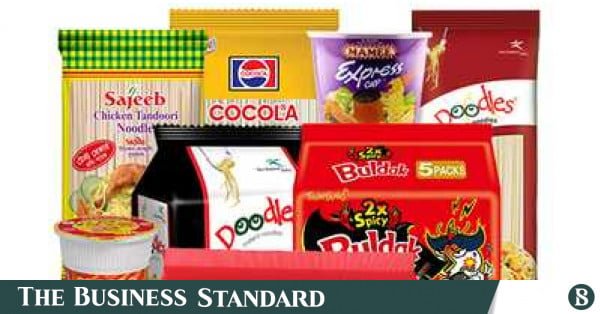
Officials familiar with the matter told The Business Standard that the proposal targets a range of widely consumed commodities, including rice, wheat, potatoes, onions, garlic, peas, chickpeas, lentils, ginger, turmeric, dried chilli, pulses, maize, flour, refined flour, salt, edible oil, sugar, black pepper, cardamom, cinnamon, cloves, dates, bay leaves and all types of fruits.

Infographics: TBS
“>

Infographics: TBS
The proposal to increase the source tax will be placed before Prime Minister Tarique Rahman in a forthcoming meeting. If approved, it may be incorporated into the next national budget.
Policy background and reversals
The source tax on these goods has fluctuated in recent years. It was raised to 2% in the fiscal 2023-24 on local letters of credit and non-LC supplies, but was later reduced to 1% in the following fiscal year.
In the most recent budget, the interim government lowered it further to 0.50% in a bid to stabilise prices and protect consumers from inflationary pressure.
Concerns over potential price impact
Business leaders and industry stakeholders warned that any tax increase is likely to be passed on to consumers, potentially pushing up retail prices.
Food inflation in Bangladesh has remained elevated for the past three years, hovering around 10%.
Mostofa Azad Chowdhury Babu, former president of the Bangladesh Cold Storage Association, said higher taxation would ultimately be reflected in product costs. “If the tax rate is increased, it will be added to the prices of goods, which may lead to higher prices,” he said.
Responding to the argument that source tax is adjustable at the end of the fiscal year, he added, “Once tax money goes to the NBR, it is not refunded in practice. That is why it is treated as a cost and included in product pricing.”
Compliance and collection mechanism
Under the current system, companies purchasing goods from local suppliers deduct source tax at the time of payment and deposit the amount with the government. In cases involving letters of credit, banks collect the tax directly and transfer it to the NBR.
Large corporations in sectors such as food and beverage, as well as other industries that procure significant volumes of essential commodities, are affected by these deductions.
Muhammad Zahangir Alam, chief financial officer of Square Pharmaceuticals, said his company procures 20 to 30 tonnes of rice per month for employee consumption. “Since we are a compliant organisation, tax is deducted at the time of payment to suppliers,” he said. “If the rate changes in the budget, deductions will be adjusted accordingly.”
Revenue expectations and policy debate
An NBR official estimated that if properly enforced, the revised rate could generate more than Tk500 crore annually.
However, a former senior NBR official questioned the rationale behind the proposed increase, noting that similar taxes had previously been reduced to prevent price escalation. He also raised concerns about policy consistency and the potential inflationary impact of the measure.
Critics have pointed out a shift in the NBR’s leadership perspective. The current chairman, during his tenure as president of the Institute of Cost and Management Accountants of Bangladesh in 2023, had previously advocated for keeping agricultural products and daily necessities outside the scope of source tax to protect the purchasing power of citizens.
He said, “Taking into account the complexity of the process and purchasing power, all types of agricultural products and daily necessities should be kept out of the scope of source tax deduction.”
About The Author