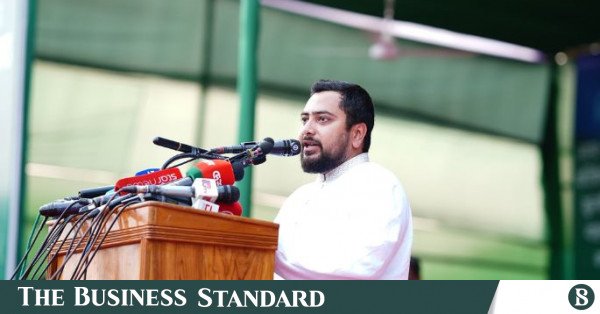
Nahid urged university administrations to play a key role in keeping educational institutions free from violence and terrorism
Opposition Chief Whip and National Citizen Party (NCP) Convener Nahid Islam. Photo: Collected
“>

Opposition Chief Whip and National Citizen Party (NCP) Convener Nahid Islam. Photo: Collected
National Citizen Party Convener and Opposition Chief Whip Nahid Islam yesterday (7 May) warned that if the issue of the referendum verdict is not resolved in parliament, movements could spill onto the streets.
While speaking to journalists following a meeting with the administration of University of Chittagong Central Students’ Union (Cucsu) and the administration of University of Chittagong, he also criticised the BNP for failing to present a clear position on constitutional reforms through a referendum.
Nahid said, “We feel that the BNP is speaking about implementing the July Charter, but they are not presenting any clear position regarding a referendum for constitutional reforms. We raised these issues during the first session of parliament.

“Considering the current situation in the country, the impact of international conflicts, the energy crisis, and now the measles crisis with an ongoing outbreak, we actually do not want the movement to escalate onto the streets.”
“However, if this is not resolved in parliament, the movement will shift to the streets, and that will depend on the government. Why the government does not want this can best be explained by them. Whether they want to preserve the old system or establish a new arrangement,” he added.
Addressing the issue of politicisation in universities, Nahid said, “Our movement originally began as a movement for jobs based on merit. Students stood against nepotism, corruption and partisan practices, and as a political party we continue to hold the same position. We have told the university vice-chancellor that transparency must be ensured in the recruitment of teachers.”
He said, “There should be no politicisation, and appointments must be based on merit. Whatever the vice-chancellor’s personal political views or affiliations may be, once he assumes an administrative role, he must remain neutral.”
Nahid further said, “Even after the formation of the government, we have observed tension in some universities and educational institutions. This is undesirable for us because we support democratic coexistence.”
He said everyone should engage in their own politics and students should choose whom to support.
Nahid urged university administrations to play a key role in keeping educational institutions free from violence and terrorism.
About The Author