A century on, the Mahanayak remains exactly what Bengal and Bangladesh have always called him: irreplaceable.
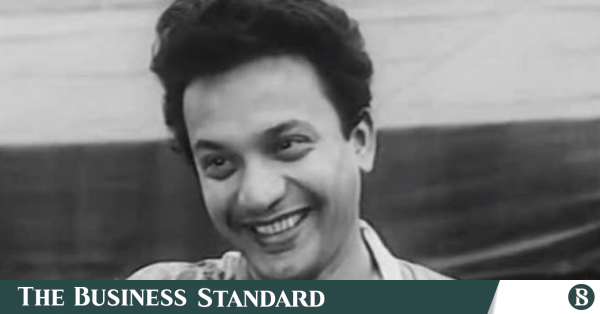
Uttam Kumar, widely known as the ‘Mahanayak’ of Bengali cinema. Photo: Collected
“>

Uttam Kumar, widely known as the ‘Mahanayak’ of Bengali cinema. Photo: Collected
A century after his birth in Calcutta, Uttam Kumar remains an inescapable presence in Bengali cinema. More than an actor, he became the defining screen icon of his era, shaping the language of Bengali stardom through his effortless charm, emotional range and remarkable versatility.
Decades after his death, his films continue to resonate across West Bengal and Bangladesh, while his image, performances and enduring appeal remain deeply woven into the cultural memory of generations.
Today marks a century since Arun Kumar Chattopadhyay was born at his maternal home on Ahiritola Street in northern Calcutta, on 3 September 1926.
The world would come to know him as Uttam Kumar, the Mahanayak, the great hero of Bengali cinema, whose smile and screen presence continue to captivate audiences forty-six years after his death.

As Kolkata launches a four-day centenary programme, complete with exhibitions at Nandan, a heritage walk through the city he loved, and plans for a new film centre bearing his name, it is worth asking what made this one actor so impossible to forget.
From flop to legend of Bengali cinema
His beginnings offered little hint of the stardom to come. Kumar’s extended family ran an amateur theatre group, Suhrid Samaj, where he first performed as a boy, but his early films after his 1948 debut in Drishtidan failed one after another, earning him the unkind reputation of a flop master.
Persistence changed his fortunes. Basu Paribar, released in 1952, gave him his first taste of box-office success, but it was Sharey Chuattar the following year, opposite a young Suchitra Sen, that transformed him into a star.
Agnipariksha, released in 1954, confirmed what audiences had sensed: together, Uttam and Suchitra were unlike anything Bengali cinema had produced before.
The Mahanayak, the undisputed legend of Bengali cinema. Photo: Collected
“>

The Mahanayak, the undisputed legend of Bengali cinema. Photo: Collected
Over the next two decades, they starred in classics including Sagarika, Harano Sur and Saptapadi, their soft-focus romances against windswept landscapes coming to define what critics still call the golden era of Bengali film.
Yet Kumar refused to be confined to romance alone.
His most celebrated work came through his collaborations with Satyajit Ray, who reportedly wrote Nayak in 1966 with Kumar specifically in mind, casting him as a film star confronting his own fame and insecurity during a train journey to Delhi.
The following year, Ray directed him again in Chiriyakhana, a performance that, alongside Antony Firingee, earned Kumar independent India’s first-ever National Film Award for Best Actor.
A Legend Beyond Bengal
Across more than two hundred films and three decades, Kumar’s appeal reached well beyond West Bengal.
He built a devoted following in East Pakistan and later Bangladesh, where his films remain cherished viewing to this day, a testament to a shared Bengali culture that transcended political borders.
He also ventured into Hindi cinema, appearing in films including Amanush and Chhoti Si Mulaqat, and received the Padma Shri in recognition of his contribution to Indian film.
The Final Dance
Kumar’s life had an ending as dramatic as any of his films.
On 24 July 1980, he suffered a fatal heart attack while shooting Ogo Bodhu Sundari, dying at the age of fifty-three.
Satyajit Ray, who had directed him in some of his finest roles, called it a profound loss for Bengali cinema.
Calcutta came to a standstill as mourners, some reportedly climbing trees and construction cranes for a final glimpse, lined the streets for his funeral procession.
Legends Never Die
That devotion has not faded.
A Kolkata metro station carries his name; director Srijit Mukherji is using archival footage and artificial intelligence to bring him back to the screen in the forthcoming Oti Uttam, and this year’s celebrations promise to introduce his work to generations born long after his death.
A century on, the Mahanayak remains exactly what Bengal and Bangladesh have always called him: irreplaceable.
About The Author