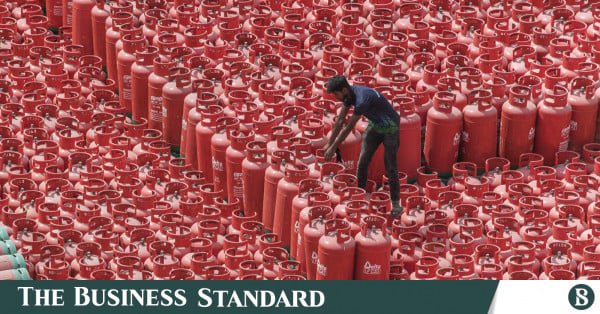
The shift is so dramatic that LPG operators are now struggling with storage management. With sales stalled, storage tanks have filled to capacity, preventing companies from unloading fresh LPG shipments from vessels waiting at port.
Representational Image/TBS
“>

Representational Image/TBS
Demand for liquefied petroleum gas (LPG) has fallen by 30 to 40% in recent weeks after a sharp price increase in April pushed many consumers, particularly middle- and low-income households, towards cheaper electric cooking alternatives, industry insiders say.
The shift is so dramatic that LPG operators are now struggling with storage management. With sales stalled, storage tanks have filled to capacity, preventing companies from unloading fresh LPG shipments from vessels waiting at port.
The clearest indicator of the switch comes from the manufacturers of electric cookers.

Pran-RFL Group, one of the country’s leading appliance makers, used to sell 30,000 to 40,000 induction and infrared cookers a month before the price increase.
“Now that number has shot up to 1.5 lakh a month, nearly four times more,” Kamruzzaman Kamal, director at Pran-RFL Group, told TBS.
Fresh LPG’s Chief Marketing Officer Abu Sayed Raza estimates that five to six lakh families have already switched to induction and infrared cookers since the April price hike. Many rural and district-town households have gone further, returning to traditional wood-fired mud stoves.
The trigger was a decision by the Bangladesh Energy Regulatory Commission (BERC) to raise LPG prices on 19 April, the second increase within the same month. The price of a 12kg cylinder rose to Tk1,940 from Tk1,341 in March, an increase of nearly 45% within a month.
Atiar Rahman, chief financial officer of Omera Petroleum, the market leader in the LPG segment, said May sales are running 30% to 40% below their usual monthly targets.
“Consumption has shrunk even in the industrial segment,” Atiar said, adding that distributors are also refusing to hold stock for fear of a potential price correction, further worsening the storage overflow problem at the company level.
Mohammed Amirul Haque, president of the LPG Operators Association of Bangladesh (LOAB), acknowledged the issues but described the demand contraction as an expected consequence of a steep price increase.
“LPG prices have nearly doubled in a year to around Tk2,000 per 12kg cylinder, which has severely eroded consumer purchasing power,” Amirul said.
Industry operators linked the latest price surge to supply chain disruptions in the Middle East, from where Bangladesh imports 80% to 90% of its LPG. The disruptions forced Bangladesh to turn to the United States as an alternative source, with March data showing that 70% of the country’s monthly LPG demand of 1.5 lakh tonnes was imported from the US.
LPG operators said American shipments, transported over a longer route, come at a higher cost, contributing to the rise in domestic prices.
Persistently high inflation – remaining above 8% for four consecutive years – had already strained household budgets even before the latest LPG price shock. Prices of edible oil, protein and vegetables have continued to rise with no relief in sight, while inflation climbed back above 9% in April, further deepening the financial strain on ordinary consumers.
With purchasing power squeezed from multiple fronts, consumers have little choice but to cut back on spending, an economist said.
About The Author