Highlighting challenges in the power sector, he said around Tk56,000 crore in dues to power plants remain unpaid
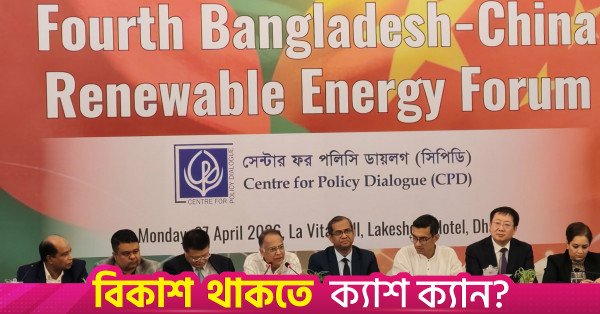
Power, Energy and Mineral Resources Minister Iqbal Hasan Mahmud Tuku speaking as the chief guest at the Fourth Bangladesh-China Renewable Energy Forum organised by the Centre for Policy Dialogue in Dhaka today (27 April). Photo: TBS
“>

Power, Energy and Mineral Resources Minister Iqbal Hasan Mahmud Tuku speaking as the chief guest at the Fourth Bangladesh-China Renewable Energy Forum organised by the Centre for Policy Dialogue in Dhaka today (27 April). Photo: TBS
Load shedding across the country is expected to ease from next week as the overall power situation improves, Power, Energy and Mineral Resources Minister Iqbal Hasan Mahmud Tuku said today (27 April).
Load shedding will fall to around 800–900MW within a week, signalling a significant improvement in electricity supply, the minister said while speaking as the chief guest at the Fourth Bangladesh-China Renewable Energy Forum organised by the Centre for Policy Dialogue in Dhaka.
Highlighting challenges in the power sector, he said around Tk56,000 crore in dues to power plants remain unpaid.

“The government is trying to clear the outstanding payments to power plants. Due to these dues, importing coal and oil is difficult. We are trying to clear the payments quickly,” he said.
He added that the government is placing special emphasis on renewable energy as a long-term solution to the power crisis.
“We have set a target to generate 10,000MW of solar power within the next five years,” the minister said.
To achieve this target, the government is planning to utilise unused land owned by the railway and various ministries to address land scarcity.
He noted that large-scale solar plants are also being planned in newly emerged riverine chars, with work already underway in areas including Sirajganj.
The minister further said the government is considering special incentives and tax benefits to attract investment in solar energy.
He also mentioned plans to involve households by enabling them to feed electricity generated from rooftop solar panels into the national grid.
About The Author