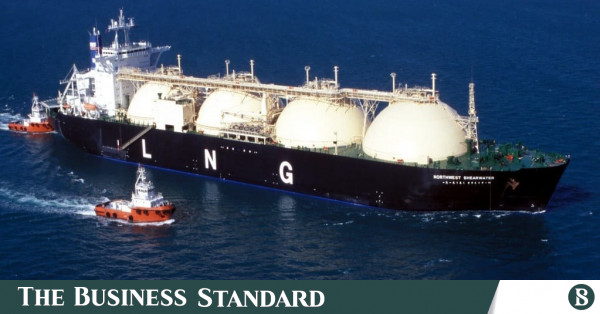
The fallout from the Iran war has pushed Bangladesh’s LNG subsidy burden to Tk16,600 crore, nearly three times the original allocation of Tk6,000 crore for the fiscal 2025-26, as the government was forced to rely heavily on costly spot market purchases.
The additional subsidy requirement arose after long-term LNG deliveries were suspended under force majeure conditions by key suppliers, leaving Petrobangla with little option but to purchase gas from the volatile spot market amid attacks on Middle Eastern energy infrastructure and the closure of the vital shipping lane of Strait of Hormuz.
According to Petrobangla, the conflict has added Tk10,600 crore to the LNG subsidy requirement, a 176.7% increase from the original fiscal provision.

“The Iran war cost us an additional Tk10,600 crore as most long-term suppliers have maintained force majeure since March, forcing us to rely on expensive spot purchases,” AKM Mizanur Rahman, director (finance) of Petrobangla, told The Business Standard on Saturday.
Of the total subsidy requirement, Petrobangla has already received Tk13,100 crore from the government and expects the remaining Tk3,500 crore in the coming months.
Bangladesh’s largest LNG supplier, QatarEnergy, invoked force majeure on 2 March, followed by Oman-based OQ Trading Limited on 5 March and US-based Excelerate Energy on 6 March.
The disruptions also affected some short-term contracts because their loading ports and shipping routes were linked to Qatar and the Strait of Hormuz.
Under the pre-war delivery plan, Bangladesh was scheduled to import 115 LNG cargoes during FY2025-26. Between March and June, 41 cargoes were planned, including only eight from the spot market.
However, after supply disruptions, Petrobangla reduced total imports to 37 cargoes during the period and purchased 25 cargoes from the spot market – more than three times the planned volume – at prices ranging between $20 and $28 per mmbtu.
Mizanur further said Petrobangla had also cut two LNG cargoes from its fiscal import plan to contain subsidy costs. “If those two cargoes had been imported, more than Tk2,000 crore would have been added to the subsidy bill at current prices,” he said.
Force majeure continues
Petrobangla officials said long-term LNG supplies are unlikely to resume before 16 July, as suppliers continue to cite force majeure conditions.
“Long-term suppliers have informed us that until the Strait of Hormuz is fully reopened, they cannot resume deliveries,” Mizanur said.
Officials said the closure of Hormuz has also disrupted short-term supplies, as most cargoes originate from Middle Eastern loading ports.
With uncertainty continuing, Rupantarita Prakritik Gas Company Limited (RPGCL), Petrobangla’s LNG procurement arm, has floated tenders to purchase two additional spot cargoes for July delivery.
“I have no information regarding the resumption of term supplies. RPGCL is now working to secure LNG cargoes for July,” said Rafiqul Islam, director (operations) of Petrobangla.
According to the pre-war Annual Delivery Plan for July 2026, Bangladesh was expected to import 10 LNG cargoes to supply 1,010-1,030 million cubic feet of gas per day to the national grid. The plan included four cargoes from QatarEnergy, two from Qatar Energy Trading, one from OQ Trading, one from Excelerate Energy, one under a short-term contract and one spot cargo.
FY2026-27 plan delayed
The uncertainty surrounding the Iran conflict has also stalled Petrobangla’s LNG import planning for FY2026-27.
“Once force majeure is withdrawn, we will prepare the import plan for FY2026-27. Until then, there is little value in finalising such plans,” Mizanur said.
He added that Petrobangla is currently focused on securing sufficient spot cargoes to maintain gas supplies and remains in regular contact with long-term suppliers.
About The Author