Fashion
According to the Japanese fashion designer Satoshi Kondo, the creative director of Issey Miyake:
1. Washi Paper
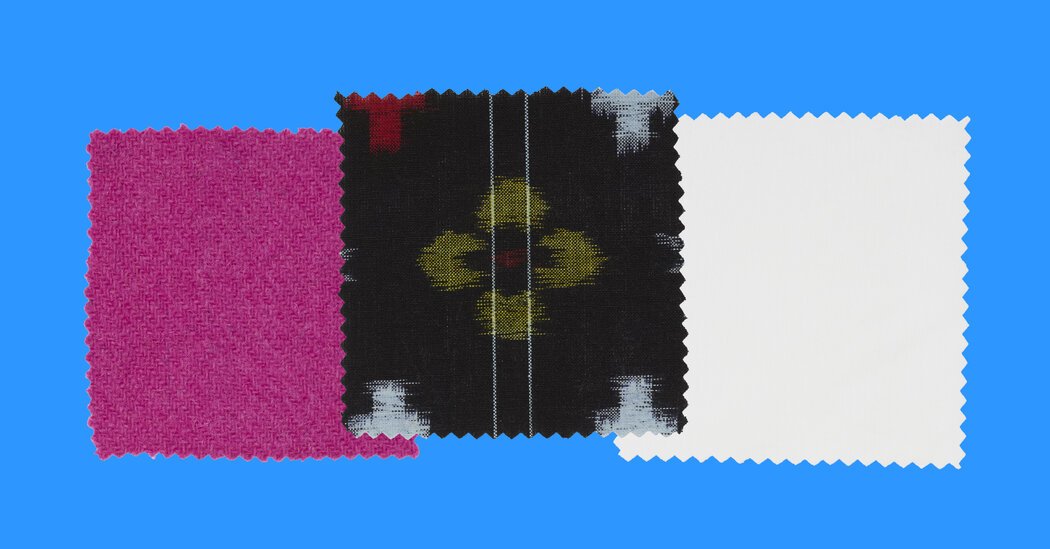
“We introduced an original textile made with washi yarn in our spring 2024 collection that we created by cutting strips of washi and spinning them into thread,” says Kondo, 41. “I was inspired by my stay at LOG, a hotel in Hiroshima, where every surface of my room was covered with washi, which comes from the inner bark fibers of [one of three plants, including] the paper mulberry [a flowering tree that’s native to East and Southeast Asia]. Maybe it’s a Japanese thing, but I think washi, because of its quality and texture, offers something not just tactile but psychologically soothing. Washi is about one-third the weight of cotton — light, breathable and dry to the touch. It’s also biodegradable.”
2. Kasuri-Woven Wool
“Centuries ago, fabrics woven in the kasuri style were celebrated by common people. They were made by partially dyeing yarn so that when you weave it back together, you can create different patterns. There are only a few remaining craftspeople in Kyoto who still produce it by hand; the craft itself is dying. At the brand, we take the partially dyed yarn and weave it on a machine to make it more cost-effective.”
According to the Italian fashion and textile designer Marco Zanini, formerly the creative director of Rochas and Schiaparelli:
3. West Indian Sea Island Cotton
“There are white shirts, and then there’s the white shirt,” says Zanini, 54. “The difference depends on the kind of cotton fabric. Commercialized [through slavery] at the turn of the 18th century in the British West Indies, and today often woven in Italy or Switzerland, Sea Island Cotton has an unbelievable softness and a strong surface that resists wear over time. It’s only grown in very small amounts in Barbados, Jamaica and Antigua. This makes Sea Island cotton the rarest of its kind, and one of the most sustainable in the world.”
4. Harris Tweed
“The chicest handwoven woolen cloth, Harris tweed comes from the Outer Hebrides islands at the remote northwestern tip of Britain. For the past 200 years or so, every aspect of the production process has taken place only in that small archipelago. Each yard of the fabric is handwoven in hundreds of patterns in the homes of its weavers (around 150 of them), using foot-powered treadle looms. The wool is locally dyed before being spun, creating a vibrant, intricately detailed cloth. It’s also the only fabric in the world protected by its own act of Parliament.”
5. Linen
“Linen textiles are some of the oldest in recorded history. Woven from the fibers of the flax plant, they’re breathable, durable and resistant to many insects. Since flax generally doesn’t require irrigation during its cultivation, linen is truly eco-friendly. What makes it so special, though, is its humble appearance. Whether it’s a heavyweight canvas or an airy fabric woven with a fine yarn count, linen is good for clothes and interiors, especially in its off-white, sandy natural color. Is there anything more elegant than a three-piece suit cut in tobacco or unbleached Irish linen cloth, just like they wore back in the Edwardian days?”
6. Vicuña Wool
“The world’s most expensive fabric comes from the soft, tawny underfleece of vicuñas (closely related to guanacos, llamas and alpacas), which live in South America’s central Andes. But they approached extinction in the 1970s, and their prized fleece can now only be sheared in accordance with regulations determined by CITES [the Convention on International Trade in Endangered Species of Wild Fauna and Flora]. To take a nap on the sofa wrapped in a buttery vicuña blanket or shawl is the closest one can get to perfection.”
According to the French jewelry designer Lauren Rubinski, the founder of the Rubirosa clothing and accessories shop in Paris:
7. Poplin
“[Cotton] poplin holds a special place in my life,” says Rubinski, 39. “I grew up in Ralph Lauren poplin shirts — my own, and my father’s. I gravitate toward two-ply poplins, never too thin: 120/2 or 140/2 is ideal. [The first number indicates the yarn count; the higher the number, the finer the yarn. The second number refers to the ply.] It keeps the shirt crisp, structured and effortless.”
8. Cashmere
“Few sensations compare to the feeling of wearing cashmere [a softer and more insulating alternative to sheep’s wool]. Whether it’s a sweater or a pair of socks, it’s the perfect balance between comfort and elegance. I have a particular love for baby cashmere [a superfine, supersoft cashmere gathered from goats less than a year old] in a lightweight crew neck. I’m currently developing an ultralight version designed to feel like a T-shirt.”
9. Guanaco Wool
“This is the king of wools, from the wild ancestor of the llama. I cherish a polo coat that belonged to my father. It’s exceptionally light, crisp and warm.”
These interviews have been edited and condensed.
More in Fashion
See the rest of the issue
About The Author