Theater
The Kenyan-born, New York-based director Saheem Ali, 48, whose works include the Broadway productions of James Ijames’s “Fat Ham” (2021) and Marco Ramirez’s “Buena Vista Social Club” (2023):
‘Romeo and Juliet’ (circa 1594-96)
“Shakespeare doesn’t tell you why the Capulet and Montague families are fighting, so in every different period, society can make up what’s motivating them, whether it’s race, culture or identity. That openness means you can always apply a contemporary lens.”
‘Twelfth Night’ (circa 1601-02)
“It’s his strongest comedy, with mistaken identity and cross-dressing, but it also has emotional sophistication. [The lead character] Viola loses her brother, and there’s this beautiful scene at the end when they’re reunited. It’s the perfect encapsulation of how comedy and tragedy can live side by side.”
‘Macbeth’ (circa 1606-07)
“The plot and the pace are so tight that it kind of washes over you. And again, there are multiple interpretations: Who are the witches, for example, and how do they speak in this world? It continues to feel fresh, with its central character who’s so ambitious that he gets consumed and killed by it.”
The English actress Judi Dench, 91, who has performed in dozens of Shakespeare stage productions, including “Twelfth Night” in 1958, her Broadway debut:
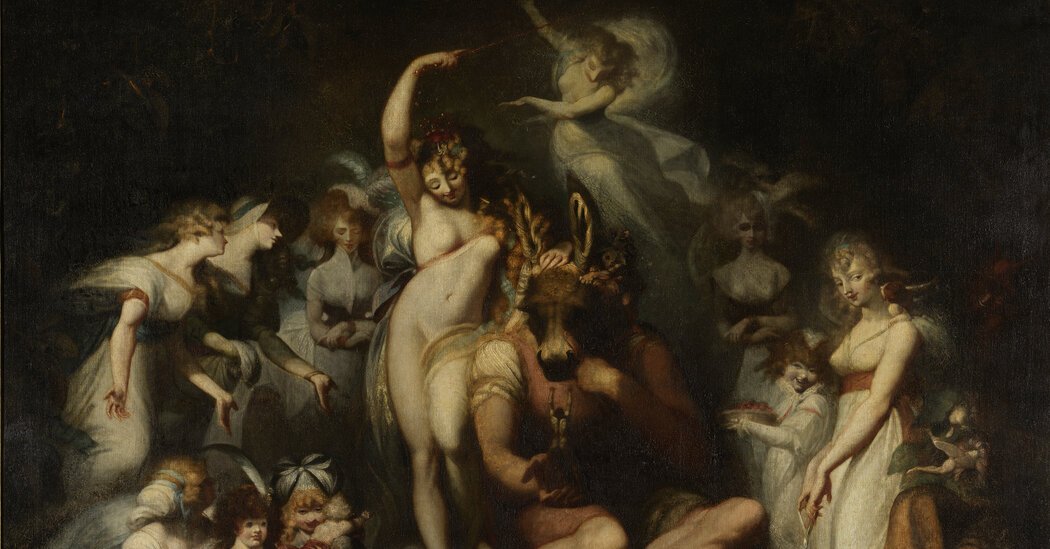
‘A Midsummer Night’s Dream’ (circa 1594-96)
“It’s your gateway to Shakespeare as a child, full of magic, fairies and an enchanted forest — a fairy tale!”
‘Twelfth Night’
“It’s about falling in love, young love — a rom-com!”
‘Macbeth’
“It’s about the stuff you struggle with in later years: ambition, disappointment and rage — a horror story!”
The British actor Paapa Essiedu, 35, who played Hamlet in the Royal Shakespeare Company’s 2016 production and starred in the recent West End production of Arthur Miller’s “All My Sons” (1947):
‘Richard II’ (circa 1595-96)
“It’s about power; this idea of divine power and earned power. There’s a line toward the end — in probably my favorite of Shakespeare’s speeches — where King Richard II is imprisoned and coming to terms with the fact that he has to be humbled. He says, ‘Whate’er I be, / Nor I nor any man that but man is / With nothing shall be pleased till he be eased / With being nothing.’ In this life, where it’s all about more, you’ll never be happy until you’ve made peace with the fact that you can have nothing.”
‘Hamlet’ (circa 1599-1601)
“It’s more than a work of entertainment or even art; it’s a guide to prepare us for life and death. The first time I saw the play was in 2011 at the Barbican, in German and directed by Thomas Ostermeier, starring Lars Eidinger. It’s still the best production of it I’ve seen — so visceral and spiritual that it hit me to my core.”
‘Antony and Cleopatra’ (circa 1606-07)
“Considering the time period, it’s rare to have a play that revolves around a multidimensional female role. It’s a story where both characters get confronted by reasons not to be together, and it’s really about power and the things people do to hold on to it.”
These interviews have been edited and condensed.
More in Theater
See the rest of the issue
About The Author