Music
“Musical theater is always inherently emotional,” says Eisenberg, 42, who wrote and directed an as-yet-untitled film starring Julianne Moore as a woman cast in a community-theater production. “The idea is that if a feeling is too big to say, it has to be sung, so musical theater is intense and grand by nature. That’s probably what turns a lot of people off — it can feel saccharine or cloying or comically angry — but that’s what I love about it. I’m an emotional person and a performer, so show tunes speak to my taste more than anything.”
“It carries themes from the show, yet it’s not an overture: It’s an instrumental that tells a story. When the older kids are marching in to meet their teacher, the song swells with grandeur, adding new layers of instrumentation and mirroring the bombast of the [king’s royal children]. It’s an amazing piece of music.”
‘Someone in a Tree,’ from John Weidman and Stephen Sondheim’s ‘Pacific Overtures’ (1976)
“This song is unlike traditional musical theater in its structure and subject. A brilliant philosophical argument about the importance of the individual, it meanders, goes on tangents and ultimately flows back to its musical and thematic theses. And like all great works of art, it’s also entertaining.”
‘The Riddle Song,’ from Tina Landau and Adam Guettel’s ‘Floyd Collins’ (1996)
“It’s a duet between a guy who’s stuck in a cave and his brother who’s trying to rescue him and, in order to keep the one who’s stuck entertained and hopeful, the brother gives him a series of riddles. They start to reminisce about their childhood. The song goes in a thousand different directions but never in a way that’s inconsistent with itself, and it ultimately feels triumphant. There’s so much emotion that, even when the brothers are happy, it’s still clouded in tragedy.”
‘Yes,’ from James Lapine and William Finn’s ‘A New Brain’ (1998)
“This is a song the songwriter wrote in the middle of a show about songwriting. It doesn’t even make it all the way through — it gets cut off by the antagonist — but there’s such amazing harmony from the ensemble. I played it on a loop as I was writing my first feature-length script, when I was 17. It shows how affecting musical theater can be even when it’s doing something so slight.”
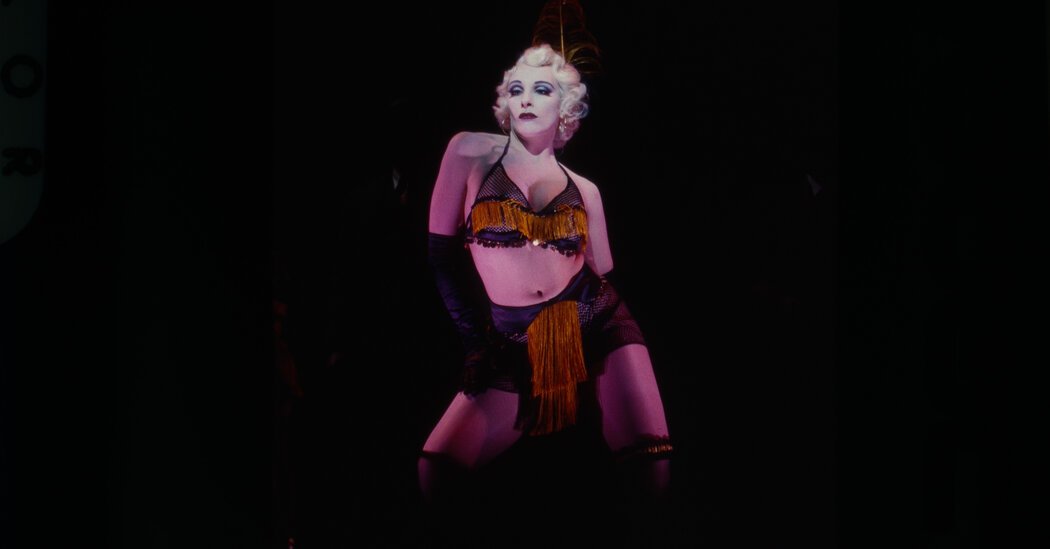
‘Queenie Was a Blonde,’ from George C. Wolfe and Michael John LaChiusa’s ‘The Wild Party’ (2000)
“This is the rocket ship that launches this crazy musical, which was adapted from a Jazz Age narrative poem by Joseph Moncure March. LaChiusa turns it into this brassy, terrifying introduction to the character [Queenie, a vaudeville showgirl]. Musicals open in many different ways, and this one felt like it opened halfway through and you were just trying to catch a moving train.”
This interview has been edited and condensed.
More in Music
See the rest of the issue
About The Author