A senior BNP leader said the president’s expected resignation would send a clear message that the government continues to monitor developments closely and will take a firm stance against activities that could undermine law and order
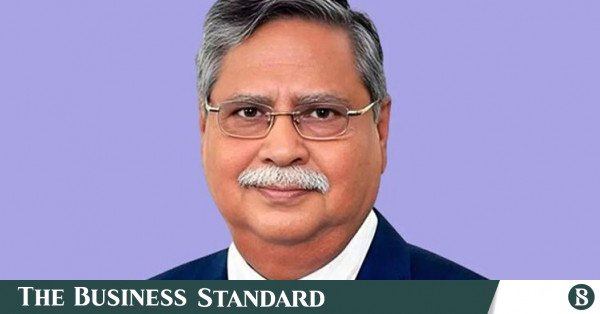
President Mohammed Shahabuddin.Photo:BSS
“>

President Mohammed Shahabuddin.Photo:BSS
President Mohammed Shahabuddin is likely to resign soon as discussions over his departure has gathered pace, according to media reports that cited multiple sources familiar with the matter.
The possibility of Shahabuddin’s resignation has gained momentum in recent weeks, the sources said.
A high-level government source also told Prothom Alo that Shahabuddin’s departure would be a natural development.

“It is only natural that he will not remain, whether today or tomorrow,” the source said.
When asked why the issue had resurfaced, the source said the government had become dissatisfied with reports that the president had tried to re-establish old contacts. The source added that the government no longer considered it prudent to keep a pre-uprising figure in the country’s highest constitutional office.
A source close to Bangabhaban said a decision could come within a day or two.
The source also noted that the president has a meeting scheduled on 29 July with the non-resident ambassadors of four countries.
He took office in April 2023 and remains the only holder of a top constitutional office from before the 2024 July Uprising.
His position came under intense pressure after the fall of Sheikh Hasina’s government through the uprising. Student protesters had even laid a siege to Bangabhaban, the presidential residence, and demanded his resignation. BNP, which later won the general election and came to power in February this year, opposed the move at the time.
In a later interview with Kaler Kantha, Shahabuddin said the armed forces had stood by him during that period.
Sources said Shahabuddin spoke by phone with former prime minister Hasina while visiting London for medical treatment in May this year, reports The Daily Star. Hasina has lived in exile in India since July 2024. The president travelled to London on 9 May and returned on 18 May.
The sources said intelligence agencies later became aware of the conversation. They claimed the agencies subsequently conveyed a message urging the president to step down.
However, a senior BNP leader told The Daily Star the reported phone call was not the only reason behind the expected resignation. The leader described the issue as “more complex”.
The BNP leader said the political situation became more sensitive after Hasina recently announced plans to return to Bangladesh in December.
On 10 July, Reuters reported that Hasina, who faces a death sentence in Bangladesh and whose party’s activities remain banned, said she and senior Awami League leaders planned to return from exile in India around December and surrender.
Sources also said the authorities have monitored efforts by some Awami League leaders inside the country to reorganise the party.
A senior BNP leader said the president’s expected resignation would send a clear message that the government continues to monitor developments closely and will take a firm stance against activities that could undermine law and order, reports Prothom Alo.
On 17 July, Prime Minister Tarique Rahman instructed the authorities concerned during a cabinet meeting to strengthen the ongoing drive against the Awami League, Bangladesh Chhatra League, Jubo League, and their associate organisations.
Sources said the authorities have yet to make a final decision on when Shahabuddin may resign or who may succeed him.
Shahabuddin took oath as Bangladesh’s 22nd president on 24 April 2023.
On 12 December 2025, during the interim government’s tenure, Shahabuddin said he planned to step down midway through his term after the February parliamentary election. He also said he had felt humiliated by the interim government led by Muhammad Yunus.
After the BNP-led government assumed office, Shahabuddin said in a newspaper interview on 24 February this year that he would remain in office if the government wanted him to stay. He added that he would resign voluntarily if the government preferred his departure.
Under the Constitution, the Speaker of Parliament will serve as acting president until Parliament elects a new president if the president resigns.
About The Author