Minister says interim government’s NBR steps were “not actually reforms”
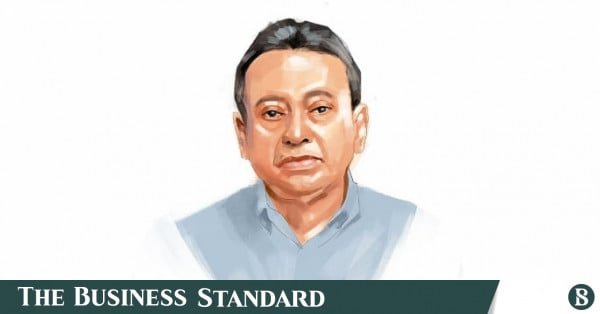
Finance and Planning Minister Amir Khosru Mahmud Chowdhury. Sketch: TBS
“>

Finance and Planning Minister Amir Khosru Mahmud Chowdhury. Sketch: TBS
Finance and Planning Minister Amir Khosru Mahmud Chowdhury has said the conditions attached by the International Monetary Fund (IMF) under its loan agreement are “not suitable” for Bangladesh’s economy or its people.
He also said the government cannot comply with all IMF demands because it remains accountable to the public.
The minister made the remarks today (11 May) at a discussion titled “Roadmap for rebuilding Bangladesh’s economic future amid global instability”, organised by Bonik Barta.

Claiming that most development partners are aligned with BNP’s election manifesto, the finance minister said, “They are my development partners. If they are not aligned with us, we cannot move forward.”
“We are aligned as far as policy goes and as far as the manifesto goes. But we are not agreeing everywhere. We have differences with the IMF because the conditions they are imposing are not suitable for my economy or my people,” he added.
Explaining the government’s position, he said, “We are an elected government and accountable to the people. We cannot do everything according to what they say.”
He added that differences of opinion with multilateral bodies would continue, but the government would only make course corrections that remain aligned with its manifesto.
The finance minister also criticised the previous interim government’s steps to split the National Board of Revenue (NBR) into separate policy and execution divisions, calling the reform “half-baked”.
“The reform that was initiated during the previous interim government was actually not a reform,” he said.
“It was left in a half-baked condition. Now we first have to undo it and then reform it properly.”
He also indicated that the government wants to reduce bureaucratic dominance in tax policymaking and involve businesspeople and professionals more directly.
“Those who formulate tax policy must understand the DNA of Bangladesh,” he said.
He added that recommendations from tax policymakers should go directly to the finance minister without bureaucratic interference.
“We do not want to keep tax policy trapped in bureaucratic tangles,” he said.
About The Author