Following a complaint received on Thursday, the Department of Environment is preparing to conduct a drive in coordination with the local administration.
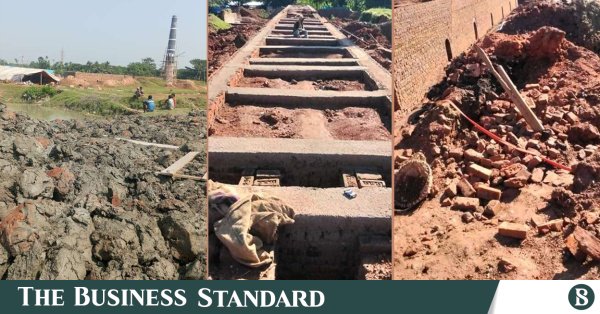
A brick kiln being constructed on the bank of the Karnaphuli River in Boalkhali, Chattogram, without approval from the Department of Environment. Photo: TBS
“>

A brick kiln being constructed on the bank of the Karnaphuli River in Boalkhali, Chattogram, without approval from the Department of Environment. Photo: TBS
A brick kiln is being built on the bank of the Karnaphuli River in Boalkhali, Chattogram, without approval from the Department of Environment (DoE), with nearly 90% of the construction already complete and preparations underway to begin production this month.
The kiln, named D&C Bricks, is being constructed in Char Khizirpur, where soil brought from different areas for brickmaking has been piled up beside the river.
Following a complaint received on Thursday (5 November), the DoE is preparing to conduct a drive in coordination with the local administration.

The department was scheduled to visit the site today (8 November), with the Boalkhali upazila administration providing operational support and setting up a mobile court if required.
A visit to the site found more than 200 workers engaged in construction day and night. Sheds are also being built to accommodate workers.
Locals fear that once operational, the kiln will pollute the river and surrounding environment through smoke and waste.
They are also concerned that filling parts of the riverbank could obstruct the river’s natural flow, increase erosion on the opposite bank and damage nearby forest land and homesteads.
A food product manufacturing enterprise and a salt factory are located beside the kiln. Residents fear pollution could affect their production and product quality.
Sakib, a local resident, said they knew the kiln had no approval and had submitted a written complaint to the administration.
“If the brick kiln starts operating, the air quality in the area will deteriorate. Being on the riverbank, there is also a direct risk of water pollution. This will harm aquatic life and biodiversity,” he said.
He added that soil collection and the filling of the riverbank could damage surrounding land and affect the quality of salt produced by the neighbouring factory.
However, Jane Alam, who oversees the kiln’s production activities, said the establishment was 26 years old but had remained closed for three years after the administration demolished it. The previous chimney was 70 feet high, while the new one is 50 feet, he said.
“We have completed all preparations anew. Brick burning with coal will begin soon. Wood will not be burned. There is a plan to produce seven to eight lakh bricks per month. Each brick will be sold for Tk12,” he said.
Chattogram DoE Deputy Director Mozahidur Rahman told TBS that the department had received a complaint and would discuss the matter with the upazila administration before taking legal action.
He said the allegations of soil collection and other preparatory activities needed to be verified through an on-site inspection. The department and local administration would conduct a joint drive against the kiln, which has no approval.
DoE Inspector Jannatul Ferdous also confirmed that D&C Bricks had no approval and was being set up illegally.
“We will conduct a drive quickly and shut it down. DoE maintains a zero-tolerance stance against illegal brick kilns,” she said.
The kiln’s proprietor, Shahjahan, acknowledged that the establishment did not have environmental clearance from the DoE. He said they would begin operations after obtaining the necessary clearance and approvals.
Acting Boalkhali Upazila Nirbahi Officer and Assistant Commissioner (Land) Kaniz Fatema said only one brick kiln in the upazila currently had approval and used environment-friendly technology.
She said she had received written complaints from local residents on Thursday and informed the DoE.
She added that the DoE was responsible for prosecution over environmental clearance violations involving brick kilns, making its participation necessary for legal action.
About The Author