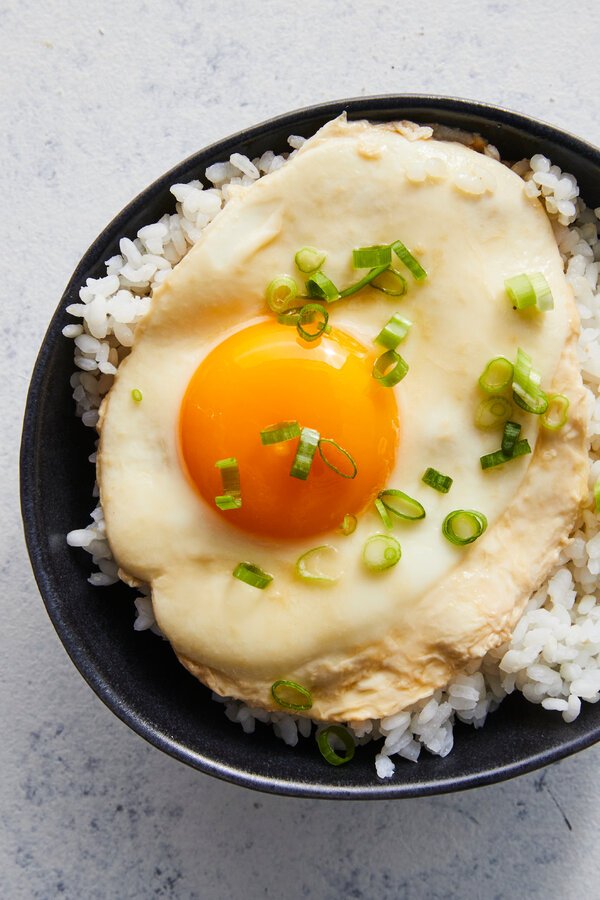
A good number of fried egg recipes involve covering the pan to steam the tops, or basting the thicker, gloopier whites, repeatedly, with ripping-hot fat.
Those eggs are fine and good, but they’ve never met my broth-basted eggs. A new method in my household, it came into my life the way many things do: by accident.
I must have been rushing dinner one night, or maybe I was throwing together the meal I cook for myself and my fiancé, Paolo, whenever we come home from vacation: rice, kimchi jjigae and eggs.
The eggs are the one thing I’m always changing up. A few autumns ago, we had just gotten back from Kyoto, where we ate onsen tamago, or hot spring eggs, for breakfast almost every morning. Cooked in the shells, they were often served swimming in a little dashi with mirin and soy sauce, a savory combination of flavors that I haven’t been able to shake. The technique inspired me to try a home version, out of the shell for ease.

Basting helps cook the egg whites while leaving the yolks runny.Credit…Linda Xiao for The New York Times. Food Stylist: Monica Pierini.
It took many early mornings and homemade Japanese breakfasts to nail my own technique, because with onsen tamago, it’s a split-second difference between failure and perfection.
The overcooked eggs were exactly that: overcooked. But the undercooked ones? They still had an ounce of potential, so I would just crack them into a bowl, pour hot water from a kettle over them, and then microwave them until they were soft and wibbly-wobbly. Once they were out of the microwave, piping hot, I’d stir in a sprinkle of Hondashi, the Japanese home cook’s instant bonito soup stock, to make a little broth. There’s nothing more nourishing to the spirit.
These days, I like to start my eggs in a skillet of simmering broth, butter, soy sauce and mirin. The eggs don’t stick, because they’re swimming in liquid, and their texture is lusciously soft because water cooks food gently.
To baste is to spoon fat or liquid over a food as it cooks. When you baste eggs with broth, you end up with a near-instant dish not unlike the soft, custardy part of an oyakodon, a homey chicken and egg rice dish. Or you could think of this as the soy sauce egg that tops your bowl of ramen. A lazy man’s onsen tamago, this egg isn’t like other eggs: It went to the spa a liquid and came back a cloud.
Follow New York Times Cooking on Instagram, Facebook, YouTube, TikTok and Pinterest. Get regular updates from New York Times Cooking, with recipe suggestions, cooking tips and shopping advice.
About The Author