Highlights:
- Population becomes asset through comprehensive human capability development
- Education should prioritise skills, knowledge, and practical application
- Health, training, and opportunity sustain productive human resource development
- Bangladesh underutilises graduates despite growing youth population
- Certificate-focused education leaves graduates unprepared for evolving labour markets
- Rising population growth threatens Bangladesh’s human resource development goals
The Bangladesh Securities and Exchange Commission (BSEC) has undertaken a series of plans to revive the country’s long-sluggish stock market by increasing the participation of institutional investors through removal of regulatory barriers in existing policies.
The newly appointed commission plans to review IPO (Initial Public Offering) rules to revive the primary market, simplify margin rules to improve money flow, and introduce performance-based mechanisms for mutual funds to attract institutional investors.

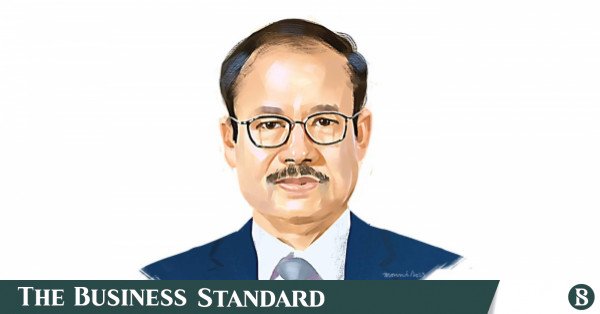
In an interview with The Business Standard, the newly appointed BSEC Chairman Masud Khan said his immediate priority is to maximise deregulation to ensure the market’s natural growth, and aggressively bring fundamentally strong scrips and listings into the market.
He also plans to ease bureaucratic bottlenecks by cutting down paper work through the introduction of automation in his office.
“The fundamental weakness of Bangladesh’s stock market is that it has historically been dominated by retail investors. Institutional participation is virtually absent in the true sense,” Masud Khan said.
He said the commission has already begun implementing reforms. “On my second day in office, I abolished the floor price mechanism. It had paralysed the market for nearly two years and caused unprecedented suffering.”
He also cited resolving the Beximco Pharmaceuticals GDR issue on the London Stock Exchange and strengthening market surveillance as early achievements.
“The Dhaka Stock Exchange has been instructed to modernise its surveillance system within six months and introduce AI-based market monitoring within a year,” he said.
IPO proceeds to be allowed for debt repayment
Current regulations limit the use of IPO proceeds for repaying bank loans to 30%.
Masud Khan said the commission is considering removing or substantially relaxing the restriction. “Companies burdened with expensive debt should be able to raise equity to deleverage. Lower borrowing costs ultimately benefit shareholders.”
He also said IPO approvals have become excessively slow because past financial scandals prompted regulators to adopt an overly cautious approach.
According to him, the current Public Issue Rules contain several impractical provisions, including the requirement for at least 40 eligible institutional investors to participate in book building before price discovery can begin.
“In a market as shallow as Bangladesh’s, that threshold is unrealistic,” Masud said.
He added that the Dutch auction mechanism under the book-building system also needs reform. “We are re-examining the entire pricing mechanism to ensure companies receive fair, market-driven valuations.”
Direct listing to be opened for high-cap private companies
The BSEC chairman said one of his biggest priorities over the next five years is to reform Bangladesh’s direct listing regulations.
Current rules allow only state-owned enterprises to use direct listing.
“Right now, our direct listing rules are incredibly archaic; they explicitly state that only state-owned enterprises can utilise direct listing, completely barring the private sector. This is ridiculous, and I am going to change it immediately.” he said.
“Furthermore, the old rules forced companies to offload a mandatory 25% of their shares right away. I am going to slash that threshold down to 10%,” he added.
According to Masud, companies such as Banglalink or Incepta Pharmaceuticals should not have to undergo lengthy evaluations because they are already well-established businesses.
“The only time required will be for price discovery and the actual market offer,” he said.
Large companies may be required to list
Masud Khan also wants legislation requiring large companies operating with substantial public funds to become listed entities.
He proposed defining Public Interest Entities (PIEs) as companies whose combined equity and outstanding debt exceed Tk300 crore. “If a private company’s total capital employed (equity plus outstanding debt) crosses a threshold of, say, Tk300 crore, it is effectively operating on massive public funding. In my view, such companies should be legally mandated to list on the stock exchange.”
He also proposed requiring multinational companies operating in Bangladesh to incorporate locally and list on the domestic bourse.
“Institutions such as HSBC and Standard Chartered operate as branches. I believe they should register as local companies and become listed,” he said.
Pension, provident funds should invest in the market
Masud said provident, pension and gratuity funds represent a major untapped source of institutional investment.
Although legal amendments already allow up to 25% of these funds to be invested in listed equities, fund managers have largely avoided doing so because of market volatility.
“We must fix the institutional pipeline by enforcing the Trust Act. Right now, countless companies are flagrantly violating the Trust Act by taking their provident and gratuity funds and simply parking them as standard deposits in commercial banks,” he said.
BSEC to introduce key performance indicators of mutual funds
The BSEC also plans to introduce internationally recognised key performance indicators (KPIs) for mutual funds.
These would include measures such as one-year NAV growth, rolling returns and expense ratios, with all data published on a central website.
“Investors will easily see which funds perform well and which consistently underperform,” BSEC chairman said.
He ruled out extending the tenure of closed-end mutual funds. “Let me state this with absolute clarity: As long as I am the Chairman of the BSEC, no extension for any closed-end mutual fund will ever be granted.”
Margin rules to be simplified
Masud Khan said existing margin lending regulations are overly restrictive and limit liquidity in the market.
Commercial banks currently have plenty of liquidity, but much of it cannot flow into the stock market because of rigid lending rules.
He said regulations such as suspending margin lending once a stock’s price-to-earnings ratio exceeds 30 are too inflexible.
“BSEC will only set broad KPI boundaries. Beyond that, brokers will have the freedom to design their own risk management frameworks and determine who to lend to,” Masud khan stated.
About The Author