How can people possibly afford to live in one of the most expensive cities on the planet? It’s a question New Yorkers hear a lot, often delivered with a mix of awe, pity and confusion.
We surveyed hundreds of New Yorkers about how they spend, splurge and save. We found that many people — rich, poor or somewhere in between — live life as a series of small calculations that add up to one big question: What makes living in New York worth it?
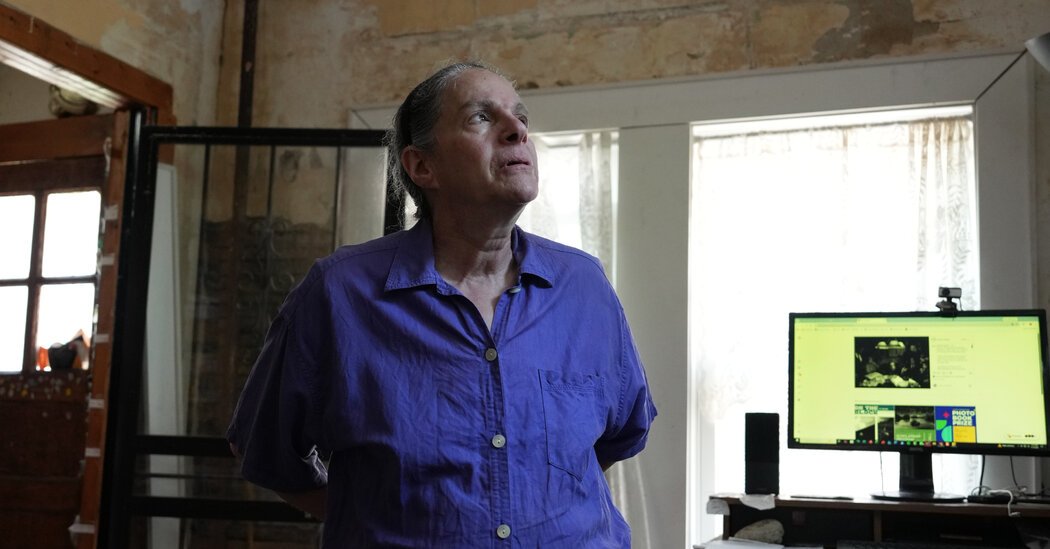
Beth Evans counts herself among the most fortunate of New Yorkers.
She bought a home decades ago and cultivated a career that matched a lifelong passion for literature. The city is in her blood — Ms. Evans calls herself the grandmother of fifth-generation New Yorkers — and she has never stopped loving it.
Ms. Evans, 68, is a professor and librarian at Brooklyn College, a job that pays her about $130,000 per year. She is set to retire in two years and has paid off her mortgage, and her home is worth about $800,000, according to Zillow.
Social Security benefits, money from her retirement account and inheritance from her parents offer her a comfortable cushion. But it has not always been so simple. And now, Ms. Evans faces some difficult choices about her future — and whether it will even be in New York.
Like many older New Yorkers, Ms. Evans is asking herself whether her shifting lifestyle and needs justify paying the city’s exorbitant prices. The youngest of her four children moved out last year, leaving Ms. Evans in the unfamiliar, and sometimes unsettling, position of living by herself.
But she prizes being close to her young grandchildren — aged 5 and 8 — and when she ponders life outside the city, she talks herself out of it midsentence. Perhaps a little more companionship would do the trick.
“I would be happy with roommates,” Ms. Evans said. “I would like to be one of the Golden Girls.”
Building Equity
Ms. Evans purchased her Marine Park home — a semidetached, red-brick rowhouse — in 1984 for $89,000, which is roughly equivalent to $290,000 in 2026, with her then-husband.
“It’s really a factor of age that I can live cheaply in New York, because I bought a house a long time ago,” Ms. Evans said.
For about a decade after they bought the house, Ms. Evans was a stay-at-home mother, and income from her husband, who worked as an oil burner mechanic, supported the household. She went back to school in 1990 to receive a Master of Library Science from Queens College, before starting at Brooklyn College in 1994.
Right now, Ms. Evans considers a splurge to be financing her third graduate degree, for which she sets aside about $400 per month. She is working toward a Master of Fine Arts in creative writing at Stony Brook University, taking classes at the Midtown Manhattan campus.
“I was an English lit major,” she said. “It’s always a lot easier to sit on the outside and criticize people’s writing.”
Ms. Evans appreciates the ethnic diversity of Marine Park.
She recalled introducing the neighborhood to a friend who had recently moved to Brooklyn. It was a culinary adventure along Coney Island Avenue, starting at a Pakistani restaurant; followed by a kosher store; followed by a Chinese restaurant; and ending with a Russian restaurant.
Ms. Evans’s life was uprooted in 2005. Her husband unexpectedly left the country, leaving her as a single mother to care for four children. One was in college, but her youngest child, a boy, was only 4 years old.
Suddenly on a single income, Ms. Evans had to find a way to make ends meet. She was forced to take out a second line of credit — a home-equity loan, or second mortgage — which cost another $700 per month. About a decade later, Ms. Evans finished paying off the mortgage.
Despite her cost constraints, she found affordable enrichment for her children.
She took her daughter to a free Transit Museum program, focused on the architecture of the city’s transit. That daughter later became an architect for the Metropolitan Transportation Authority.
For $5 a week per child, her sons attended a summer camp run by the Urban Park Rangers in Marine Park. Her oldest son later became a ranger in Marine Park. Now, he’s an environmental planner in Upstate New York.
Tearing Down the House
These days, Ms. Evans’s biggest expenses are extensive renovations to her home, which she put off for many years while raising a family, leading to water damage.
Over the last two years, she has spent about $166,000 on improvements like fixing her roof and repainting bricks, using the inheritance she received from her parents. The walls, ceilings and kitchen are next, along with the windows.
She finds herself in a predicament. Selling her home so soon after making the renovations would not make sense, she concedes. To make the move worth it, she would need to find a home less expensive than the one she is living in, a challenging proposition in New York.
Each month, various forms of insurance add up to $1,100. Her real estate taxes last month jumped more than $100 to $665. Medical bills are $500. Gas and electric comes to another $450. Groceries come from Aldi and Okka Foods Market, a popular supermarket on Kings Highway, and total around $400.
She spends about $400 per month on her two cats — Greybee and AiMori, including vet bills and food. The phone bill is $50 per month, on a family plan with two of her children. Another $300 is spent on gifts for her grandchildren and children, including trips to the New Victory Theater, a children’s theater in Midtown.
Another $200 a month goes to attending plays and other entertainment. A recent performance she enjoyed for $20 was “Kitty Daddy,” an Off Broadway play about a depressed man whose life is transformed by a cat he rescues from a shelter.
Ms. Evans was raised Jewish in Midwood, but brought up her children as Unitarians and remains active at her congregation in Brooklyn Heights, where she serves as a deacon and ushers.
After Sunday service, she often enjoys a meal at Kitchen, a Mediterranean restaurant in Cobble Hill, where the potato dumplings cost $15 and the baked feta saganaki goes for $14.
Planning for the Future
When Ms. Evans started her job at Brooklyn College in 1994, she opted for a retirement plan instead of a pension. The benefit of the retirement plan is that after she dies, her children will have access to her money. But unlike the pension, it is not guaranteed to last for the rest of her life.
Sizing up your remaining years like that can be a cold, calculating exercise, with the biggest unknown being your health. Living until you’re 95 might sound appealing, but financial planners could make you a graph that would show you with no savings at that age, Ms. Evans said.
“The most important variable is a variable nobody knows,” she said.
But for right now, Ms. Evans is effusive about New York and speaks about the city like a Brooklyn native who resists every inclination to leave the only home she has ever known.
“I like the mix of ages and mix of backgrounds,” she said. “Every time you get on a subway it’s like, ‘Oh, here’s the whole world,’” Ms. Evans said. “It’s the thing I love about New York.”
About The Author